

There is a moment in every well-considered kitchen when utility gives way to authorship; when the space stops being a sum of appliances and becomes something more deliberate, more composed. Increasingly, that moment is happening above the range.
For builders and designers working at scale, whether orchestrating a cohesive 200-home community or refining the visual language of a branded residential development, the range hood is no longer a background element. It is an anchor. A signal of intent. And when executed in cast metal, it becomes something rarer: a functional object with the presence of sculpture.
This is how builders are increasing perceived home value with The Bastille Collection. If you are a builder, keep reading!
The Return of Material Authority
In an era of engineered surfaces and increasingly seamless kitchens, cast metal introduces something distinctly human: variation. Depth. Evidence of process.
The Bastille Collection leans into this material honesty. Each hood is cast—not fabricated—resulting in subtle irregularities that catch light differently across its surface. This is not imperfection; it is character calibrated at scale.
For designers specifying across dozens of kitchens, this becomes a powerful differentiator. While cabinetry, stone, and fixtures may follow a controlled palette, the hood introduces a layer of individuality that resists feeling mass-produced. Each unit belongs to a larger system, yet carries its own visual fingerprint.

Beyond Utility: The Range Hood as Object
To style a cast metal range hood well, one must first reconsider its role. It is no longer a background appliance to be tucked into millwork—it is a focal object, often the only vertical element that interrupts a field of cabinetry.
That shift requires a different kind of thinking.
A cast metal hood carries visual density. It absorbs and reflects light differently than wood or lacquer. It introduces a tactile surface in a space otherwise dominated by planar materials. And perhaps most importantly, it signals permanence—something made, not assembled.
For designers, this means the hood should not be an afterthought. It should be considered early—at the same stage as cabinetry profiles and stone selection—because it will inevitably influence both.
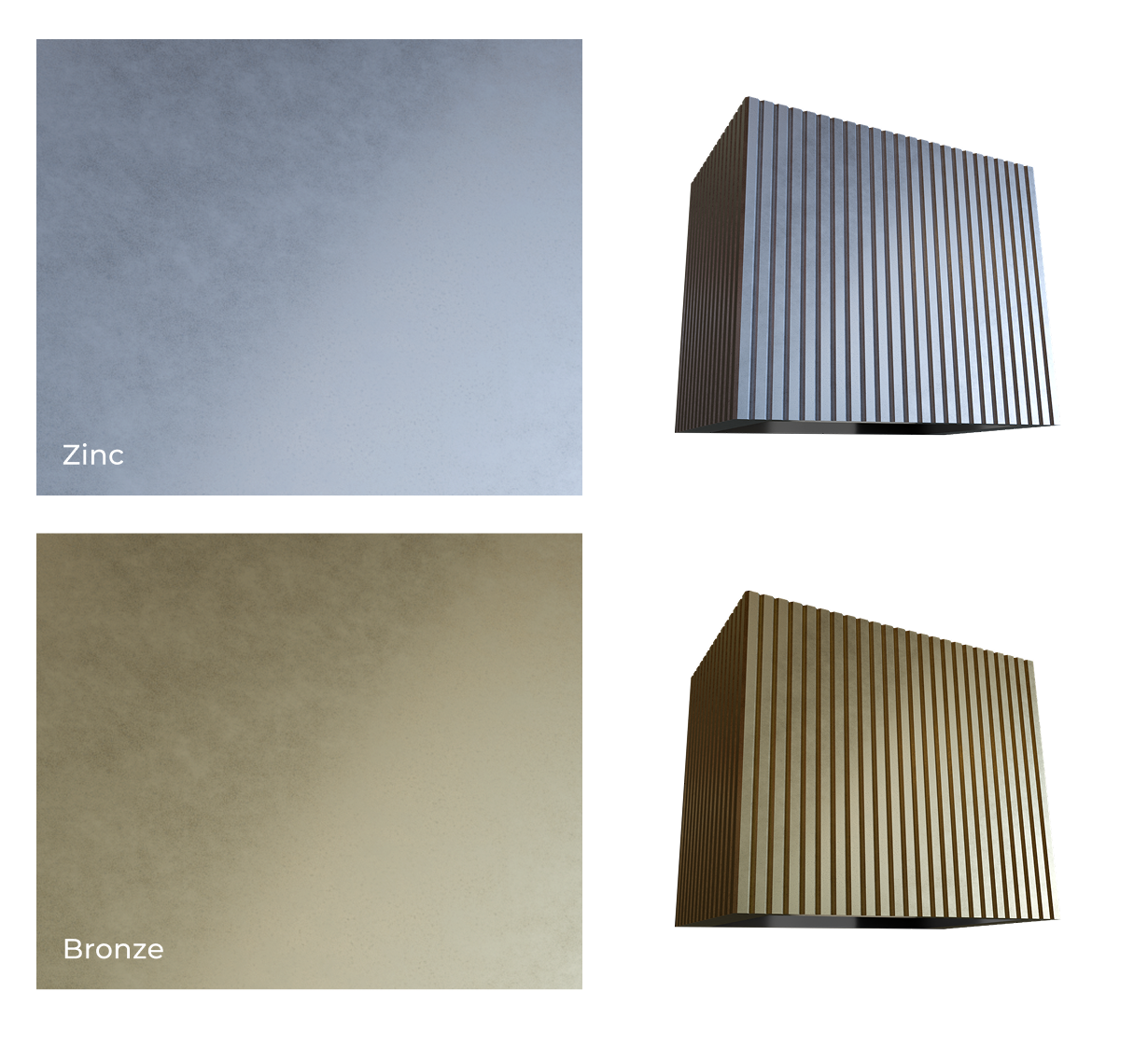
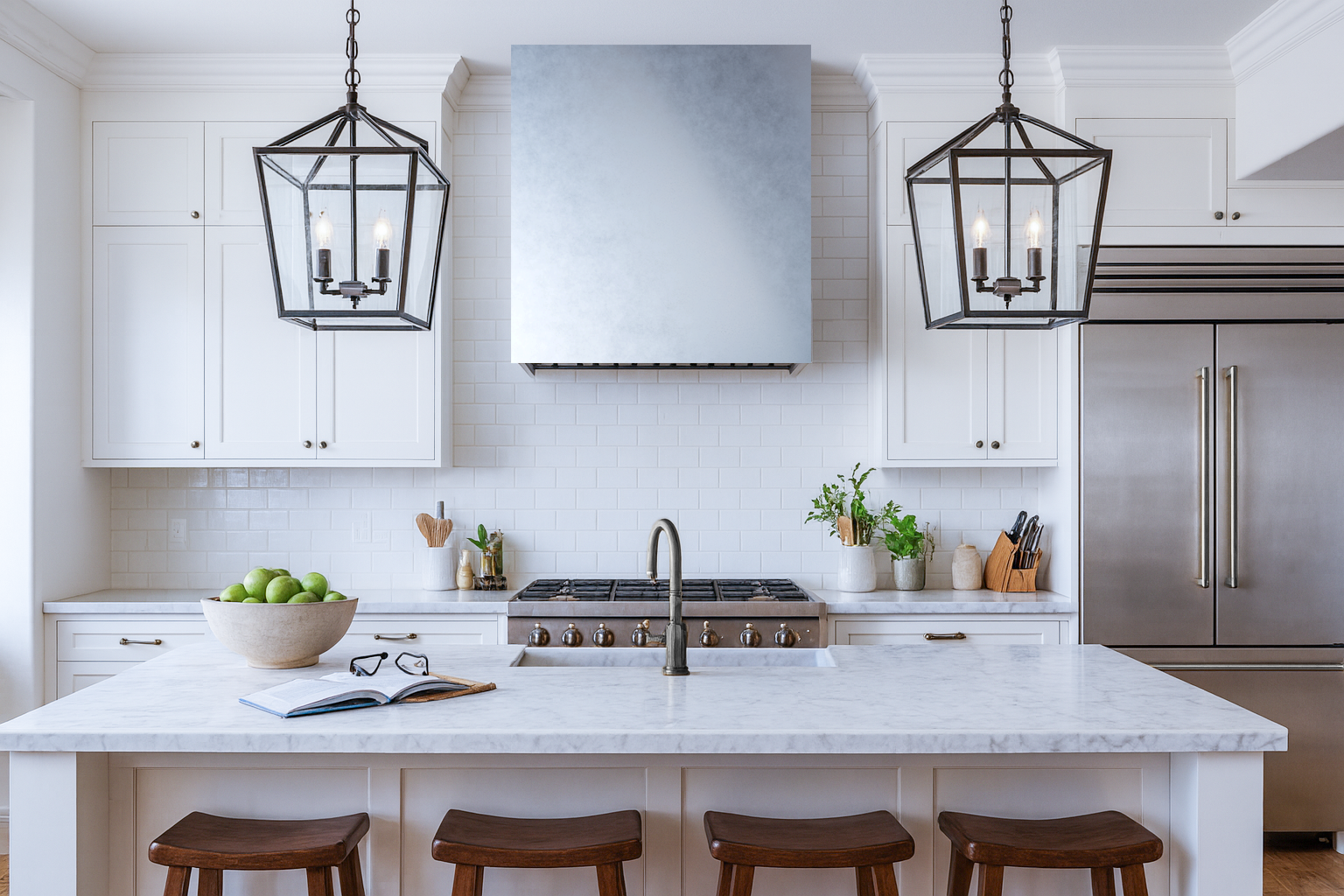
Pictured: Bastille Collection Jill Range Hood
Material as a Narrative
Cast metal brings with it a story of process. Unlike fabricated sheet metal, casting produces subtle irregularities—soft undulations, minute variations in thickness, a surface that feels worked rather than manufactured.
This is where styling begins: not with decoration, but with respect for the material itself.
The most compelling kitchens allow that material to speak. Surrounding elements are often simplified—pared-back cabinetry, restrained hardware, quiet backsplashes—so the hood’s surface can carry the visual complexity.
In this sense, styling a cast metal hood is an exercise in editing. The goal is not to add more, but to create space for the material to resonate.
Form, Proportion, and Placement
Because of their weight—both literal and visual—cast metal hoods demand careful proportional consideration.
A hood that is too slight will feel incidental. One that is overly heavy can dominate the room in a way that feels forced. The most successful applications strike a balance: a silhouette that feels grounded, but not overbearing.
Key considerations include:
- Width relative to the range and cabinetry: A slightly wider hood can create a sense of generosity and presence.
- Height and taper: Verticality draws the eye upward, reinforcing ceiling height and spatial volume.
- Edge detailing: Crisp lines read more contemporary; softened edges introduce a more traditional or transitional tone.
For designers working across multiple units or a large development, these proportional decisions become part of a repeatable system—one that can scale without losing its visual clarity.
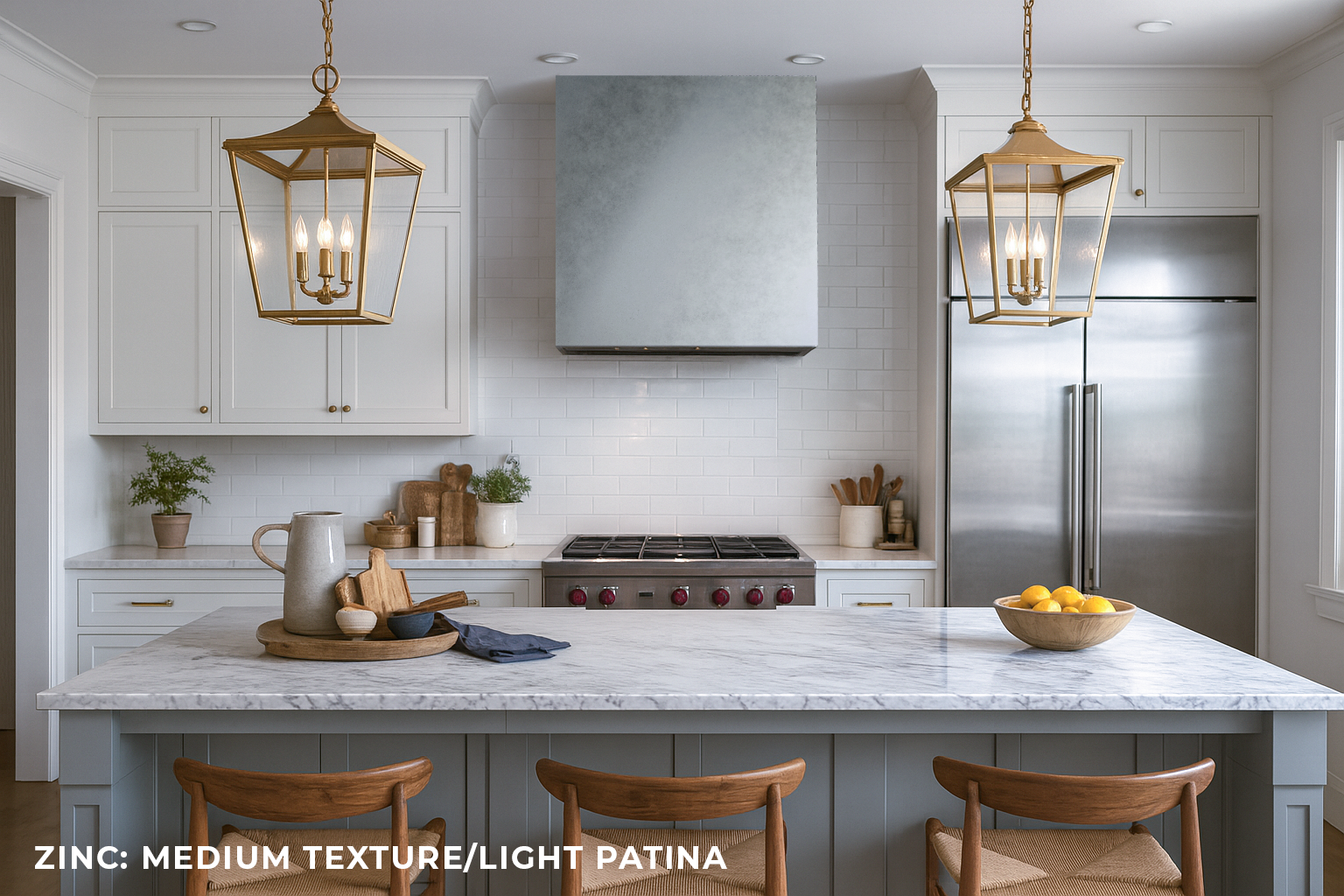
A Case for Consistency with Character
In large residential developments or builder-driven communities, the challenge is always the same: how to create cohesion without monotony.
Cast metal range hoods offer a compelling solution. Their forms can be standardized, their dimensions rationalized—but their surfaces resist uniformity. No two pieces catch the light in exactly the same way.
This is where collections like the Bastille Collection enter the conversation—not as the sole solution, but as an example of how cast metal can be systematized without losing its soul. With a limited number of silhouettes and a curated range of finishes, designers can maintain a consistent visual language while introducing enough variation to keep each kitchen from feeling identical.

See More
Article: Custom Zinc Bar Top For a Timeless Hospitality Experience
Bastille Collection: See our suite of products
Our Clients: Successful past partnerships