

When designers, architects, and hospitality directors ask us which living metal is right for their project, the honest answer is: it depends on the story the space is meant to tell. Zinc, pewter, and brass each carry centuries of history, behave differently under daily use, and age in ways that are beautifully distinct from one another. This guide lays out a direct, material-by-material comparison so you can enter your next specification conversation — or your next conversation with us — with clarity and confidence.
The Short Answer: Zinc vs Pewter vs Brass at a Glance
| Property | Cast Zinc | Pewter | Brass |
|---|---|---|---|
| Base composition | Zinc alloy | Tin-dominant alloy | Copper-zinc alloy |
| Starting color | Blue-grey | Bright silver | Warm gold |
| Patina direction | Matte grey, chalky warmth | Muted grey to charcoal | Amber to dark bronze-brown |
| Maintenance level | Very low | Low to moderate | Moderate |
| Hardness | Moderate | Soft to moderate | Hard |
| Design range | Ornate to ultra-modern | Classic French to contemporary | Industrial to Art Deco to traditional |
| Ideal application | Kitchen countertops, bar tops, range hoods | Bar tops, bistro counters, hospitality surfaces | Bar tops, accent counters, statement pieces |
| History of use | Architecture, roofing, ornamental detail | French bistros and brasseries | Decorative metalwork, hardware, fixtures |
Each of these is what we call a living metal — a surface that doesn’t hold still. It responds to its environment, to touch, to time. That’s not a flaw. That’s the point.
What Is a Living Metal, and Why Does It Matter in Luxury Design?
A living metal is any cast metal surface that develops a natural patina over time through oxidation, use, and environmental exposure. Unlike stone, quartz, or painted surfaces, living metals are in constant, slow dialogue with the space they inhabit.
For luxury kitchens, bars, and hospitality interiors, this matters enormously. A cast zinc countertop installed in a boutique hotel bar will look different — richer, deeper, more storied — five years from now than it does on installation day. The same is true of pewter and brass. Each mark, each subtle shift in tone, adds to the surface rather than detracting from it.
This is precisely why high-end designers and hospitality groups return to these materials again and again. They don’t age out of style. They age into character.
Cast Zinc: The Workhorse with a Poet’s Soul
What Zinc Is
Zinc is a grey-blue alloy metal with one of the longest track records in architectural history. It has been used in European roofing, ornamental downspouts, tiles, and facade details for centuries. Its architectural lineage gives cast zinc countertops and bar tops a credibility that more fashionable materials simply can’t replicate.
At La Bastille, zinc is our signature material — and the one for which we are known worldwide.
How Zinc Looks and Ages
Fresh cast zinc has a cool blue-grey tone, clean and almost mineral in character. Over time — through contact with water, oils, food, and air — it develops a soft, chalky warmth that many designers describe as impossible to replicate with any applied finish. This natural patina reads as deeply authentic, which is why zinc countertops are frequently specified when a kitchen or bar needs to feel like it has been in place for generations.
Zinc can also be hand-finished at the time of fabrication to appear already aged — a technique we use when clients want that lived-in, antique quality from day one. The range is wide: sleek and modern on one end; richly ornate and architecturally detailed on the other.
Zinc Performance Characteristics
- Maintenance: Very low. Zinc requires no sealers and no specialized care. A wipe-down is typically sufficient.
- Reactivity: Zinc will react to acidic substances (citrus, vinegar) leaving lighter marks that blend into the overall patina over time. These are not damage — they are part of the surface’s story.
- Hardness: Moderate. Zinc is softer than brass or bronze but holds up well in high-use residential and commercial environments.
- Eco-profile: Zinc is one of the most recyclable metals in architecture, which makes it a responsible choice for sustainability-conscious projects.
Best Applications for Zinc
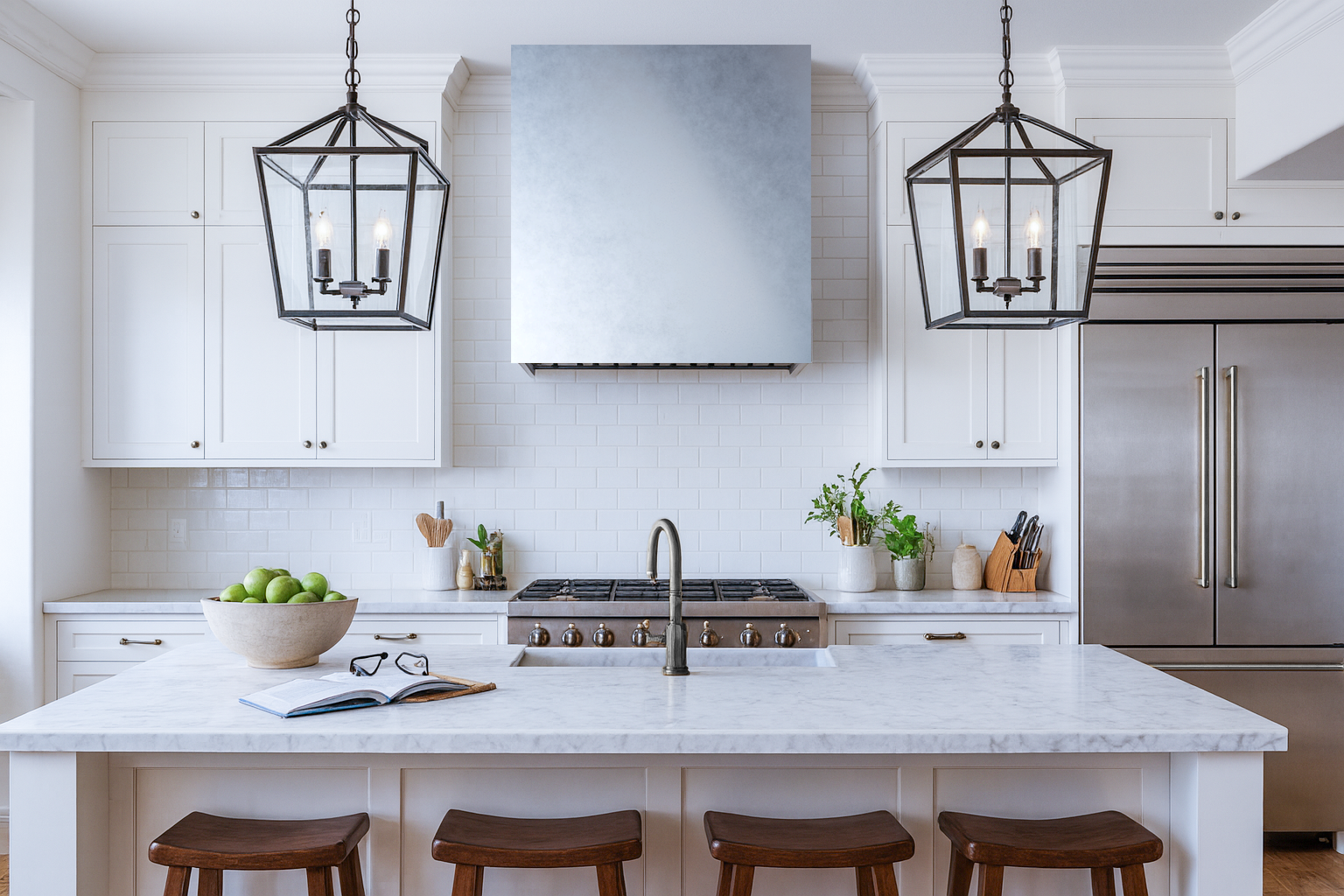
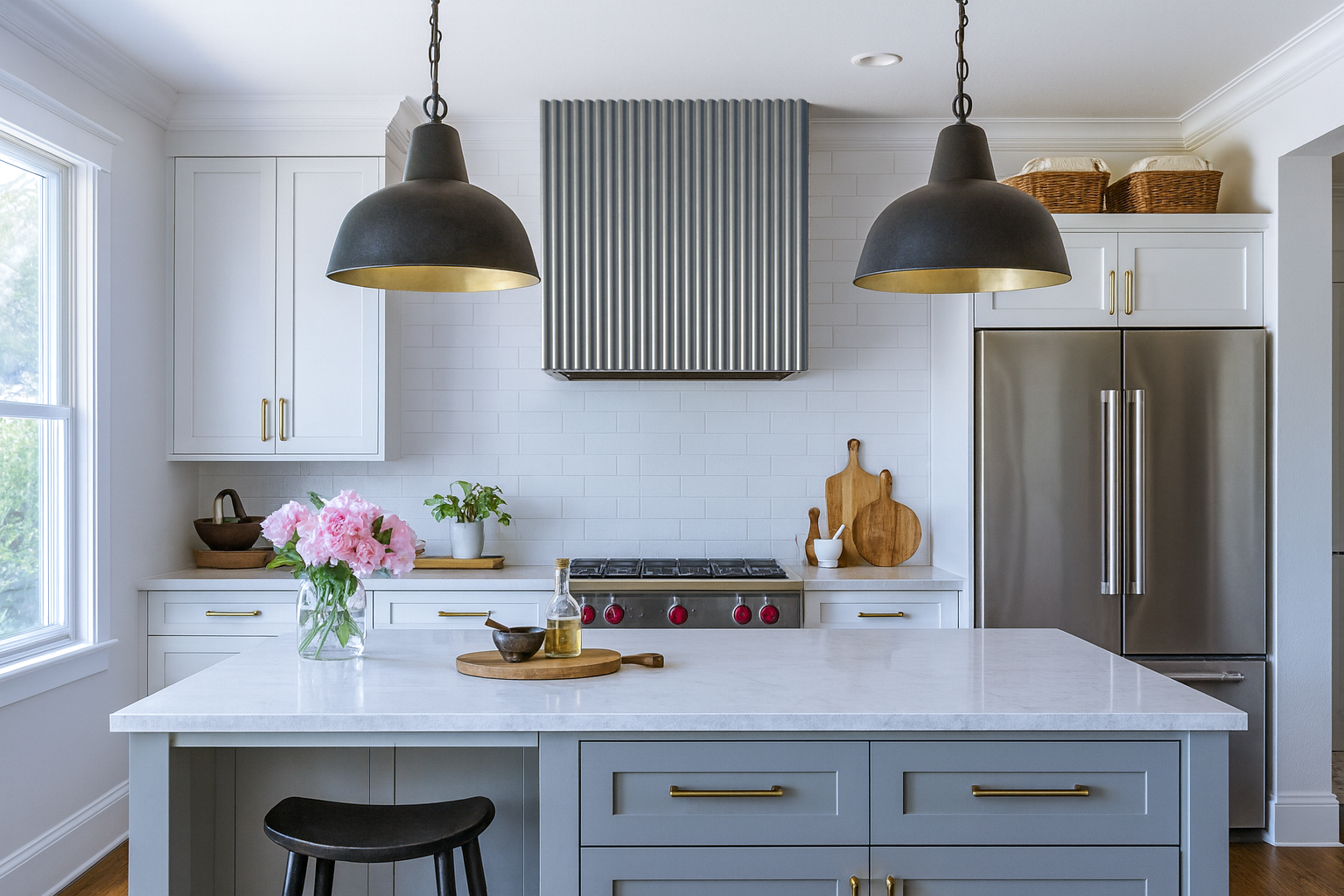
Cast zinc is ideal for kitchen countertops, island surfaces, bar tops, and range hoods. Its versatility in design language — from a farmhouse kitchen to a Michelin-starred restaurant — makes it the most adaptable of the three metals discussed here. If you are specifying a single living metal surface for a luxury kitchen and want maximum flexibility in aesthetic direction, zinc is a strong first consideration.
Pewter: The Parisian Standard, Rediscovered
What Pewter Is
Pewter is a malleable alloy composed primarily of tin, with small additions of other metals for strength and workability. It has been used in French bistros and brasseries for centuries — so much so that bars in France are colloquially called “le zinc,” even though the surfaces they reference are, in fact, pewter. That cultural confusion is a testament to how deeply these two materials are intertwined in the history of European bar and hospitality design.
How Pewter Looks and Ages
Freshly polished pewter is strikingly beautiful — a vibrant, almost mirror-bright silver that catches light with a warmth that chrome and stainless steel simply cannot offer. Left to develop naturally, pewter shifts toward a muted grey or deep charcoal patina that is sophisticated, quiet, and deeply elegant.
One of pewter’s most distinctive qualities is its flexibility of maintenance. Unlike zinc, which is best appreciated as a low-intervention surface, pewter can be maintained at nearly any point along the spectrum from matte patina to polished silver. A client who wants their bar top to gleam can polish it to a high finish. A client who prefers a more understated, weathered look can allow the natural patina to develop without intervention. This versatility makes pewter a favorite in hospitality environments where the design brief may shift over time.
Pewter Performance Characteristics
- Maintenance: Low to moderate, depending on desired finish level. A polished pewter surface requires more regular attention to maintain its brightness.
- Reactivity: Pewter is relatively low-reactive compared to zinc. It handles daily use in bar and hospitality environments gracefully.
- Hardness: Softer than brass but workable and durable for countertop and bar top applications.
- Design range: La Bastille offers an expanded selection of traditional and modern edge profiles in pewter, making it adaptable to virtually any aesthetic brief.
Best Applications for Pewter
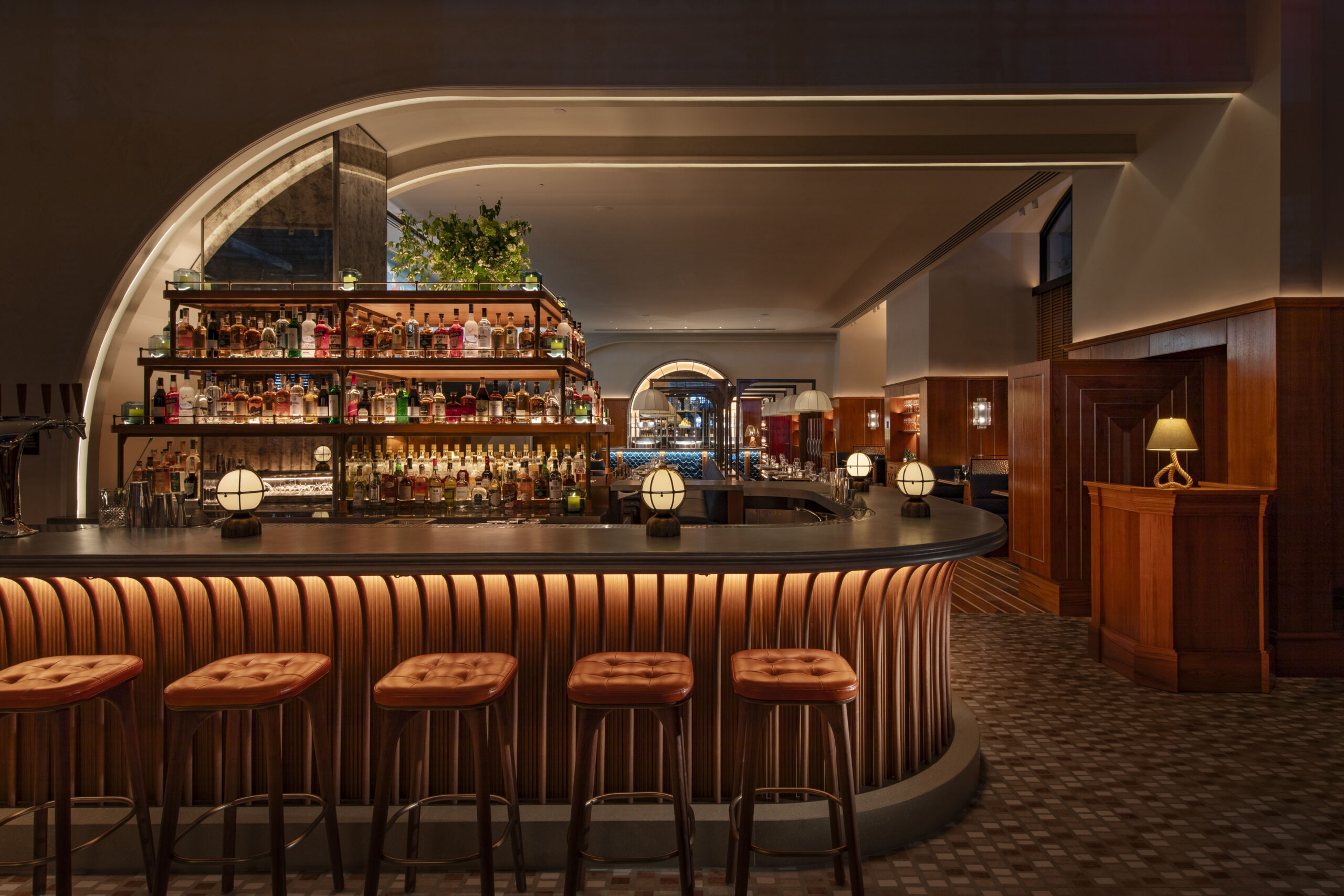
Pewter is the definitive material for bar top surfaces with a French or European bistro sensibility. It is equally at home in contemporary hospitality interiors where a cooler-toned, refined metal is required. Pewter bar tops and countertops carry an authority that feels inherited rather than installed — the right choice when the brief calls for authenticity with elegance.
Brass: The Bold Statement Metal
What Brass Is
Brass is a copper-zinc alloy, and it is the most visually assertive of the three metals in its initial presentation. Its warm gold tone is immediately recognizable and carries strong associations with Art Deco interiors, mid-century bar design, and — in more recent years — the high-design hospitality movement that has reclaimed brass as a luxury material rather than a dated one.
How Brass Looks and Ages
New brass is warm, golden, and luminous. Over time, it develops a rich amber patina that deepens toward brown-gold and, eventually, toward darker bronze tones. The progression is slower than zinc or pewter and requires more intentional management if a specific finish level is to be maintained.
Brass is harder than both zinc and pewter, which makes it more resistant to surface scratching and physical wear. It is also the most architecturally assertive of the three — best used when the brief calls for the metal surface itself to be a design statement.
Brass Performance Characteristics
- Maintenance: Moderate. Brass responds well to regular cleaning with mild soap and water. To maintain a polished finish, periodic attention is required. To allow natural patina development, benign neglect is entirely acceptable.
- Reactivity: Brass will react to acidic substances and can develop darker tonal shifts in high-contact areas. These variations contribute to the surface’s character over time.
- Hardness: The hardest of the three metals discussed here, offering excellent durability in high-traffic commercial environments.
- Design range: Brass works across a wide range of design languages — from Art Deco to industrial to transitional luxury — but it is always present. It announces itself.
Best Applications for Brass
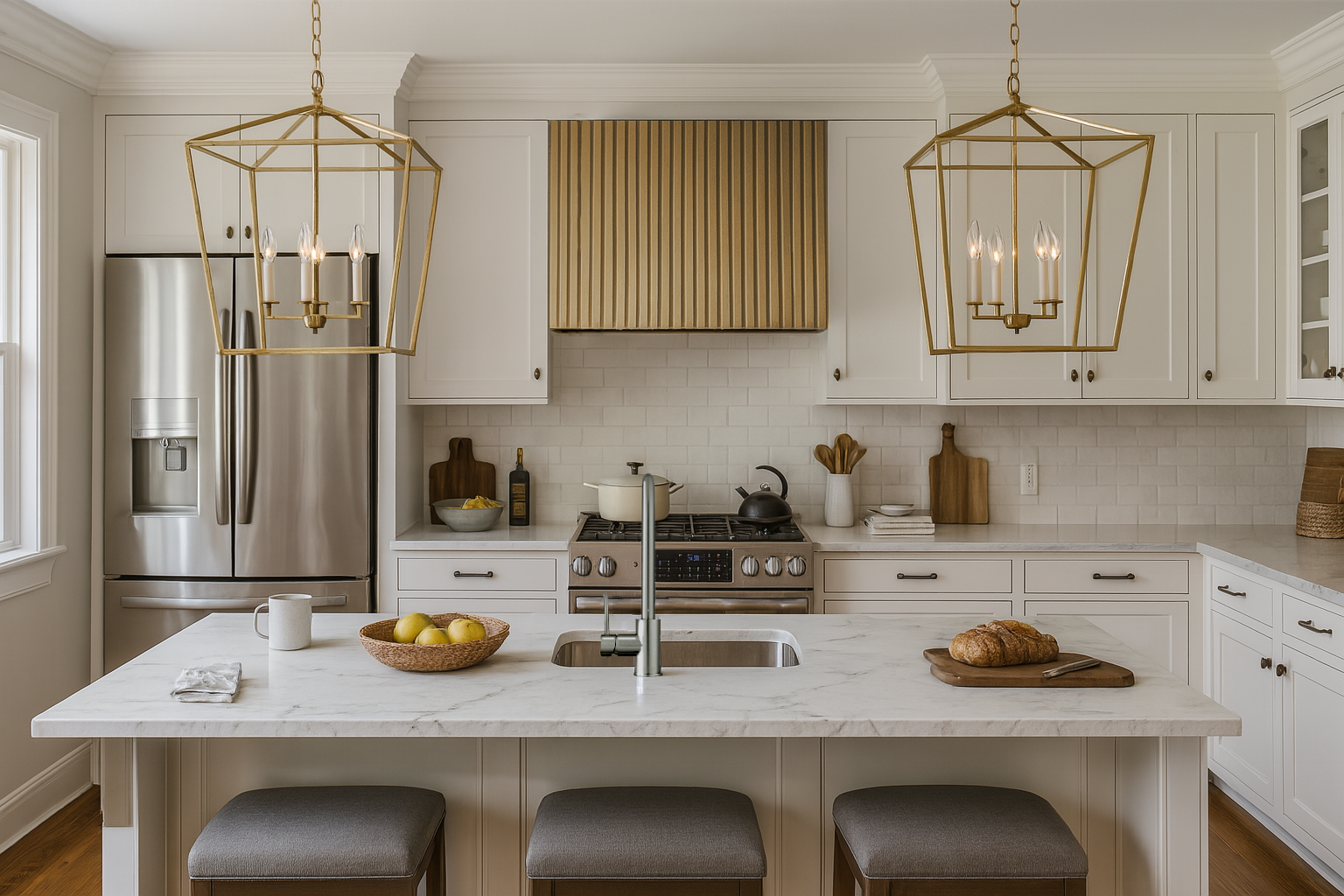
Brass is ideal for bar tops, accent countertops, and hospitality surfaces where visual warmth and presence are essential to the design concept. It pairs beautifully with dark millwork, marble, and natural stone. In residential settings, a brass kitchen island or bar counter functions as a deliberate focal point rather than a background element.
Side-by-Side: Choosing the Right Metal for Your Project
Choose Cast Zinc If:
- You want the widest range of design expression, from rustic to modern
- Low maintenance is a priority
- The space benefits from a cooler, mineral-toned surface that ages gracefully with minimal intervention
- You are specifying both countertops and a range hood, and want material consistency throughout
Choose Pewter If:
- The brief has a French bistro, European brasserie, or refined hospitality aesthetic
- You want the option to polish the surface to a high shine or allow natural patina development
- A silver-toned living metal reads more appropriate than a warm gold or blue-grey
- The project is a high-volume bar environment where authenticity of material is part of the brand story
Choose Brass If:
- The design calls for warmth, presence, and a gold-toned focal point
- Durability against heavy physical use is a specification priority
- The interior palette includes dark woods, marble, or other materials that benefit from brass’s contrast
- The client wants a surface that reads as luxurious and intentional from day one
A Note on Patina: Embrace It by Design
One of the most common questions we receive from designers specifying living metals for the first time is: “How do I explain patina development to my client?”
Our answer is always the same. Frame it accurately: patina is not wear. It is transformation. A cast zinc countertop or pewter bar top that has developed its natural patina is more valuable, more beautiful, and more honest than a surface frozen at its factory-fresh starting point. Living metals are heirloom-quality materials precisely because they accumulate meaning over time.
The key is setting expectations clearly at the design phase. Clients who understand what their surface will become — and why — are invariably the most satisfied with the result.
Frequently Asked Questions
Can I use zinc, pewter, or brass in a commercial kitchen?
Yes. All three living metals are used in commercial environments, including restaurants, bars, and boutique hotels. Zinc and brass are particularly well-suited to high-traffic commercial settings. Pewter is the classic choice for bar tops in hospitality contexts. Each material should be matched to the specific use case and maintenance capacity of the operation.
How do I clean a living metal countertop or bar top?
For all three metals, mild soap and warm water are sufficient for daily cleaning. Avoid abrasive cleaners, harsh chemicals, and prolonged contact with strongly acidic substances. For pewter maintained at a polished finish, a metal-appropriate polish applied periodically will maintain the desired brightness.
Do living metal surfaces require sealing?
No. Unlike stone countertops, living metals do not require sealing. Their patina development is a natural surface process and does not indicate porosity or vulnerability.
How long does fabrication take?
At La Bastille, our typical lead time is 12–14 weeks from approved shop drawings. We provide technical shop drawings within 1–2 business days of a completed project inquiry, and our in-house team of designers and artisans manages every stage of fabrication in our USA facility.
Can I specify the same metal for both a countertop and a range hood?
Yes, and many of our clients do exactly that. Material continuity across a kitchen’s countertop surfaces and range hood is one of the most effective ways to create a cohesive, designed interior. We handcraft both surfaces in-house, ensuring a consistent finish across every element of your project.
Working with La Bastille
We partner with architects, interior designers, and hospitality groups across North America to deliver custom metalwork with reliable timelines, refined finishes, and the kind of expertise that only comes from working exclusively in living metals. Every surface we produce — whether a cast zinc countertop for a residential kitchen or a pewter bar top for a flagship restaurant — is handcrafted in the USA by our dedicated team of on-staff designers and skilled artisans.
If you are in the early stages of a specification and want to discuss which metal is the right fit for your project, we would welcome the conversation. Reach out to begin the process, and we will have initial drawings in your hands within 1–2 business days.