

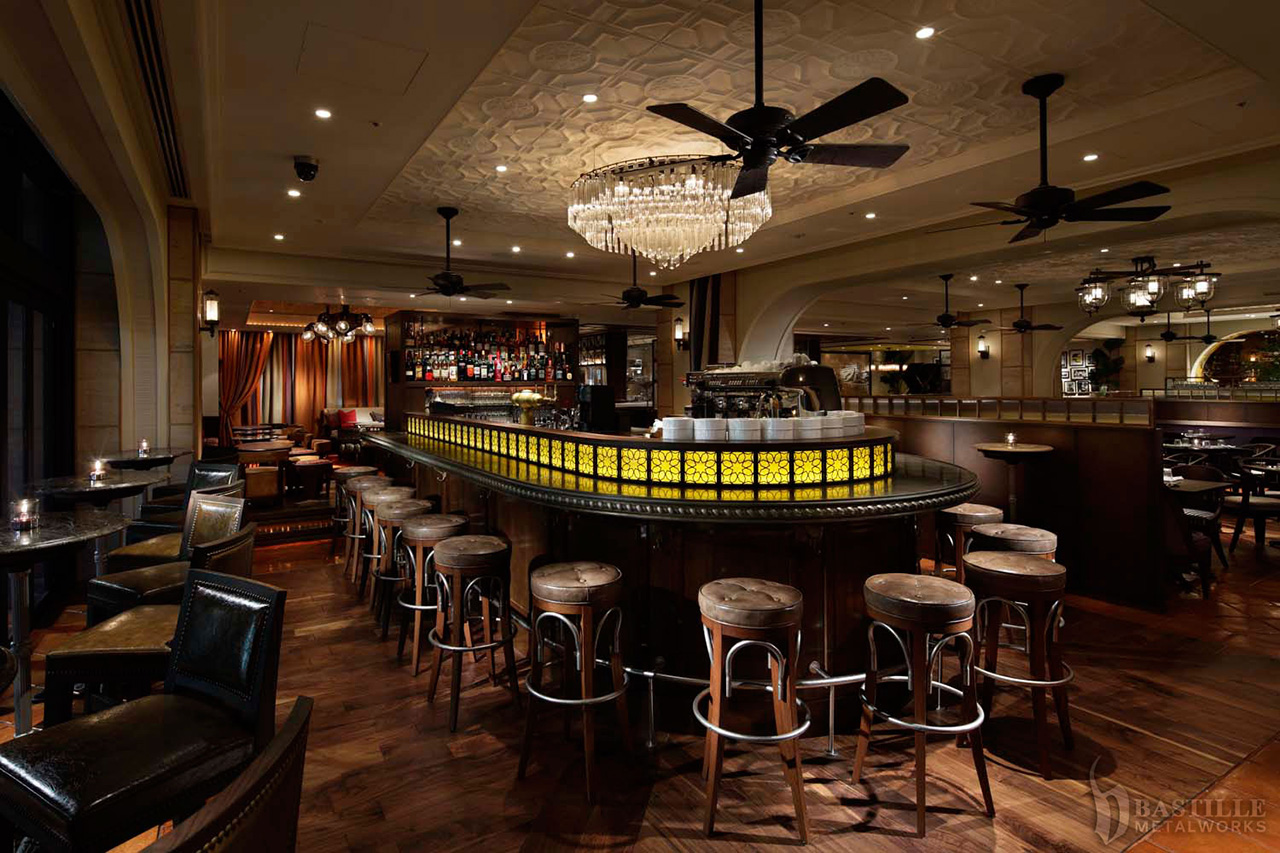
When a designer specifies a zinc bar top, they are not simply choosing a surface material. They are reaching back through centuries of European hospitality culture, selecting a living metal that will evolve with the room, deepen with every pour, and outlast nearly every other surface option in a high-traffic commercial environment. That decision — refined, considered, historically informed — is precisely why the zinc countertop remains the defining mark of luxury bar design across the world’s most respected restaurants, boutique hotels, and brasseries.
The History of Zinc in Bar Culture
The story begins in France, where the zinc became synonymous with the bar counter itself. Parisian brasseries and bistros lined their service counters with pewter — a malleable, tin-based alloy — and Parisians affectionately named the bar after its surface: le zinc. The term persisted for generations, and the look became so deeply embedded in French hospitality culture that it defined the visual grammar of the bistro interior worldwide.
What that history tells us is not merely nostalgic. It tells us that these materials were chosen because they worked — under decades of heavy use, shifting ambient conditions, and the relentless chemistry of liquid contact. Metal surfaces survived in working bars not because they were fashionable, but because they were durable, cleanable, and capable of improving with age rather than degrading.
The transition from pewter-lined French bars to cast zinc surfaces in modern hospitality design represents a natural evolution. Zinc carries the same fundamental qualities — a blue-grey hue, a living finish that develops organically over time, and a malleable character that accepts everything from sleek modern edge profiles to highly ornate architectural detailing — while offering the flexibility demanded by contemporary specifications.
At La Bastille, we’ve spent years studying and building on this tradition. Every zinc bar top we handcraft is a continuation of that centuries-long lineage, interpreted through rigorous American craftsmanship and the highest-quality alloys available.
What Makes Zinc a “Living Metal”
The phrase living metal is not marketing language. It is a precise description of how cast zinc behaves over time, and understanding that behavior is essential for any designer or hospitality group specifying a bar surface.
Zinc is grey in color with a distinctive blue-grey hue that reads differently across lighting conditions — warmer under amber bar light, cooler and more architectural under daylight. Unlike painted, laminate, or sealed stone surfaces, zinc does not simply wear. It ages. The surface develops a patina through contact with moisture, air, and the organic chemistry of everyday use. Fingerprints, the oils from a bartender’s hands, the rings of a hundred thousand glasses — each leaves a micro-impression that compounds over months and years into a surface texture that cannot be manufactured or replicated in the factory.
This is, in fact, one of the most compelling selling points for hospitality clients: a zinc bar top that has been in service for five years looks materially richer and more intentional than it did on installation day. The aging is not damage. It is character, accrued in real time.
For projects that require an aged aesthetic immediately — a newly opened restaurant seeking the warmth and gravitas of a decades-old brasserie — our team can hand-finish zinc countertops and bar tops to appear as though they have been in place for years. The result is an interior that feels lived-in and considered from the moment doors open.
Cast Zinc vs. Other Bar Surface Materials
Hospitality designers are rarely short on surface options. Marble, quartz, stainless steel, solid wood, concrete — each has its advocates and its appropriate contexts. But a genuine side-by-side evaluation reveals why so many high-end specifications consistently return to zinc.
Zinc vs. Stainless Steel
Stainless steel is hygienic and durable, but it reads as commercial and cold in most hospitality settings. It shows scratches, smudges, and watermarks immediately and persistently. It does not patinate; it simply dulls. A zinc bar top, by contrast, softens as it ages and develops the kind of surface warmth that makes guests linger.
Zinc vs. Marble and Stone
Natural stone brings its own richness, but it is porous, requires sealing, and is susceptible to etching from acidic liquids — a significant liability in bar environments where citrus and alcohol are constant. Zinc is not impervious, but its response to contact is a controlled, intentional aging rather than staining or structural compromise.
Zinc vs. Quartz and Engineered Surfaces
Engineered surfaces offer consistency and low maintenance, but they cannot age gracefully. In five years, a quartz bar top looks exactly as it did on day one — or slightly worse. A zinc countertop in the same period has developed a surface narrative. For hospitality brands investing in atmosphere, that distinction is meaningful.
Zinc vs. Other Living Metals
Within the cast metal category, zinc occupies a specific position. Brass and bronze are harder alloys, each with their own exceptional qualities — brass brings warmth and a more golden tone; bronze, traditionally used in sculpture, offers extraordinary hardness and a rich antiqued finish. Pewter, the traditional French bar material, polishes to a vibrant silvery hue and maintains its mirror-like finish with regular upkeep, or patinas gracefully to a muted charcoal when left to develop naturally. Each metal has its moment and its appropriate application.
Zinc, however, remains the most versatile. Its adaptability across design aesthetics — from sleek, contemporary profiles to intricate architectural edge detailing — and its proven performance in high-volume bar environments make it the most specified cast metal surface in luxury hospitality design.
Why High-End Restaurants and Hotels Specify Zinc
Designers and hospitality groups who work with La Bastille return to zinc for reasons that are both practical and philosophical.
Performance under pressure. A bar top is one of the most demanding surfaces in any commercial interior. It faces constant liquid contact, impact, temperature variation, and the daily physical demands of service. Cast zinc, when properly fabricated and installed, is built for exactly this environment.
Design range. No other bar surface material offers the same latitude across design languages. A zinc countertop can be specified with a sleek, knife-edge profile for a minimalist urban bar, or with an ornate, ogee-style edge for a traditional hotel lobby bar. The metal itself accepts custom shapes, integrated sinks, and complex geometry without compromise.
The aging proposition. For hospitality groups building long-term brand equity through physical space, a material that improves over time is an asset. Zinc aligns with the design philosophy of creating interiors that deepen in value and character alongside the brand.
Provenance and craftsmanship. In an era when sourcing and authenticity matter to discerning clients and guests alike, the ability to specify a bar top that is handcrafted in the USA by skilled artisans — rather than mass-produced overseas — carries genuine weight. At La Bastille, all of our metalwork is sourced, designed, and fabricated domestically by our on-staff designers and artisans.
The La Bastille Approach to Custom Zinc Bar Tops
Our process begins with collaboration. When a designer or hospitality group brings a zinc bar project to us, our first step is understanding the full context: the design vision, the operational demands of the space, the timeline, and the specific details that will make the piece singular.
From there, our in-house design team develops technical shop drawings tailored precisely to the project’s specifications. We work with designers, architects, and hospitality groups across North America, and we know that reliable communication and clear timelines are as important as the metalwork itself. Clients typically receive an initial response within one to two business days, and we’re transparent about lead times — custom cast zinc bar tops are heirloom-quality pieces that require the time and care they deserve, with typical lead times running approximately 12 to 14 weeks.
Every zinc bar top we produce is one of a kind. There are no shortcuts in our process, no stock profiles dressed up as custom work. Each piece is hand-cast and hand-finished to the client’s exact specifications — edge profiles, dimensions, integrated features, and surface treatment all defined in partnership with the design team.
We also take pride in working with the highest-quality zinc alloys available, because the material is only as good as what goes into it. The durability and longevity our clients expect from a luxury bar surface begins with the quality of the alloy and extends through every step of fabrication.
Frequently Asked Questions
How does zinc hold up in a high-volume bar environment?
Cast zinc is well-suited to the demands of commercial bar service. It handles constant liquid contact, temperature variation, and physical impact without structural failure. The surface will patinate over time, which is both expected and desirable — the aging process is what gives zinc bar tops their distinctive character.
Can a zinc bar top be made to look already aged at installation?
Yes. Our team can hand-finish zinc surfaces to replicate the appearance of a patinated, well-used surface, giving newly opened spaces an immediate sense of warmth and history.
How does zinc compare to pewter for bar tops?
Both are excellent choices with deep roots in European bar culture — in fact, the famous Parisian bars known as le zinc were traditionally surfaced in pewter. Zinc tends toward a more architectural aesthetic and ages freely, while pewter can be maintained at a polished, mirror-like finish or allowed to develop a muted charcoal patina. We fabricate both and are happy to discuss which is the right fit for a specific project.
What edge profiles are available for zinc bar tops?
We offer a wide selection of edge profiles, from sleek modern options to highly ornate architectural details, all customized to the project’s design specifications.
How do I begin a custom zinc bar top project with La Bastille?
Reach out to our team directly. We respond within one to two business days, and we’ll connect you with one of our in-house designers to begin the conversation. You can visit us at labastille.com to explore our work and get in touch.
A Surface Worth Specifying
The zinc bar top has earned its place in luxury hospitality design not through trend cycles but through centuries of proven performance, aesthetic depth, and a singular ability to grow more beautiful with use. For designers and hospitality groups who understand that a great interior is built on materials with both integrity and longevity, zinc remains the clearest, most considered choice.
We handcraft each project using the highest quality alloys and the skills of our dedicated artisan team — creating heirloom-quality surfaces built precisely to your specifications, designed to serve a room for decades and tell a richer story with every passing year. When you are ready to explore what a custom zinc bar top could bring to your next project, we are ready to begin that conversation.