

Designing a custom metal countertop is one of the most deliberate decisions you can make for a space — and one of the most rewarding when it’s done right. Whether you’re an architect refining a hospitality concept or a homeowner building a kitchen that should outlast every trend, the process of aligning metal species, patina, and edge detail to your existing aesthetic language is both a technical and an artistic conversation. This guide walks you through each decision point, in sequence, so the result feels inevitable rather than assembled.
Step One: Read Your Space Before You Choose a Metal
Before selecting a material, spend time identifying the dominant aesthetic language already present in your architecture. Metal countertops do not exist in isolation — they anchor a room, and the wrong species can create visual friction even if each element is beautiful on its own.
Ask yourself a few orienting questions:
- What is the primary palette? Warm wood tones, cool concrete, painted millwork, or raw stone each call for different metallic companions.
- What is the dominant finish language? A kitchen full of brushed nickel hardware reads differently than one with unlacquered brass fixtures or matte black steel.
- What is the age and architectural period of the structure? A 19th-century townhouse, a 1960s California ranch, and a contemporary loft each have a vocabulary worth honoring.
- What is the intended emotional register? Refined and formal? Lived-in and warm? Industrially spare? Romantically antique?
These answers become the brief that drives every subsequent decision in your custom metal countertop design.
Step Two: Match Your Metal Species to Your Architectural Lineage
Each of the cast metals we work with at La Bastille carries its own historical and aesthetic identity. Choosing the right species is the single most important decision in the process.
Zinc: The Modernist’s Living Metal
Zinc has centuries of architectural pedigree — from Parisian rooflines to ornamental downspouts — and that history shows in its character. In color, zinc presents as a cool blue-grey that deepens and warms over time into something genuinely beautiful. It is equally at home in a sleek, minimalist kitchen as it is in a highly ornate, classically detailed interior.
Zinc countertops are an excellent choice for:
- Contemporary and transitional kitchens with clean geometry
- Farmhouse and French country interiors seeking an aged, heirloom quality
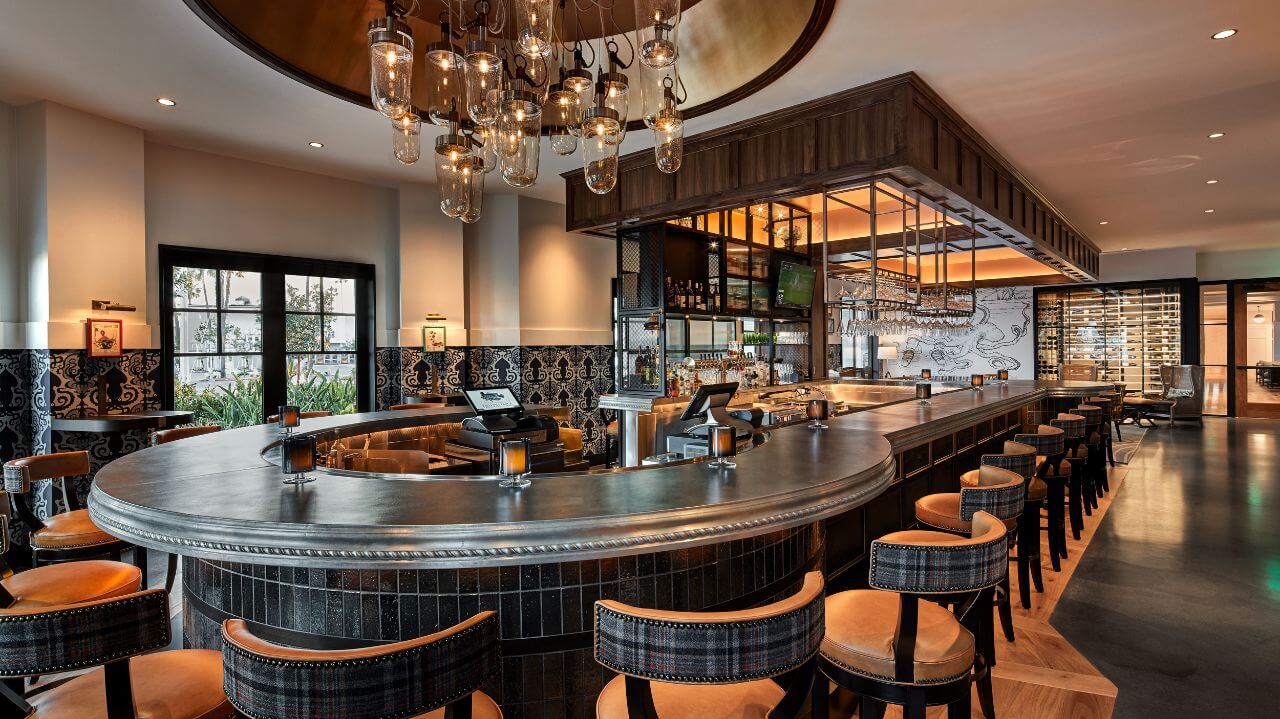
- Commercial bar tops where long-term patina development is desirable
- Architects who want a surface that reads as architectural rather than decorative
Because zinc is a living metal, it will develop use patterns and tonal variation over time. This is not a flaw — it is the material’s most compelling characteristic.
Pewter: The Classic French Bistro Surface
Pewter is the material of Parisian bar culture, and its sophistication travels well. Composed primarily of tin, pewter is a malleable alloy with a vibrant silvery hue that can be maintained as a mirror finish or allowed to develop a muted charcoal patina — the choice is yours, and it can evolve over the life of the surface.
Pewter countertops and bar tops suit:
- Formal dining rooms and butler’s pantries with traditional detailing
- High-end restaurant and hospitality interiors with a European sensibility
- Kitchens with marble, limestone, or other cool-toned natural stone
- Spaces where the client wants the flexibility of a high-polish or a more subdued living finish
Brass and Bronze: Warmth, Weight, and Sculptural Presence
Brass brings immediate warmth and a visual richness that no other metal replicates. It reads as both luxurious and approachable, and it pairs beautifully with dark cabinetry, richly veined stone, and warm wood millwork.
Bronze is a significantly harder alloy with a wider range of finish possibilities — from a polished golden bronze to a deep, antiqued brown. Originally the material of sculpture and architectural ornament, bronze countertops carry a sense of permanence and gravitas that suits formal or high-drama interiors particularly well.
Brass and bronze are ideal for:
- Kitchen and bar surfaces in jewel-toned or richly material interiors
- Hospitality spaces where a dramatic focal surface is part of the design concept
- Residential projects where the client wants a surface that reads as genuinely one-of-a-kind
Copper: Warmth With Alchemical Character
Copper is the most visually dynamic of the living metals. Its natural reddish-warm tone evolves through a range of patinas — honey, amber, chocolate brown, and eventually a complex layered depth — that no other material can approximate. For the right interior, copper is transformative.
Copper countertops work particularly well in:
- Rustic or craft-driven interiors with natural material palettes
- Kitchens designed around warmth and organic texture
- Bar tops where the aging process becomes part of the space’s story over time
Step Three: Specify Your Finish — Patina as a Design Decision
Once you’ve selected your metal species, the next decision is finish: how the surface arrives, and how it will be allowed to evolve.
At La Bastille, every finish begins with hand-processing. There are no shortcuts, and there is no metallic paint. What you receive is the actual metal, treated with care by skilled artisans, finished to a specification that aligns with your design intent.
Key finish considerations include:
Initial polish level. Do you want a high-polish surface that reads as refined and luminous on day one? Or a hand-finished, matte surface with more visual softness and immediate depth?
Accelerated or natural patina. We can hand-finish zinc and pewter surfaces to look as though they have been in place for decades — appropriate for historical renovations, antique-inspired interiors, or projects where a “new” surface would feel incongruous. Alternatively, clients can receive the metal in a cleaner initial state and let it age naturally over time.
Sealing and maintenance preferences. Some clients want a surface that evolves freely; others prefer a more controlled aging process. We walk through this in detail during the design consultation so expectations are clear and the surface behaves exactly as intended.
Step Four: Select Edge Profiles That Speak the Right Architectural Language
Edge profiles are where custom metal countertop design intersects most directly with the architectural vocabulary of the surrounding space. An edge is not a finishing detail — it is a design statement, and it should be treated as such.
Profiles for Traditional and Classical Interiors
Ogee, cove, and bead-and-cove profiles carry centuries of architectural history. These curved, layered edges feel at home in kitchens with raised-panel cabinetry, coffered ceilings, or detailed millwork. Pewter and zinc both accept these profiles beautifully, and the interplay of light across a curved cast-metal edge is unlike anything a flat material can produce.
Profiles for Transitional Spaces
A simple eased or waterfall edge suits interiors that blend traditional structure with contemporary restraint. These profiles are clean without being cold, and they allow the metal surface itself — its color, its texture, its patina — to carry the visual weight.
Profiles for Contemporary and Minimalist Environments
A sharp, square edge with a tight radius is the correct choice for interiors with a more rigorous geometric logic. This profile works particularly well with zinc and brass in modern kitchens where the countertop is meant to be architecturally precise rather than decorative.
Custom and Bespoke Profiles
Because every piece we fabricate at La Bastille is entirely one-of-a-kind, we also develop custom edge profiles for clients whose projects require something outside the standard library. If you have a specific profile detail in existing millwork, stone, or architectural trim that you’d like to reference or mirror, bring it to the conversation — our in-house designers work from your specifications to develop something that is native to the project.
Step Five: Think in Systems, Not Surfaces
The most resolved custom metal countertop installations we’ve completed are those where the metal was considered as part of a larger system — not a single surface, but a language extended through the space.
Consider how your countertop species and finish might carry through to:
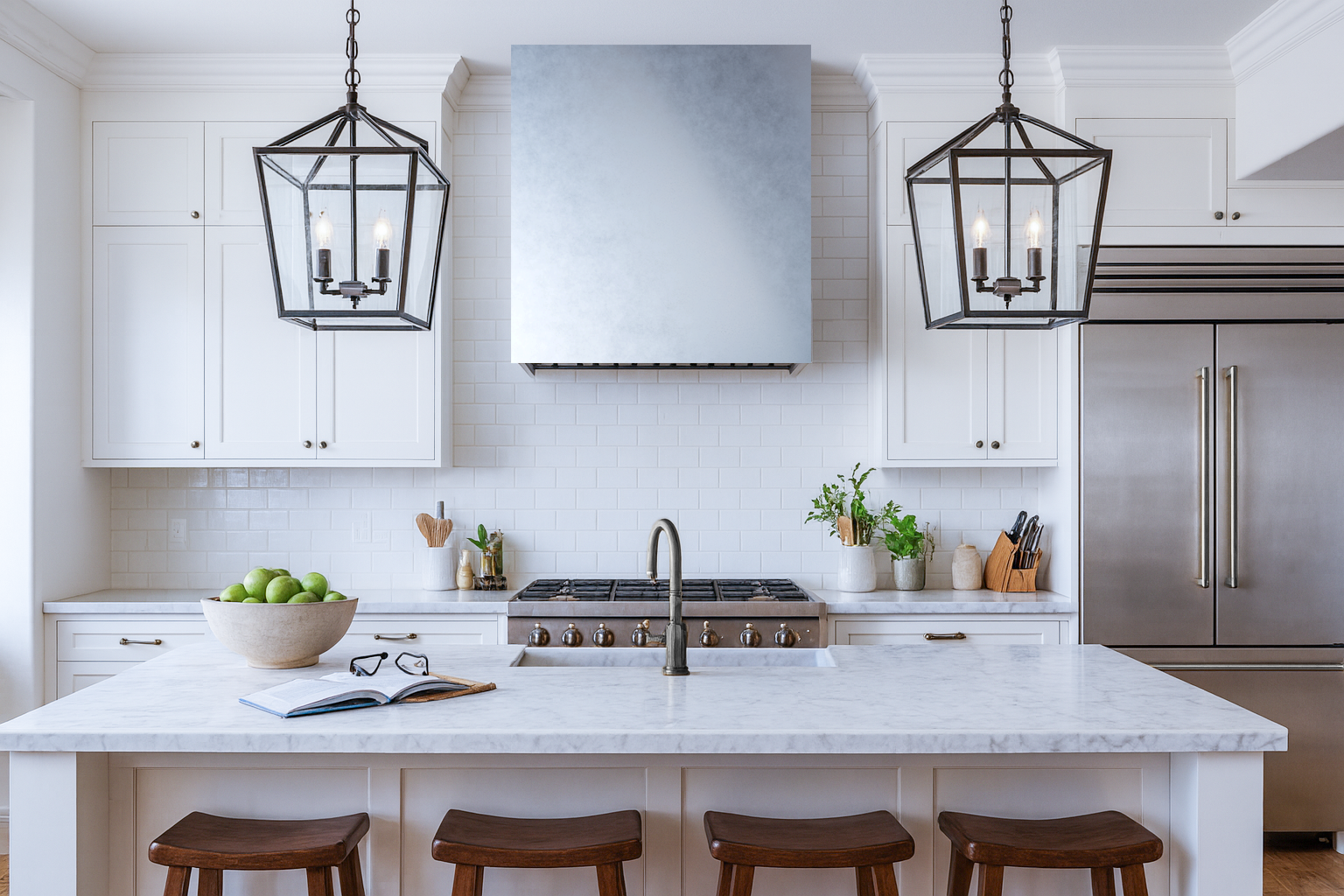
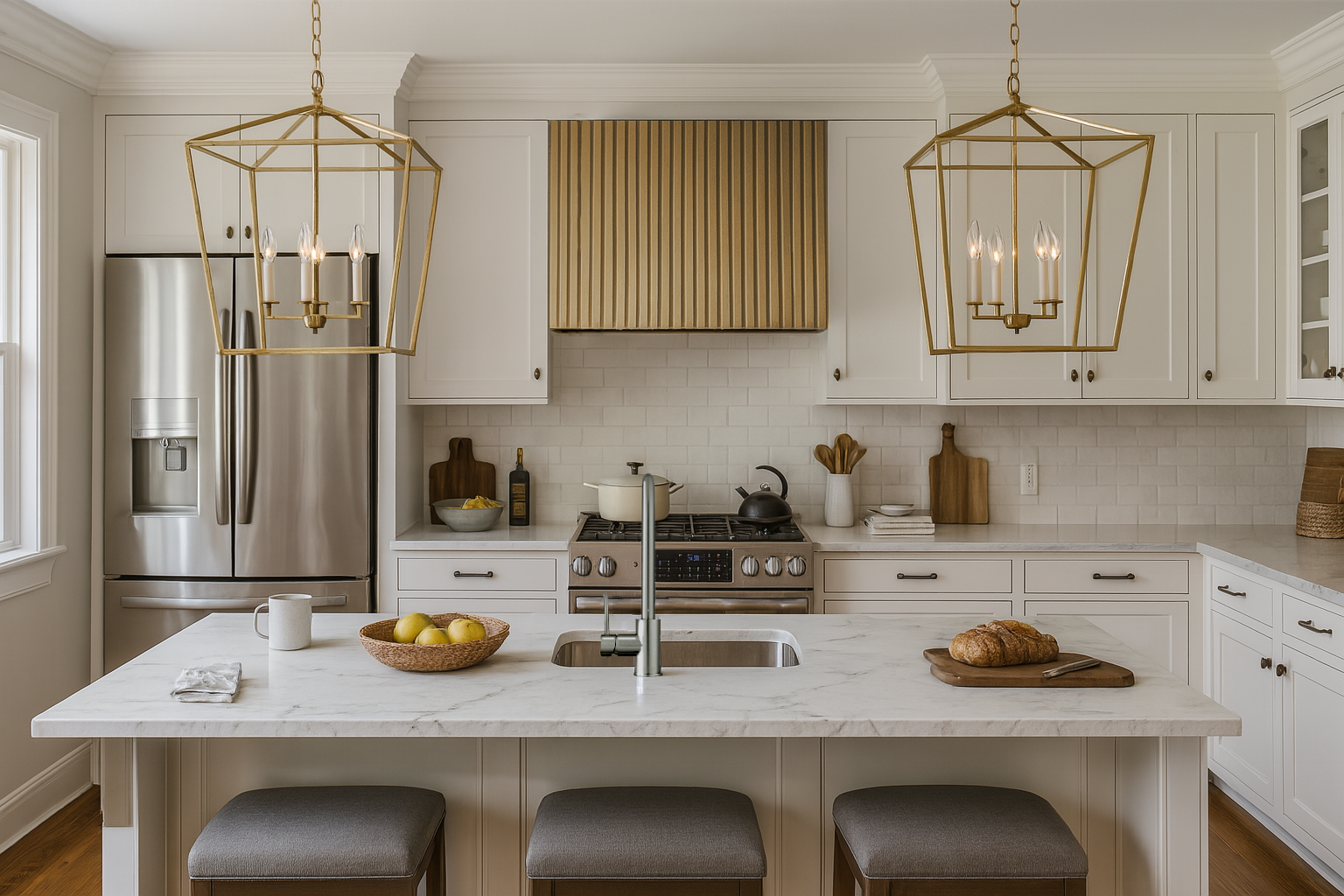
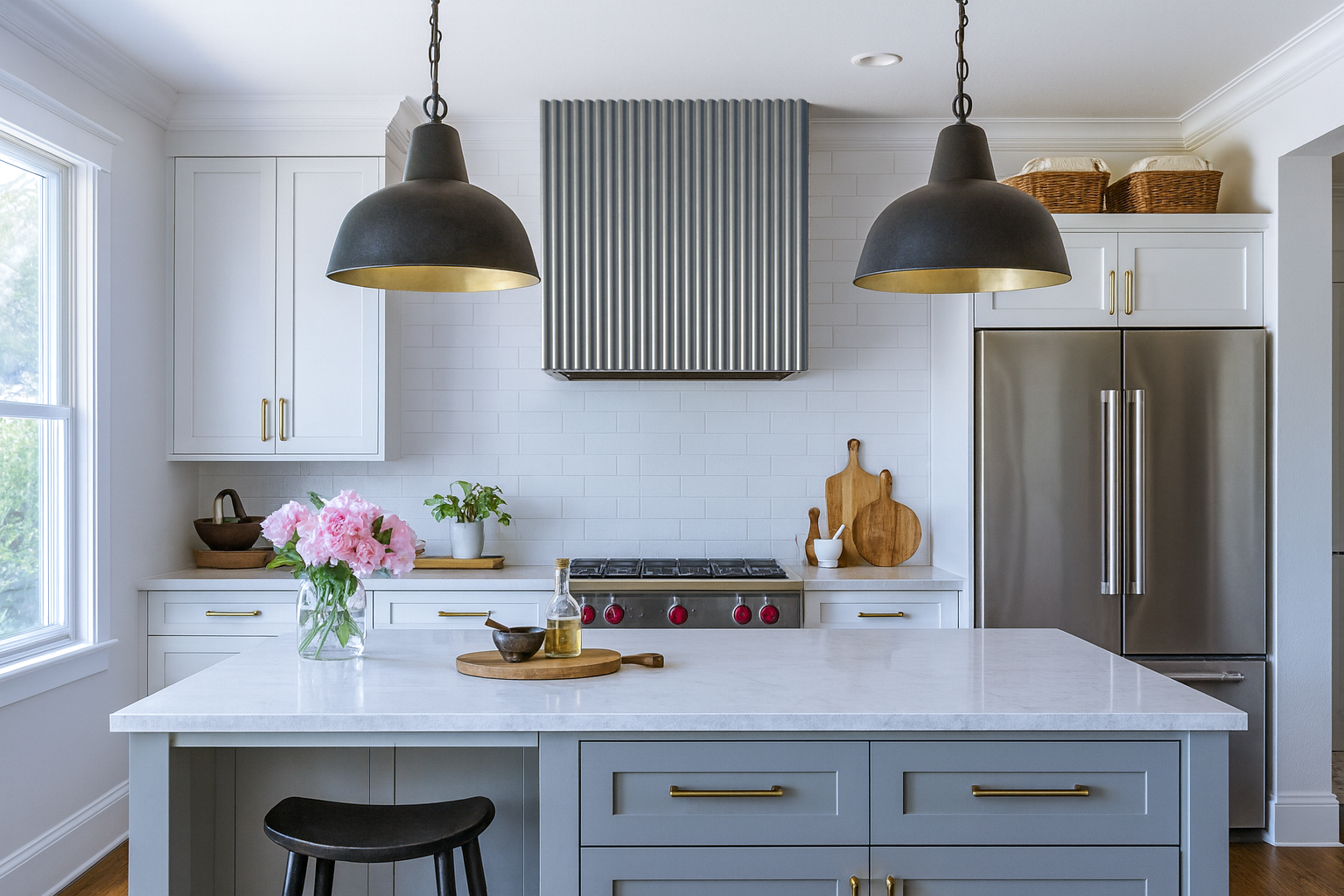
- A custom metal range hood in matching or complementary cast metal. La Bastille fabricates fully custom range hoods in zinc, pewter, brass, bronze, and copper — each built to exacting specifications and equipped with a premium liner for seamless integration.
- Bar tops and prep surfaces in the same or related metal, creating material continuity across functional zones.
- Accent surfaces — a zinc island top paired with brass or pewter details in the same kitchen — where two metals from the same family create sophisticated contrast rather than conflict.
This systems-level thinking is where architectural design firms and interior designers often find the most value in partnering with our team. We can help you map out how the metals relate across the full scope of a project, not just a single piece.
Practical Considerations Before You Finalize Your Specification
Before your design moves to fabrication, a few practical points are worth confirming:
- Lead times. Custom fabrication at La Bastille typically runs 12–14 weeks from approved specifications. Plan accordingly, particularly on hospitality or commercial projects with fixed opening dates.
- Site conditions. Metal countertops require a level, properly supported substrate. Confirm your cabinetry and structural conditions are prepared before installation.
- Care and maintenance. We provide detailed care guidance with every project. Living metals are not fragile — they are designed for use — but clients benefit from understanding how their surface will age and how to care for it intentionally.
- Sourcing. All of our metals are the highest quality available, and every piece is sourced, designed, and fabricated in the USA by our dedicated team.
Frequently Asked Questions
Can I mix two different metals in the same kitchen?
Yes — with intention. Zinc and pewter, or brass and bronze, share enough tonal kinship to coexist beautifully. The key is establishing a clear hierarchy: one primary surface and one accent, rather than equal competition. Our design team helps clients navigate these relationships.
Which metal is most appropriate for a high-use commercial bar top?
Cast zinc and pewter have centuries of bar-service history for good reason. Both develop character under heavy use and are durable under the conditions of a working bar. Bronze is also an excellent choice for clients who want greater initial hardness.
Will my metal countertop show scratches and marks?
Living metals will develop a patina that includes subtle marks of use — this is part of their character and value. For clients who prefer a more controlled or maintained surface, we discuss finish options and care protocols that allow for regular polishing to a higher sheen.
How do I start the process with La Bastille?
The best first step is a design consultation with our team. We respond within one to two business days, and our in-house designers are available to work through material selection, edge profiles, dimensions, and finish specifications with you from the earliest stage of your project.
Do you work with architects and designers on trade projects?
Yes — we partner with designers, architects, and hospitality groups across North America. We also offer the Bastille Collection, a trade-only curated range hood line crafted for high-end builders and designers who require volume with consistent, refined quality.
Designing a custom metal countertop that truly belongs to its space is a process of careful listening — to the architecture, to the materials, and to the people who will live or work there. When metal species, patina, and edge detail are chosen with that kind of attention, the result is not just a surface. It is something heirloom-quality, one-of-a-kind, and entirely native to the space it inhabits. We would be honored to be part of that conversation.