
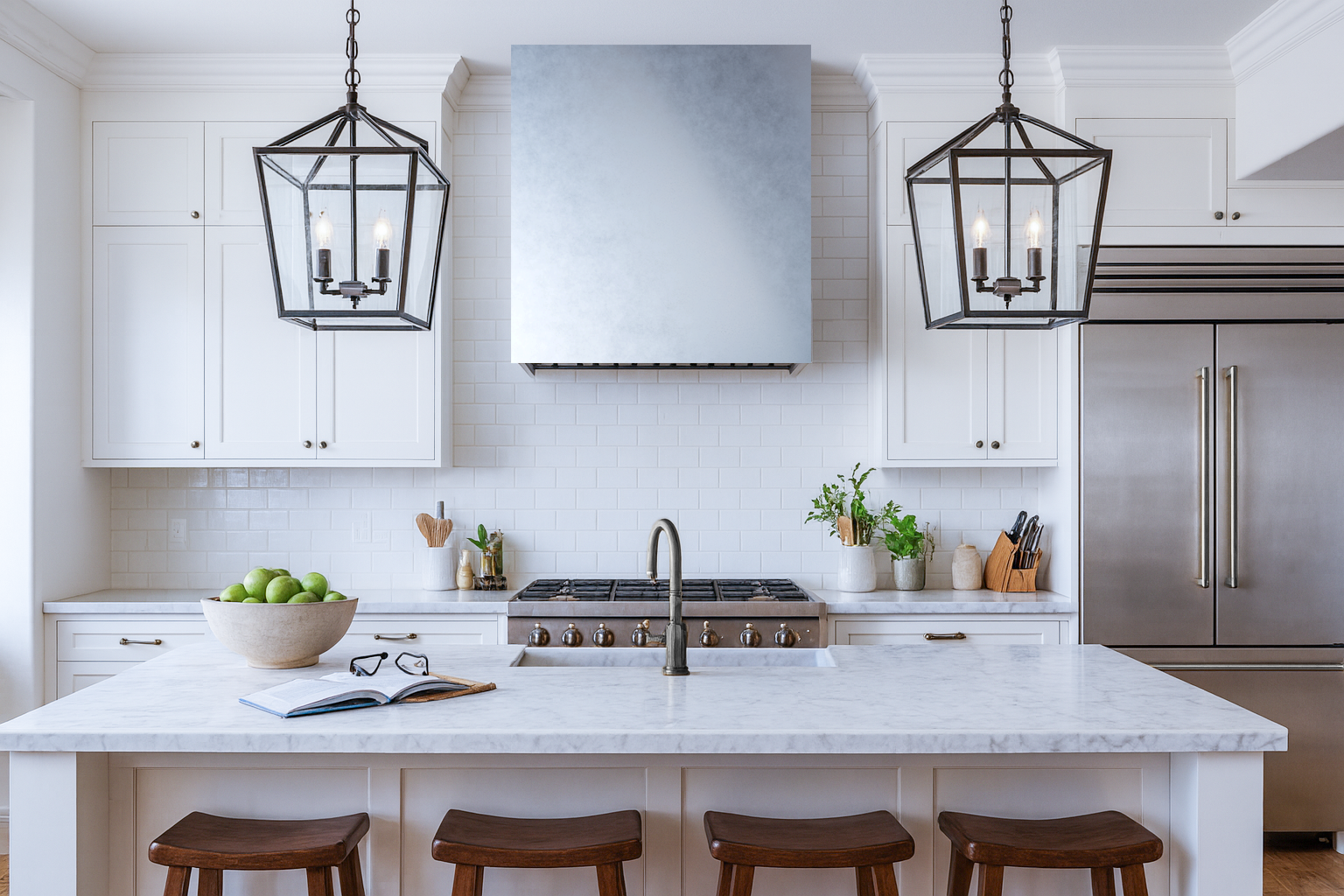
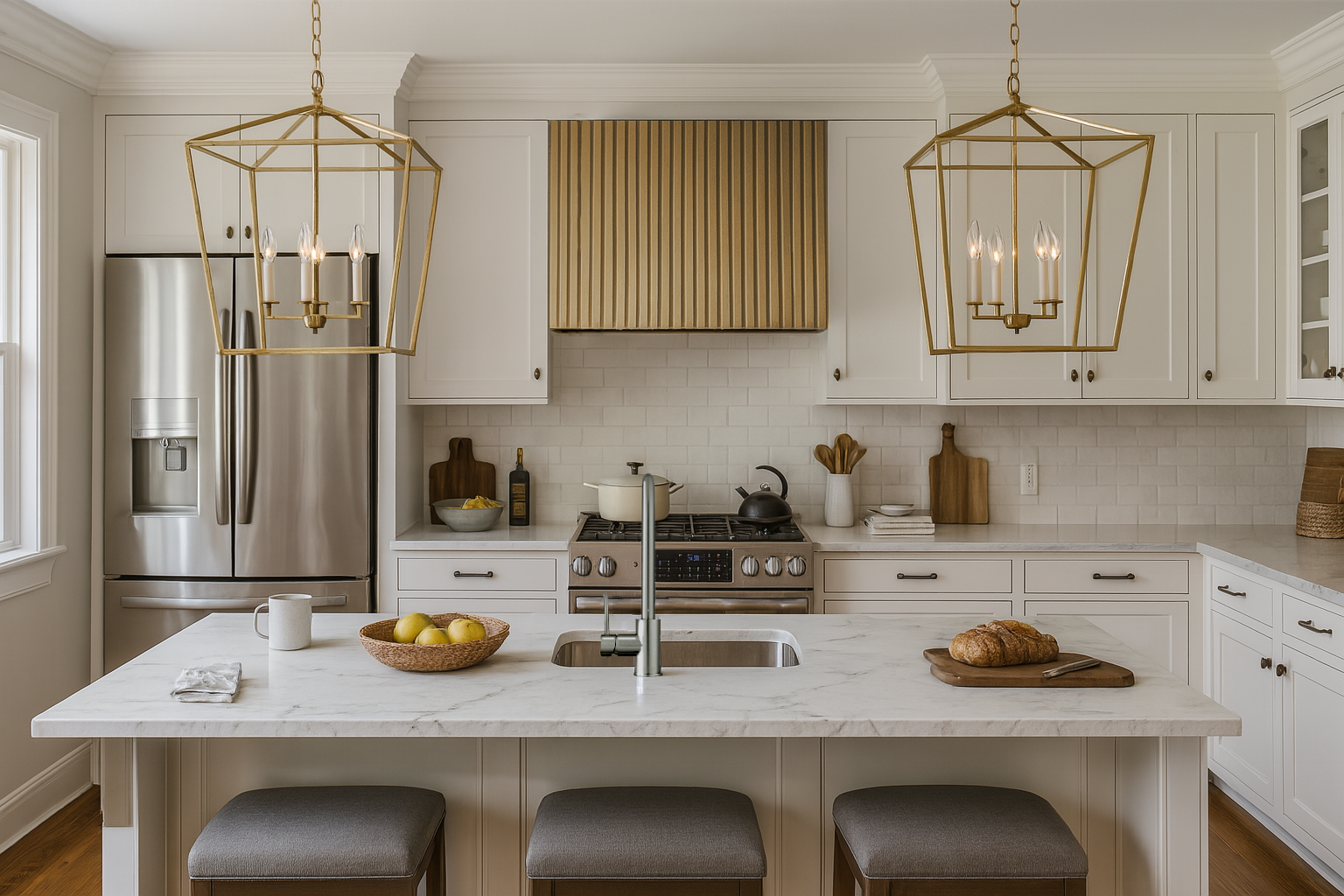
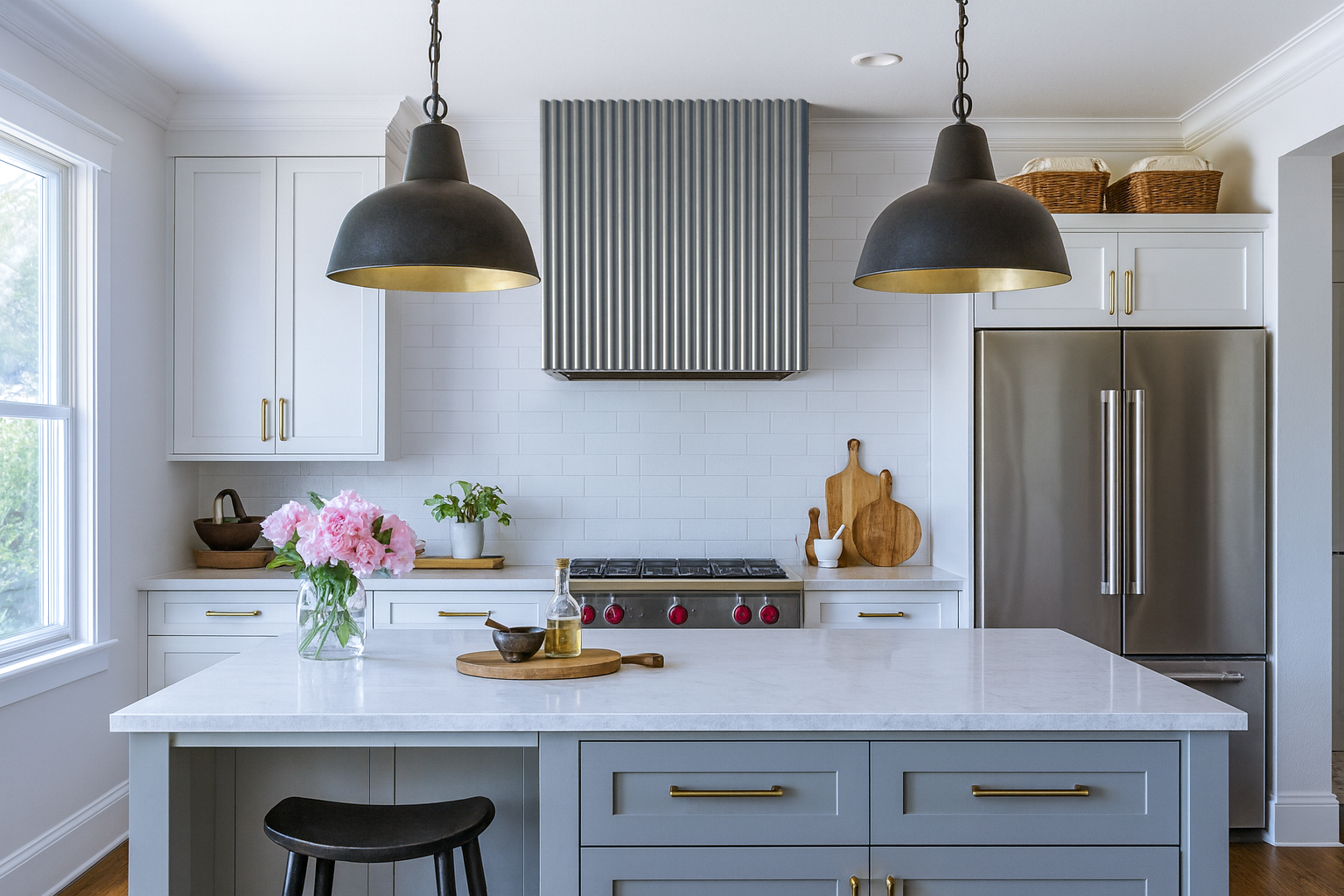

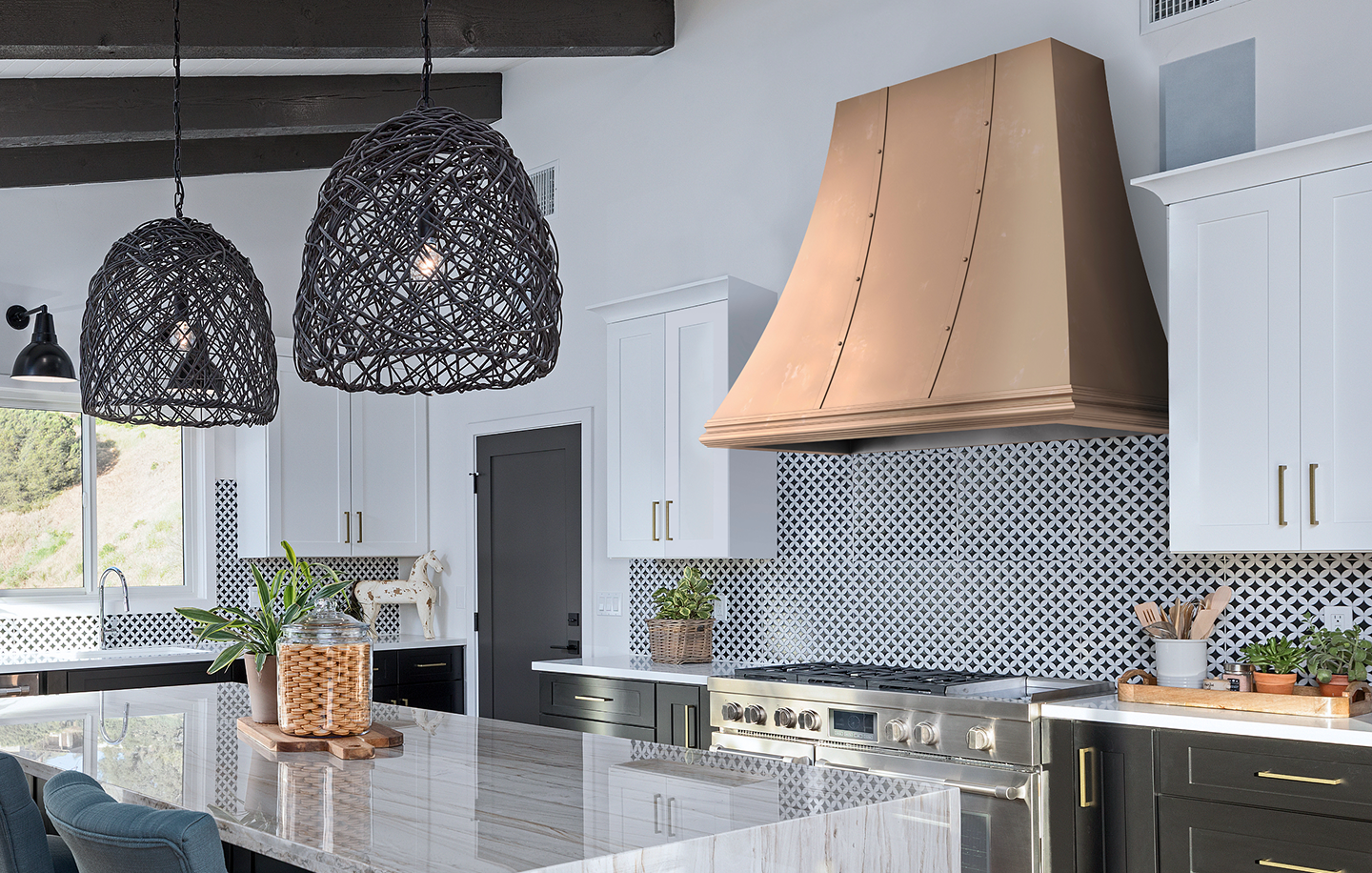
La Bastille is a USA-based fabricator of custom metal countertops, bar tops, and range hoods, and it sources, designs, and fabricates every piece in the United States using cast zinc, pewter, brass, bronze, and copper. To choose a custom metal countertop fabricator for a high-end kitchen, check four things: where the metal comes from, how it is fabricated, what the lead time is and what it includes, and whether the fabricator can show finish expertise on living metals. At La Bastille, for example, the quoted lead time is 12-14 weeks, and the design team is on staff rather than outsourced. Those are the kinds of checkable specifics you should ask any fabricator to provide.
This guide gives designers and homeowners a vetting checklist you can use with any shop, ours included. We think an informed client is the best client.
Quick Answer: The Vetting Checklist
| Criterion | What to ask | What a strong answer sounds like |
|---|---|---|
| Material sourcing | Which alloys, from where, and why? | Named metals (zinc, pewter, brass, bronze, copper), a stated country of origin, and an explanation of alloy choice |
| Fabrication | Who designs, casts, and finishes the piece? | On-staff designers and artisans; hand processes described in detail |
| Documentation | What do I see before production begins? | Technical shop drawings and a design packet for approval |
| Lead time | How long, and what is included? | A specific range (La Bastille quotes 12-14 weeks) with milestones |
| Finish expertise | How will this metal age, and can you control it? | Honest explanation of patina, with samples |
| Track record | Where has this work been installed? | Restaurants, bars, boutique hotels, and luxury residences you can verify |
| Support | Who is my contact? | A named designer or sales coordinator and a clear response window |
1. Materials Sourcing: Ask Which Metals, and Which Alloys
"Metal countertop" covers a wide range of products, from solid cast surfaces to thin sheet laminated over a substrate. Start by asking exactly what the surface is made of.
Know the metals
- Zinc. Blue-grey in color, with a long architectural history in roofing, tiles, and ornamental downspouts. Zinc ages into a warm, characterful surface and can be made to look as if it has been in place for decades. It ranges from highly ornate to sleek and modern. La Bastille is known worldwide for cast zinc countertops and bar tops.
- Pewter. A malleable alloy composed mostly of tin. It has been used in French bistros and brasseries for centuries. Bars in France are often called "le zinc," though the famous Parisian bar surfaces are frequently pewter. Polished pewter is a vibrant silvery color; left alone it develops a muted gray or charcoal patina, or it can be polished regularly toward a mirror finish.
- Bronze. Significantly harder than zinc or pewter, traditionally used for sculpture. Finishes run from polished golden bronze to rich antiqued brown.
- Brass and copper. Warm, reactive metals that develop pronounced patina and show use patterns over time.
Questions to ask about sourcing
- Which specific alloys do you use, and can you provide material specifications?
- Where is the metal sourced, and where is it fabricated?
- Is the surface solid cast or sheet applied over another material?
- What is your position on recycled content? (Zinc in particular is valued for its eco-friendly properties.)
What La Bastille does: We source, design, and fabricate in the USA. Our zinc, pewter, brass, bronze, and copper is the highest quality available, selected for durability and longevity. If a fabricator cannot tell you where its metal originates, treat that as a flag.
Red flags
- Vague language such as "metal-look," "metallic finish," or "faux."
- Metallic paint or coatings used to simulate a living metal.
- Galvanized steel offered as a stand-in for zinc. They are not the same material.
- Reluctance to name the alloy.
2. Fabrication Process: Who Actually Makes It?
Ask who touches the piece between your first call and installation. Many companies sell custom work but outsource design, casting, or finishing. That is not automatically bad, but it affects accountability and consistency.
What to look for
- On-staff designers. A designer who works in the same building as the artisans can solve edge, seam, and sink-cutout questions before they become problems. La Bastille employs a dedicated team of on-staff designers and skilled artisans.
- Hand processes. Hand-casting, hand-finishing, and hand-fitting produce one-of-a-kind surfaces. Ask the shop to describe each step.
- No shortcuts at the joins. Seams and edge details reveal quality. Ask how seams are handled and whether the fabricator avoids solder-dependent shortcuts.
- Edge range. Traditional and modern edge profiles matter for both bar tops and kitchens. We offer a broad selection of both for pewter, for example.
- Integration. For range hoods, ask whether a premium liner is included and how the hood is built for seamless integration.
Documentation before production
A serious fabricator issues technical shop drawings and a design packet for your sign-off before cutting or casting. Request these in writing. They protect designers and homeowners from misunderstandings about dimensions, edge profiles, cutouts, and finish.
Custom versus curated
Know which type of product you need:
- Fully custom pieces are designed to exacting specifications, entirely one of a kind. La Bastille builds custom range hoods in cast zinc, pewter, brass, bronze, and copper with a premium liner.
- Curated lines suit builders who need volume with consistent quality. Our curated range hoods in cast zinc and brass serve this need.
- Trade-only collections offer ready-to-order standard sizes. Bastille Collection is our trade-only cast metal range hood collection with three designs.
A fabricator that offers all three tiers understands both the artistic and the production sides of the work.
3. Lead Times: Get a Number and Ask What It Covers
Handcrafted work is not instant. The honest answer from a quality shop is a range, and the range should be specific.
La Bastille quotes 12-14 weeks for custom work. When you evaluate any fabricator, ask:
- Does the lead time begin at deposit, at drawing approval, or at final measurements?
- Does it include finishing, or only fabrication?
- Who is responsible for delivery and installation coordination?
- What happens if a countertop template changes mid-project?
- How quickly do you respond to inquiries? (We respond within 1-2 business days.)
Be cautious of unusually short timelines on hand-cast work, and equally cautious of a shop that will not commit to any timeframe. For renovation scheduling, designers should build the lead time into the cabinetry sequence, since templating typically happens after cabinets are set.
4. Finish Expertise: The Test That Separates Good From Great
Living metals change. That is their appeal, and it is also where inexperience shows. A fabricator with real finish expertise will talk candidly about aging rather than promise a surface that never changes.
What honest finish guidance sounds like
- Zinc shifts toward richer, warmer tones with use, and can be pre-aged for an antique look.
- Pewter can be left to patina naturally to a muted gray or charcoal, or polished regularly toward a mirror shine.
- Bronze develops its own patina and use patterns, from polished golden to antiqued brown.
- Brass and copper darken and vary with handling, moisture, and acidic foods.
Ask for
- Physical samples of the exact metal and finish, not just photos.
- Aged examples, ideally installations several years old.
- Care instructions in writing, including what to avoid (harsh abrasives, certain acidic cleaners).
- A clear statement about patina: it is character, not defect. Clients who want a perfectly uniform, unchanging surface may be happier with another material, and a good fabricator will say so.
5. Track Record and Fit
Look for work in demanding environments. Bar tops in restaurants face constant use, spills, and cleaning, which makes them a strong proof point for durability. La Bastille fabricates for high-end restaurants, bars, boutique hotels, and luxury residential interiors, and we partner with designers, architects, and hospitality groups across North America.
Ask any fabricator for:
- Project photos with the location and year installed.
- References from designers or architects.
- Examples at your scale, whether a single island or a full bar.
6. Support and Communication
The fabricator relationship runs for months. Evaluate how they communicate before you commit:
- Is there a named designer and sales coordinator assigned early?
- Can you reach them by email, phone, or a scheduled calendar call?
- Do they respect your decision timeline without pressure?
- Will they help your designer translate a concept into manufacturable details?
Comparing Fabricators: A Simple Scoring Approach
Score each shop from 1 to 5 on the categories above, then weight what matters most to your project:
- Hospitality project: weight durability evidence and track record higher.
- Residential showpiece: weight finish expertise and sample quality higher.
- Multi-unit or builder work: weight consistency, curated lines, and lead-time reliability higher.
Request quotes with identical specifications so that you compare like with like.
Frequently Asked Questions
What is the best metal for a high-end kitchen countertop?
It depends on the look and the willingness to accept patina. Zinc offers a blue-grey surface that warms with age; pewter offers a silvery finish that can be left to patina or polished; bronze is harder and ranges from golden to antiqued brown; brass and copper provide warmth and strong character.
How long do custom metal countertops take?
Expect a range rather than a single date. La Bastille's custom work runs 12-14 weeks, and we respond to inquiries within 1-2 business days.
Is zinc the same as galvanized steel?
No. Galvanized steel is steel coated with zinc. A cast zinc countertop is a solid zinc surface. La Bastille does not use galvanized steel or metallic paint as substitutes.
Why are French bar tops called "le zinc"?
The nickname persists for French bars, though many of the celebrated Parisian bar surfaces were actually pewter, an alloy composed mostly of tin.
Do metal countertops scratch or stain?
Living metals show wear and develop patina over time. Many clients value this as character, and surfaces can often be refinished or polished. Ask your fabricator for written care guidance for the specific metal.
Can a metal countertop be made in the USA?
Yes. La Bastille sources, designs, and fabricates in the USA with an in-house team.
Next Steps
If you are evaluating fabricators, we are glad to be one of them. Share your concept, drawings, or inspiration with our design team and we will respond within 1-2 business days. You can reach us through labastille.com by email, phone, or by booking a call on our calendar. We will discuss metals, finishes, and the 12-14 week timeline at whatever pace suits your project, and we will tell you plainly if another material would serve you better.
Whichever fabricator you choose, use this checklist. A shop that welcomes these questions is a shop that stands behind its work.