

The Case for Metal That Shows Its Age
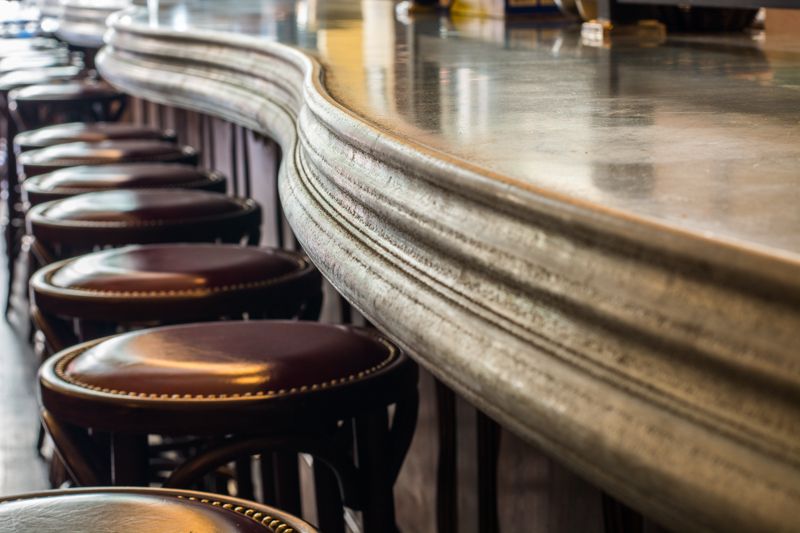
There is a particular moment in the life of a well-designed bar when the surface begins to tell its own story. A zinc bar top catches the light differently than it did on opening night. A brass rail softens from bright gold to something warmer, quieter, more settled. A pewter surface deepens in the corners where hands have rested, glasses have been set down, and years of service have accumulated. These are not signs of failure. They are signs of authenticity — and for those who understand living metals, they are precisely the point.
At La Bastille, we handcraft bar tops, countertops, and range hoods from zinc, pewter, brass, bronze, and copper. These are not coated surfaces or metallic laminates. They are hand-cast, hand-finished metals that interact with their environment over time, developing what artisans and designers call a patina — a transformation of the surface that deepens its character and confirms its quality. This post explores how that process works, why it happens, and why the most discerning hospitality designers and architects not only accept it but actively seek it out.
What Is a Metal Bar Top Patina?
Patina is the natural chemical and physical transformation of a metal surface through exposure to air, moisture, touch, and use. It is not corrosion in the damaging sense. It is oxidation in the artisanal sense — a gradual shift in color, texture, and tone that is entirely surface-level and does not compromise the structural integrity of the metal beneath.
The word itself comes from the Latin for “shallow dish,” referencing the film that forms on bronze sculptures and copper vessels over centuries. Today, designers and architects use it to describe the same process in architectural metalwork. A living metal finish is simply one that continues to evolve after fabrication — that breathes, responds, and matures alongside the space it inhabits.
For high-end hospitality interiors, this quality is not a liability. It is a differentiator. A bar top that looks identical on day one and day one thousand is a surface that has learned nothing. A bar top that has deepened, warmed, and developed subtle variation is one that has been lived in — and that distinction is deeply meaningful to guests and designers alike.
How Each Metal Ages: Zinc, Pewter, Brass, and Bronze
Zinc Patina: From Blue-Grey to Rich and Warm
Zinc is the metal most associated with the classic French bar, and for good reason. It has been used in architectural applications for centuries — in roofing, ornamental downspouts, and the famous Parisian bar surfaces that gave rise to the phrase le zinc. Its natural color is a cool blue-grey, and over time that surface shifts through a remarkable range of tones.
With use, a zinc bar top patina develops into something far warmer and more complex than its starting point. Areas of heavy contact — where forearms rest, where glasses are set down, where bartenders move with practiced routine — develop a soft, polished quality. Edges and corners accumulate a slightly deeper tone. The overall effect is one of age and depth that no factory finish can replicate.
Zinc is also inherently antimicrobial, which makes it especially well-suited to bar environments. It performs beautifully under the demands of commercial service while growing more beautiful in the process.
Pewter Patina: The Silver That Deepens Into Charcoal
Pewter carries one of the longest histories in bar design. French bistros and brasseries have used pewter bar tops for centuries — and many of those original surfaces are still in service today, which speaks both to the material’s durability and to the way its aged metal countertop quality only improves with time.
Polished pewter begins with a vibrant silvery hue that is genuinely striking. Left to develop naturally, it transitions through a muted grey and eventually settles into a luxurious charcoal — deep, sophisticated, and utterly unique. No two pewter bar tops age identically, because no two environments are identical.
La Bastille offers both paths: a pewter surface maintained to a high, mirror-like finish with regular polishing, or one allowed to develop its full living character over time. Both are valid. Both are beautiful. The choice depends entirely on the design intent of the space.
Brass Patina Bar Surfaces: Gold That Earns Its Warmth
Brass has experienced a significant resurgence in high-end hospitality and residential interiors, and much of that appeal is tied directly to how it ages. A freshly finished brass surface is warm and golden. Over months and years, a brass patina bar develops deeper amber tones, and in areas of heavy contact, the metal can take on an almost burnished quality — rich, layered, and irreproducible by mechanical means.
Unlike zinc or pewter, brass can develop slightly varied tones depending on the alloy composition and the specific finish applied during fabrication. This means a La Bastille brass bar top is already a one-of-a-kind surface on the day it is installed — and it becomes more so with every year of service.
Bronze: Sculptural Depth That Only Grows Richer
Bronze is the hardest of the specialty metals we work with at La Bastille, and its patina process reflects that density and weight. Beginning from a polished golden bronze or a rich antiqued brown, bronze surfaces develop complex, layered tones over time — shifting through warm ochres, deep browns, and occasionally green-tinged variations depending on the environment and alloy.
Bronze has traditionally been the material of sculpture and monumental architecture. When it is brought into a bar or restaurant environment, that heritage is palpable. A bronze bar top carries a sense of substance and permanence that few other materials can match — and its aged metal countertop quality only deepens that impression over time.
Why Patina Is a Design Quality, Not a Defect
The hospitality design world has, in recent years, moved decisively toward materials with honesty and history. Reclaimed wood, hand-troweled plaster, unlacquered brass fixtures — these are not accidental choices. They reflect a fundamental shift in what luxury means to contemporary clients and guests.
Luxury is no longer synonymous with perfection. It is increasingly associated with authenticity, craftsmanship, and materials that reveal their origins. A living metal finish participates in that conversation naturally and eloquently.
Consider the alternative: a coated or lacquered surface that resists change. Over time, coatings chip, peel, and scratch in ways that reveal their artificiality. A living metal, by contrast, does not chip or peel — it transforms. The wear patterns are not damage; they are documentation. They record the life of the space in a way that no applied finish ever could.
For restaurant designers and hospitality architects, this distinction matters enormously. A bar top that improves with age becomes a story the establishment can tell. It becomes part of the identity of the space. Guests notice it. They touch it. They respond to it in ways they cannot always articulate, but that invariably shape their experience.
Working With Patina: Design Guidance for Hospitality Interiors
Choosing the Right Metal for Your Intent
Different metals offer different patina trajectories, and the right choice depends on the aesthetic direction of the space:
- Zinc suits interiors that draw on French bistro heritage, industrial modern, or Scandinavian simplicity. Its blue-grey tones and warm aging process pair naturally with raw stone, aged wood, and matte plaster.
- Pewter works beautifully in spaces that want a more formal, European sensibility. Its silvery depth reads as both classic and contemporary.
- Brass is the choice for warmth and hospitality — golden tones that deepen over time, suited to cocktail bars, hotel lobbies, and residential spaces that want richness without heaviness.
- Bronze belongs in spaces of genuine gravitas — fine dining rooms, heritage properties, boutique hotels where permanence and quality are part of the narrative.
Setting Client and Guest Expectations
One of the most valuable things a designer can do when specifying a living metal surface is to educate clients and operators early. The transformation of a zinc or brass patina bar is not a warranty issue. It is the expected and intended behavior of the material.
We provide our partners with guidance on this from the very beginning of the project. When a hospitality group understands that the surface they are investing in will grow more beautiful over time — rather than remaining static — they approach the aging process as a return on investment rather than a cause for concern.
Maintenance and Care
Living metals are lower-maintenance than many people expect, but they do benefit from thoughtful care:
- Zinc and pewter bar tops can be wiped clean with warm water and a soft cloth. Avoid harsh abrasives that would create uneven wear.
- Brass and bronze surfaces benefit from occasional application of a quality wax to even out the patina and protect against excessive oxidation in high-humidity environments.
- If a more polished appearance is preferred at any stage, most living metals can be buffed and re-finished by a skilled artisan — though many of our clients find that once they have lived with the natural patina, they would not return to the original finish.
FAQ: Metal Bar Top Patina
Will the patina develop unevenly?
Yes — and that is part of what makes it beautiful. Areas of heavier use will develop more quickly, creating subtle gradients and variation that reflect the actual life of the space. This is characteristic of all living metal finishes and is considered a mark of authenticity.
Can I slow down or stop the patina process?
A clear protective coating or regular polishing can slow patina development, but most designers and operators who choose living metals ultimately prefer to let the natural process unfold. It is possible to maintain a pewter or brass surface to a high polish, though this requires consistent upkeep.
How long does it take for patina to develop?
This varies by metal and environment. In a busy bar setting, noticeable patina development on zinc can begin within the first several months. Brass tends to develop more gradually. Bronze is the slowest of the living metals to transform.
Does patina compromise the durability of the metal?
Not at all. The patina is a surface-level transformation that does not affect the structural integrity of the metal. La Bastille works with the highest-quality alloys available, ensuring durability and longevity throughout the full life of the surface.
Is a patinated bar top appropriate for fine dining and luxury environments?
Absolutely. Some of the world’s most celebrated bars and restaurants feature patinated zinc, pewter, and brass bar tops. The aged quality signals craftsmanship, history, and investment — qualities that sophisticated guests recognize immediately.
A Surface That Earns Its Place
The finest things in a well-designed space are not the ones that refuse to age. They are the ones that age honestly — that carry their years with grace and communicate, through their surface, the quality of what they are made from and the care with which they were made.
A handcrafted zinc, pewter, brass, or bronze bar top from La Bastille is not a surface that simply covers a bar. It is a surface that participates in the life of the establishment — that deepens, warms, and becomes more itself over time.
If you are working on a hospitality project and considering living metal surfaces, we would welcome the conversation. Our in-house designers and artisans are ready to help you explore the right metal, the right finish, and the right approach for your space. Reach out through labastille.com and expect to hear from us within one to two business days.
The patina begins on day one. Everything after that is the story of the space you have built.