

The Living Metals Defining Luxury Residential Countertops Right Now
The most compelling shift in luxury residential interiors is not happening in stone or engineered composite—it is happening in metal. Specifically, in cast zinc, brass, pewter, bronze, and copper surfaces that bring warmth, patina, and singular character to the kitchen, bar, and beyond. As designers and architects push past the predictable, custom metal countertop design trends are accelerating in ways that reward both aesthetic ambition and long-term thinking. At La Bastille, we work at the center of this movement every day, partnering with designers, architects, and discerning homeowners across North America to bring these surfaces to life. What follows is our read on exactly where luxury residential metal countertops are heading—down to the materials, finishes, and edge profiles driving the most meaningful demand.
Why Luxury Residential Design Is Turning to Living Metals
Stone has long dominated the high-end kitchen conversation, but a growing contingent of designers and their clients are seeking something more expressive—something that evolves. Living metals do exactly that. Unlike static surfaces, cast zinc, pewter, brass, bronze, and copper develop patina with use and time, accumulating a character that manufactured materials simply cannot replicate.
This is not a fleeting trend. It reflects a broader shift in luxury residential values: heirloom-quality over trend-chasing, craftsmanship over commodity, and surfaces that tell a story rather than simply fill a space. The clients requesting these countertops are not looking for the same kitchen their neighbor has. They are looking for something singular—a surface handcrafted to their specifications that will look more beautiful decades from now than it does on installation day.
That is the promise of living metal, and it is why demand continues to climb.
Custom Metal Countertop Design Trends by Material
Zinc: The Versatile Standard-Bearer
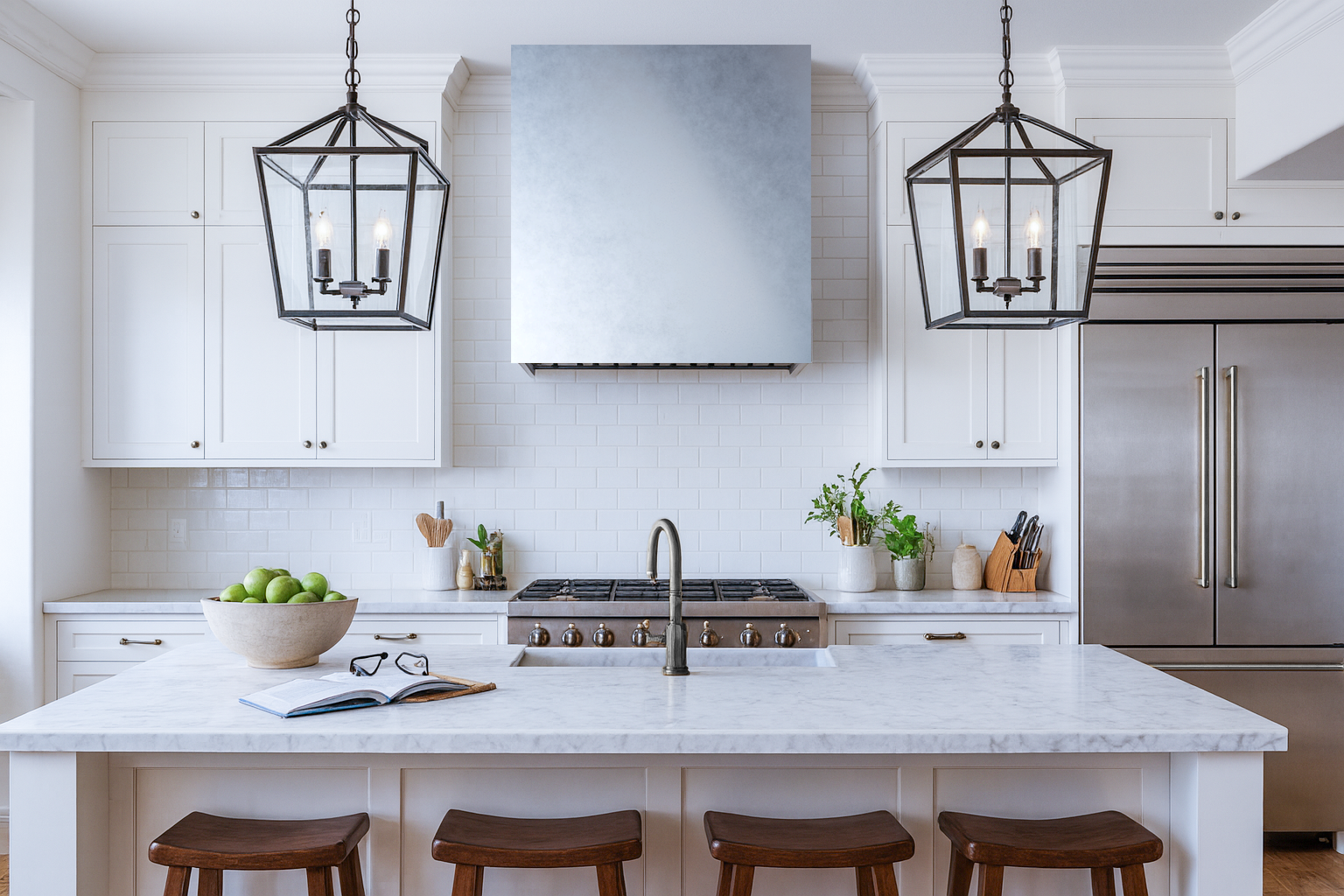
Cast zinc remains the most requested material in our studio, and for good reason. Its blue-grey hue reads as sophisticated and restrained, equally at home in a sleek contemporary kitchen as in a richly layered French-inspired interior. Zinc has a centuries-long history in architectural applications—rooftops, tiles, ornamental details—and that legacy gives it a design credibility that newer materials lack.
What we are seeing in zinc countertop trends right now:
- Aged finishes requested from day one. Clients increasingly want their zinc countertops to arrive already carrying the warmth of a surface that has been in place for generations. We can hand-finish zinc to mimic decades of natural patina, giving a newly built kitchen the quiet authority of an antique.
- Integration with unlacquered brass hardware. The pairing of matte zinc with unlacquered brass pulls and fixtures is one of the most refined combinations in luxury kitchen design. The metals age in dialogue with each other, deepening in character over time.
- Zinc bar tops in home entertaining spaces. The home bar has become a serious design focal point in luxury residential projects, and cast zinc is the top choice for homeowners who want a surface that performs beautifully under real use while looking entirely intentional.
Zinc is also one of the most eco-friendly specialty metals available, which resonates with clients who want sustainability embedded in their material selections without compromising beauty or longevity.
Brass: The Statement Surface for the Discerning Kitchen
Brass countertop design has moved decisively into luxury residential spaces, and the current iteration is far more nuanced than the polished brass of earlier decades. Today's brass countertops are hand-finished to specific tones and textures that reward close inspection—surfaces that glow warmly rather than shout.
Current brass countertop design directions:
- Satin and brushed finishes over high polish. Clients are gravitating toward finishes that diffuse light rather than reflect it sharply. Satin-finished brass has a depth and richness that feels genuinely luxurious without reading as flashy.
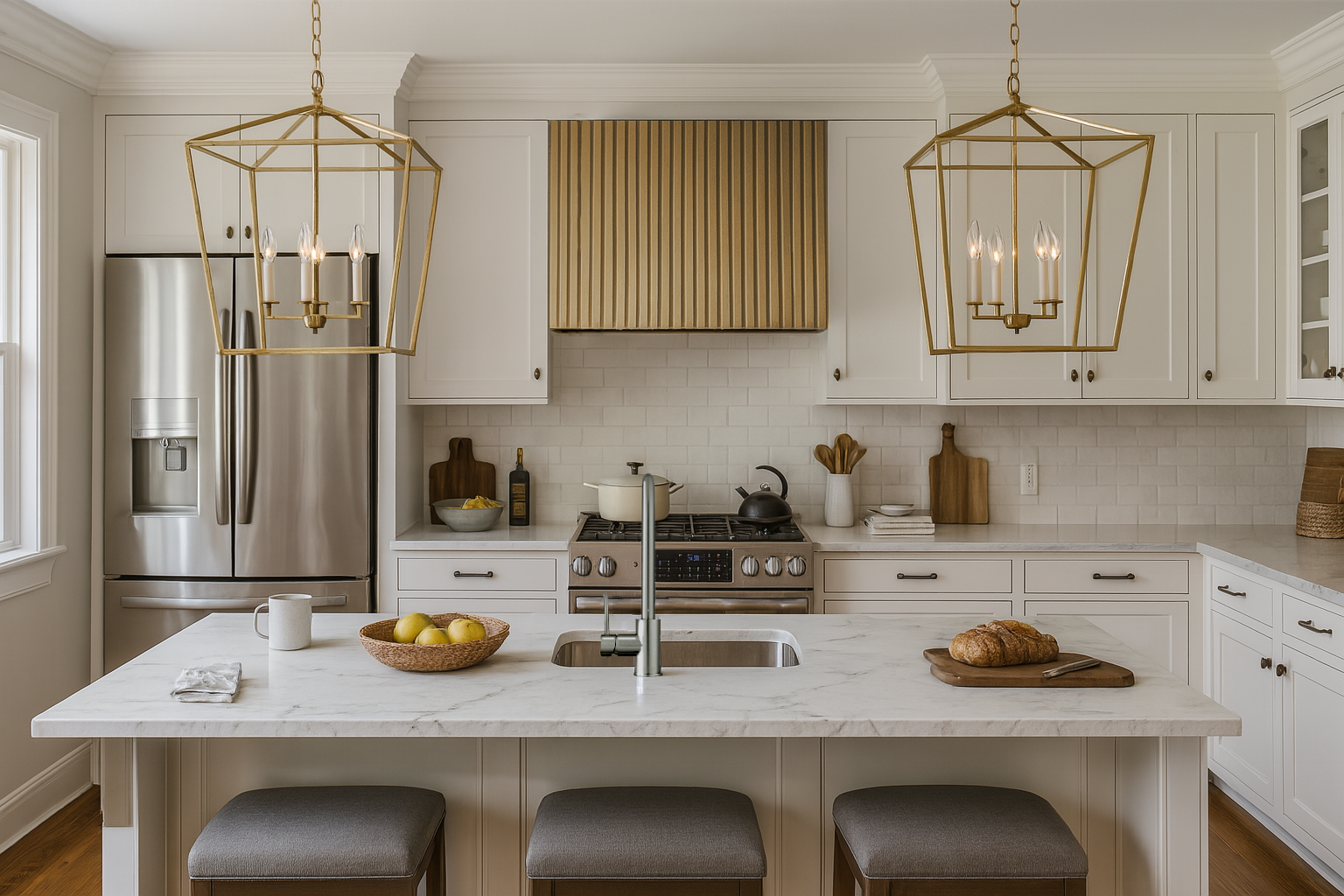
- Brass in kitchen islands as a singular statement. Rather than cladding an entire kitchen in brass, designers are deploying it strategically—most often on an island countertop—where it anchors the room and functions as a piece of functional sculpture.
- Patina-forward specifications. Unlacquered and hand-antiqued brass finishes are consistently requested over lacquered options. Clients understand that a living finish means the surface will continue to develop in beauty, and they embrace that rather than resist it.
Brass pairs exceptionally well with dark cabinetry, natural stone flooring, and plaster walls—all materials gaining momentum in luxury residential design simultaneously.
Pewter: The Parisian Reference Point
Pewter carries one of the richest design histories of any material we work with. The bars and brasseries of Paris have featured pewter surfaces for centuries—so ingrained in French culture that bars are colloquially called le zinc, even when the surface is actually pewter. That heritage is precisely what makes pewter countertops resonate with a design-literate clientele.
Pewter is a malleable alloy composed primarily of tin, and its appearance occupies a beautiful middle ground: more luminous than zinc, warmer than stainless steel, and more refined than raw copper. Polished pewter carries a vibrant silvery hue that, left to patina naturally, deepens into a luxurious muted gray or charcoal finish over time.
Where pewter countertop demand is growing:
- Butler's pantries and wet bars. The intimate scale of these spaces suits pewter's quiet sophistication perfectly. A hand-cast pewter bar top in a butler's pantry reads as genuinely curated and specific.
- Dual-finish specifications. Some clients request pewter countertops maintained to a polished finish in high-visibility areas, allowing the patina to develop naturally in more active zones. The contrast is striking and deeply personal.
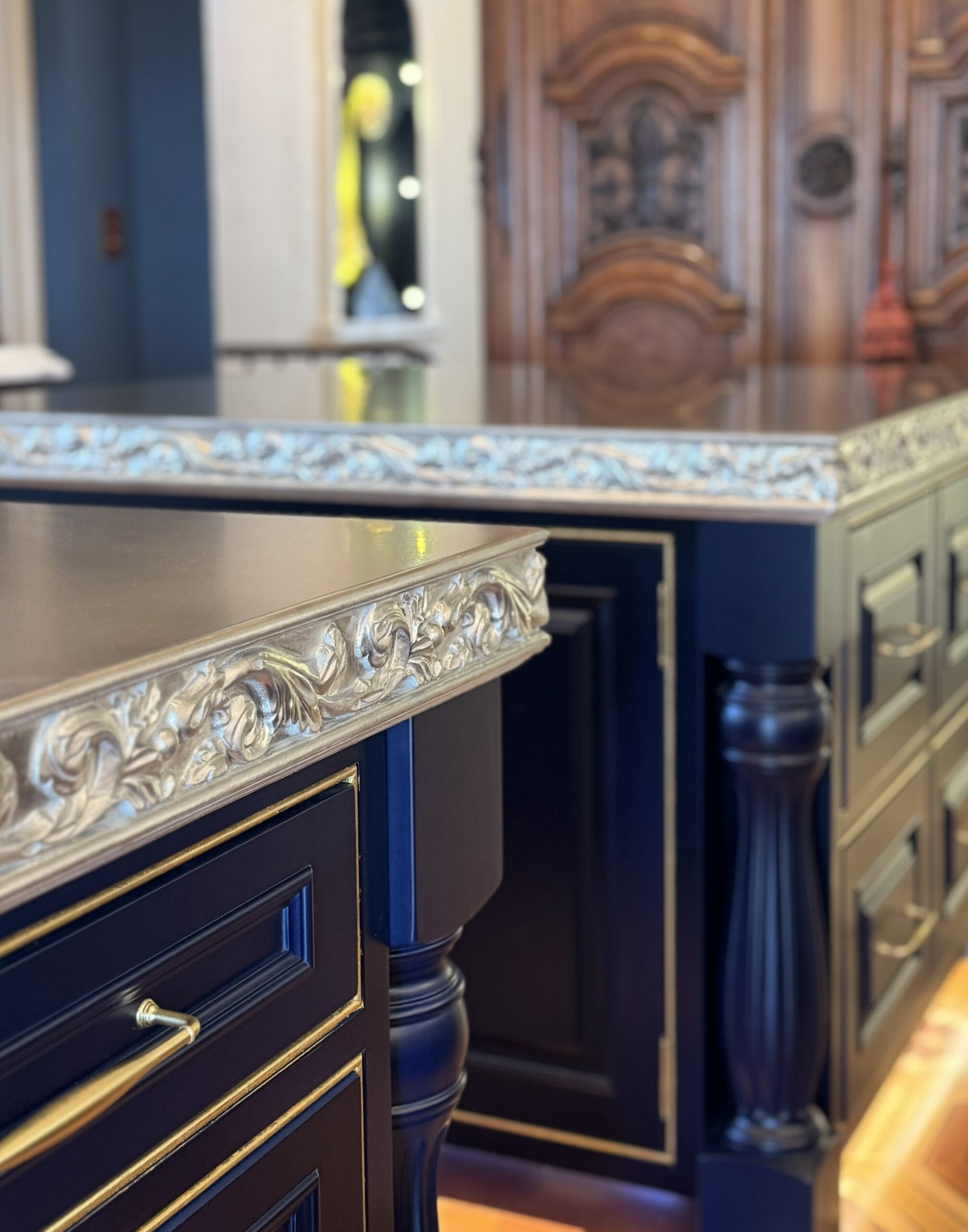
- Traditional edge profiles on contemporary forms. Pewter's long history makes it a natural candidate for pairing ornate, classically derived edge profiles with otherwise clean-lined cabinetry—bridging old-world craft and modern restraint.
Bronze: Sculptural Weight for the Most Ambitious Projects
Bronze occupies a distinct position in our material portfolio. As a significantly harder alloy than zinc or pewter, it carries a sculptural presence that suits the most architecturally ambitious residential projects. Traditionally used for monuments and fine art casting, bronze is now appearing in residential countertops and surfaces for clients who want something genuinely extraordinary.
Bronze offers an exceptional range of finish possibilities—from a polished golden bronze that glows with warmth to a rich, deeply antiqued brown that reads almost architectural in its gravity. As with all living metals, bronze develops its own use patterns and patina over time, each one unique to the household and the hands that use it.
Bronze design directions worth noting:
- Kitchen countertops in architecturally significant homes. When the architecture itself is a statement, the interior surfaces need to hold their own. Bronze does.
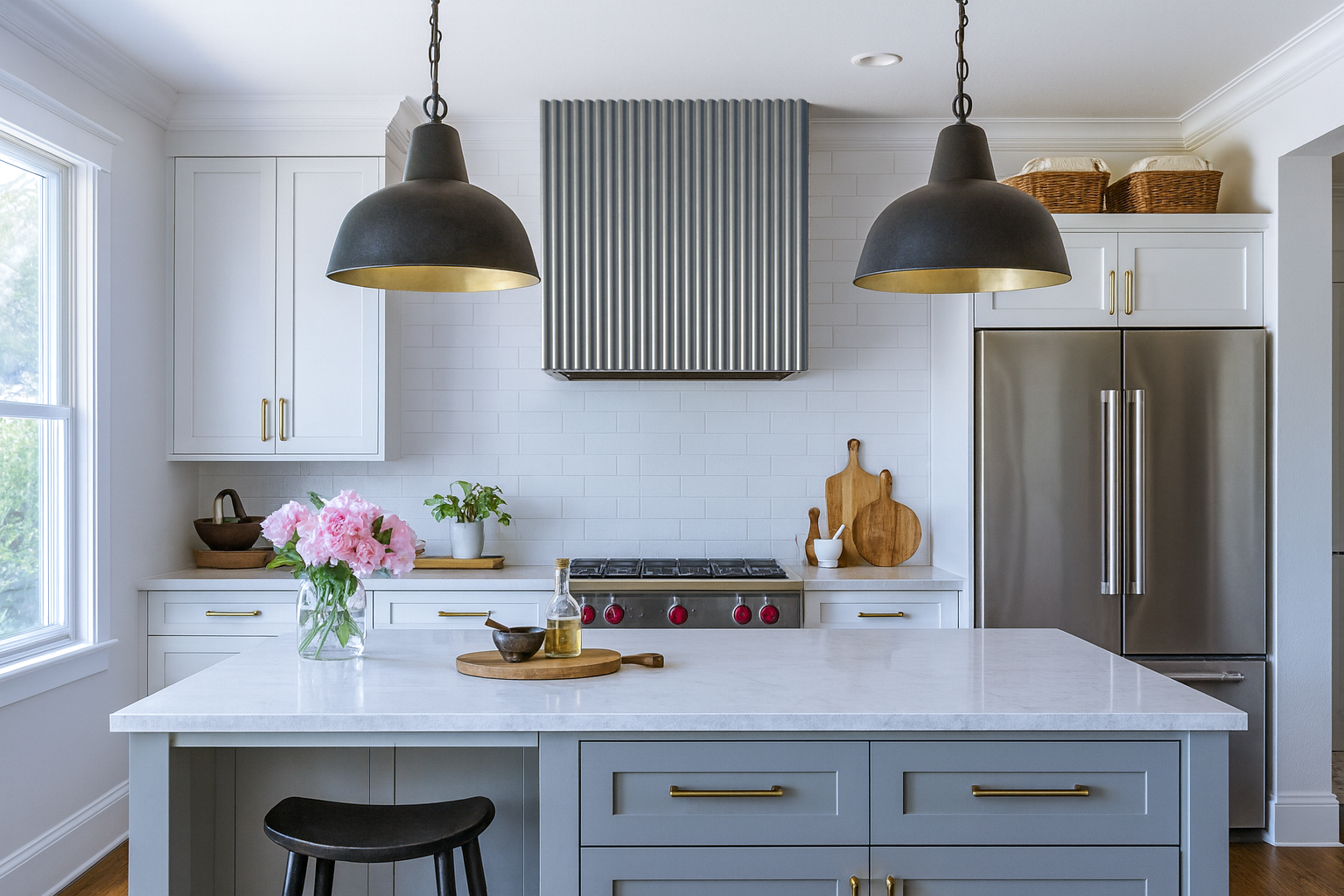
- Range hood and countertop pairings in matched alloys. Cohesion across surfaces—a bronze countertop paired with a hand-cast bronze range hood—creates an interior language that feels fully considered and deeply intentional.
Edge Profiles: The Detail That Defines the Surface
Edge profiles are among the most consequential design decisions in a custom metal countertop specification, and they are among the most frequently underestimated. The profile selected communicates the countertop's relationship to its surrounding architecture—whether it defers gracefully or asserts itself.
Edge profiles driving demand in luxury residential metal countertops:
- Ogee and double-ogee profiles remain the first choice for traditional and transitional interiors, particularly in zinc and pewter, where the profile's shadow line adds depth and tactile richness.
- Waterfall edges with a metal face are increasingly requested for kitchen islands, extending the countertop material down the side panel to create a continuous, sculptural form.
- Beveled and eased edges suit contemporary specifications where restraint is the point—a clean reveal that lets the material's texture and finish carry the visual weight.
- Bullnose profiles in brass and bronze are returning, particularly in bar top applications where the rounded edge both protects the material at its most vulnerable point and references classic bar design with authority.
La Bastille offers an expanded selection of both traditional and modern edge profiles across all our cast metals. Our in-house designers work directly with clients and their design teams to identify the profile that serves both the aesthetic vision and the functional use of the space.
Finishes Leading the Luxury Market
Beyond material selection, the finish specification is where a custom metal countertop moves from beautiful to genuinely extraordinary. Several finish directions are shaping luxury kitchen surfaces right now.
Finish trends we are seeing across projects:
- Patinated-from-the-start. As noted with zinc, clients increasingly do not want to wait years for their surface to develop character. Hand-applied patina finishes that replicate decades of natural aging are consistently requested across zinc, pewter, and bronze.
- Matte and satin over polished in most applications, with the exception of pewter in formal spaces where a mirror-like finish is maintained intentionally.
- Textured hand-finishing. Subtle surface texture—achieved through hand-finishing techniques rather than mechanical processes—adds a tactile quality that distinguishes handcrafted metalwork from anything mass-produced.
- Consistent patina maintenance guidance. Clients want to understand their surface's living nature before installation. We provide detailed care guidance so that owners feel confident managing and appreciating their surface's evolution over time.
Collaborating with La Bastille on Your Custom Metal Countertop
Every project we take on begins with a conversation. Our in-house designers and sales coordinators work directly with architects, interior designers, and homeowners from the earliest concept stage through installation, providing design packets and technical shop drawings that give design teams everything they need to specify with confidence.
All our metals—zinc, pewter, brass, bronze, and copper—are the highest quality available. Every surface is sourced, designed, and fabricated in the USA by our dedicated team of on-staff designers and skilled artisans. There are no shortcuts in our process, and no two pieces are identical.
Lead times typically run 12–14 weeks from approved specifications, and we provide realistic, reliable timelines from the outset so that project schedules can be planned accordingly.
Frequently Asked Questions
What is the most popular metal for luxury residential countertops right now?
Cast zinc remains our most requested material for both countertops and bar tops in luxury residential interiors. Brass is the fastest-growing category, particularly for kitchen island specifications and home bar applications.
Do custom metal countertops require special maintenance?
Living metals like zinc, pewter, and brass develop natural patina with use—this is a feature of the material, not a flaw. Pewter can be maintained to a polished finish with regular attention or allowed to deepen into a muted charcoal patina naturally. We provide detailed care guidance with every project so that clients understand and appreciate their surface's character from day one.
How long does it take to fabricate a custom metal countertop?
Our typical lead time from approved specifications is 12–14 weeks. We provide a clear timeline at project outset and keep design teams informed throughout the fabrication process.
Can metal countertops be used in kitchens with heavy daily use?
Absolutely. Cast zinc and brass countertops are designed for performance as well as beauty. Bronze, being a harder alloy, is particularly well-suited to demanding environments. All our surfaces are built to serve for generations—heirloom-quality in the truest sense.
Does La Bastille work directly with interior designers and architects?
Yes, and this collaboration is central to how we work. We partner with designers and architects across North America, providing in-house design support, technical shop drawings, and reliable communication throughout every project. We also offer the Bastille Collection, a trade-only curated range hood line for design professionals requiring consistent, high-end quality at volume.
The luxury residential market is moving toward surfaces that carry meaning, age with grace, and reward the people who live with them daily. Cast zinc, brass, pewter, and bronze countertops are not simply beautiful—they are investments in material culture, in craft, and in spaces that will remain relevant and extraordinary for decades to come.
If you are developing a project that calls for this level of intention, we would welcome the conversation. Reach out to our team at La Bastille to begin exploring what is possible.