

The Living Metal Renaissance: Custom Metal Countertop Trends Defining Luxury Homes in 2025
Five years ago, a zinc countertop was a conversation piece. In 2025, it is a design statement — one that architects, interior designers, and discerning homeowners are making with increasing intention and sophistication. Custom metal countertops have moved well beyond novelty status in luxury residential interiors, and the trends driving demand this year reflect something deeper than aesthetic preference: a collective appetite for surfaces that carry meaning, age beautifully, and cannot be replicated by a machine or a factory line.
Here is an authoritative look at the custom metal countertop design trends shaping high-end homes right now — from patina finishes and living metals to architectural edge profiles and the enduring appeal of cast zinc and brass.
What Is Driving the Custom Metal Countertop Surge in 2025?
The short answer: reaction and intention.
Luxury residential clients have spent years surrounded by engineered stone surfaces — quartz composites and porcelain slabs that are technically impressive but emotionally inert. They look the same on day one as they do on day one thousand. For homeowners investing in heirloom-quality spaces, that permanence of appearance is a liability, not a feature.
Living metals — zinc, pewter, brass, bronze, and copper — offer the opposite proposition. They change. They respond to use, humidity, touch, and time. They develop patina that is entirely their own, shaped by the rhythms of a specific household. That individuality is exactly what the luxury residential market is prioritizing in 2025.
At the same time, architects and designers are specifying metal surfaces with far greater technical precision than in previous years. The conversation has matured. Clients are not simply asking for “a brass countertop.” They are asking about alloy compositions, finish stages, edge profiles, integration with cabinetry reveal, and how a surface will age over a ten-year horizon.
Trend 1: Patina Finishes as the Primary Design Goal
If there is one dominant shift in 2025, it is this: patina is no longer a byproduct to be managed. It is the design goal itself.
Historically, some clients requested metal countertops and then asked how to slow or prevent the aging process. That conversation is largely over in the luxury segment. Today’s clients — often working with designers and architects who understand living metals deeply — are specifying accelerated or hand-applied patina finishes from the outset.
This means surfaces arrive already wearing a layer of earned character. A zinc countertop finished with a rich, muted grey patina reads as though it has lived in a French farmhouse kitchen for two generations. A pewter bar top with a hand-darkened finish carries the visual weight of a Parisian brasserie, where the famous zinc bars (historically pewter, in fact) have absorbed decades of candlelight and conversation.
At La Bastille, our artisans hand-finish each piece through a deliberate process that develops the patina while preserving the integrity of the alloy. No shortcuts, no artificial coatings meant to simulate what only time and craft can produce. The result is a surface that begins its life already rich with character — and continues to deepen from there.
Key Patina Styles in Demand Right Now
- Muted grey and charcoal on zinc — the classic architectural finish, referencing European roofing traditions and Scandinavian modernism simultaneously
- Warm antiqued pewter — polished to varying degrees, from a vibrant silvery sheen to a soft, candlelit warmth; some clients maintain a near-mirror finish with regular polishing, others allow natural darkening
- Antiqued bronze in rich brown tones — sculptural, deep, and visually arresting; increasingly specified for kitchen islands and butler’s pantry surfaces
- Darkened brass with selective highlights — aged but sophisticated, referencing both Victorian cabinetry hardware and contemporary jewelry design
Trend 2: Living Metals as a Signature Material Category
The phrase “living metal” has entered the design vocabulary with genuine authority in 2025. It describes metals that evolve — that respond to their environment rather than resist it. Zinc, pewter, brass, bronze, and copper all qualify.
What makes this category particularly compelling for luxury residential interiors is the relationship between permanence and change. These are not fragile surfaces. Cast zinc is extraordinarily durable. Pewter, with its high tin content, is remarkably resilient and low maintenance. Bronze is harder still, with a history that includes some of the most enduring sculptures in human civilization. These materials are built to last for generations — and while they last, they transform.
That combination of durability and organic evolution is increasingly rare in the built environment. It is also, frankly, irreplaceable by manufactured alternatives.
Zinc Countertops: The Defining Material of the Moment
Cast zinc remains the signature offering in the living metals category, and its popularity in 2025 continues to accelerate for good reason. Zinc is inherently versatile — equally at home in a sleek, contemporary kitchen with minimal detailing and in an ornately appointed traditional estate. Its blue-grey tone is distinctive without being demanding. It works with warm wood tones, cool stone, painted cabinetry, and exposed brick alike.
Zinc’s long history in architectural applications — roofing, ornamental downspouts, decorative tiles across European buildings — lends it a credibility that newer materials simply cannot claim. When a homeowner chooses a cast zinc countertop, they are connecting their kitchen to a material tradition that spans centuries.
Brass Countertops: Warmth and Gravitas
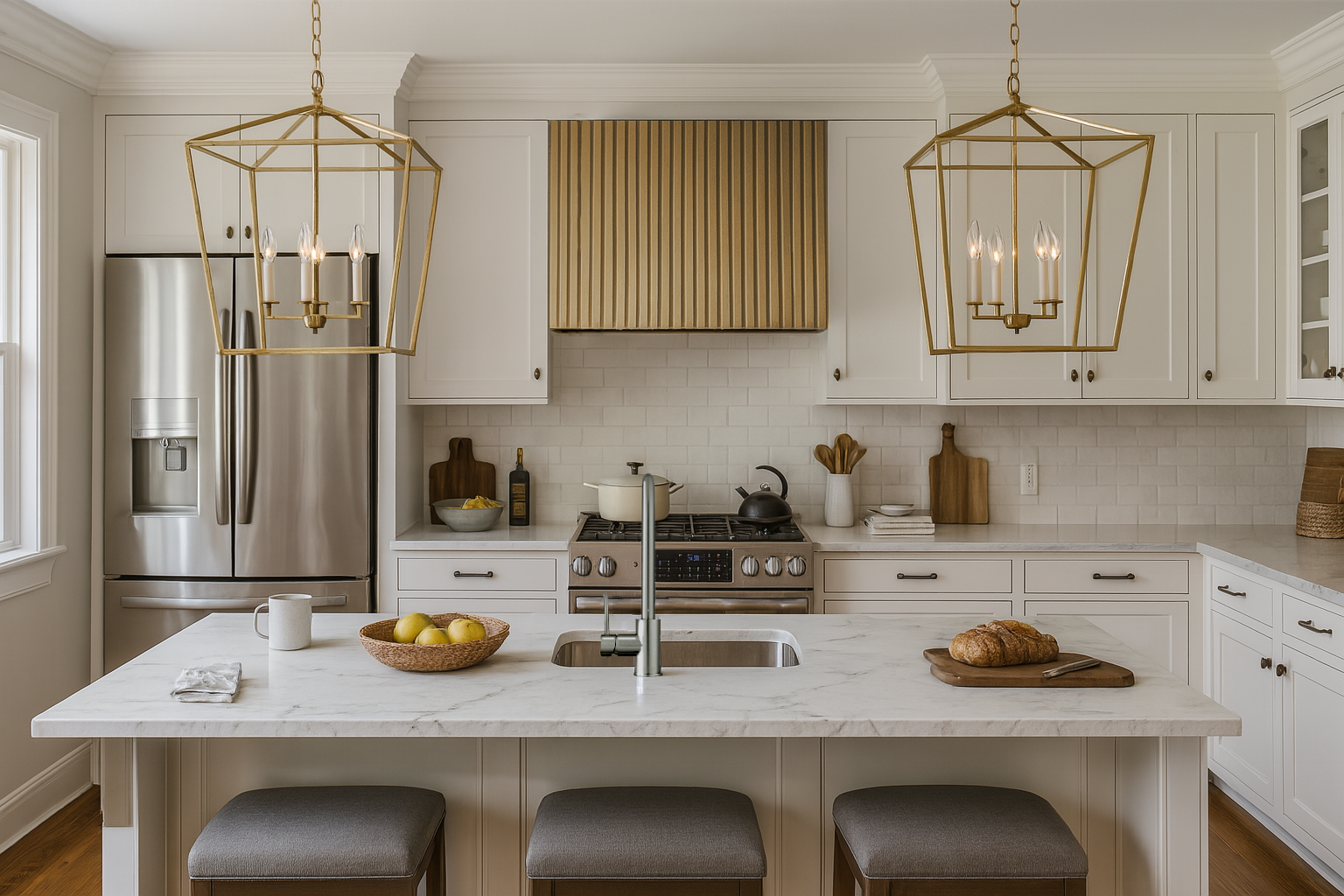
Brass has experienced a sustained revival across interior design, but the conversation in 2025 has shifted from brass accents and hardware to brass as a primary surface material. Brass countertops, bar tops, and prep surfaces bring a warmth and visual weight that no other metal quite matches.
The trend within brass specifically is toward aged, patinated, or hand-finished surfaces rather than high-polish. The highly polished brass of a 1980s hotel lobby is not what today’s luxury residential clients are reaching for. Instead, they want brass that reads as considered and settled — warm gold tones with depth and variation, sometimes with intentional darkening in recessed details.
Copper and Bronze: From Accent to Anchor
Copper and bronze have graduated from accent applications to anchor surfaces in 2025. Bronze kitchen islands, copper bar tops, and bronze bathroom vanities are appearing with real frequency in high-end residential projects. Both materials carry inherent visual authority — they command attention without demanding it. And both develop patina patterns that are genuinely unique to each surface and each home.
Trend 3: Architectural Edge Profiles as a Statement Detail
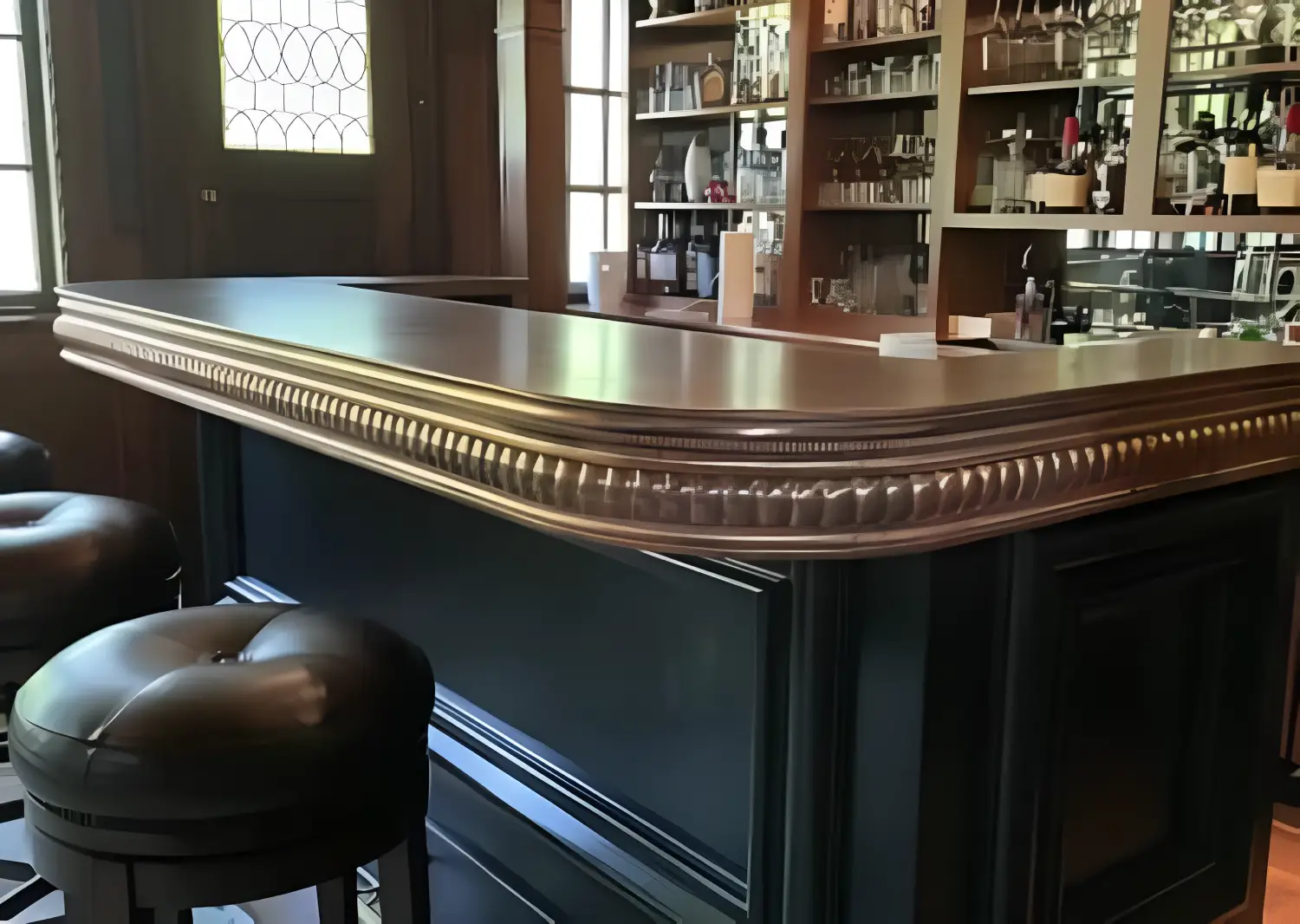
The countertop surface itself is only part of the design equation. Edge profiles — the finished edge visible from the front of a countertop or bar top — have become a significant point of differentiation in luxury residential design.
In 2025, the move is decisively away from standard eased or beveled edges toward architectural profiles that reference both historical craftsmanship traditions and contemporary sculptural sensibility.
Edge Profiles Driving Specification
Ogee and double-ogee profiles remain a staple in traditional and transitional luxury kitchens. In cast metal, they take on additional dimension because the profile can be hand-finished to emphasize depth and shadow in a way that stone cannot.
Waterfall edges — where the countertop material continues vertically down the side of a cabinetry run — are being executed in zinc and brass for island applications with dramatic effect. The weight and warmth of cast metal gives this contemporary profile unexpected depth.
Cove and radius profiles are gaining ground in bar top applications, where the edge meets a human hand repeatedly throughout its life. A thoughtfully radiused edge in pewter or zinc becomes more comfortable and more beautiful with use.
Custom architectural profiles — profiles developed specifically for a project and fabricated to exacting specifications — represent the highest expression of this trend. At La Bastille, our in-house design team works directly with architects and designers to develop edge profiles that are entirely one of a kind, aligned precisely with the architectural language of the broader space.
Trend 4: Integration with Kitchen Architecture
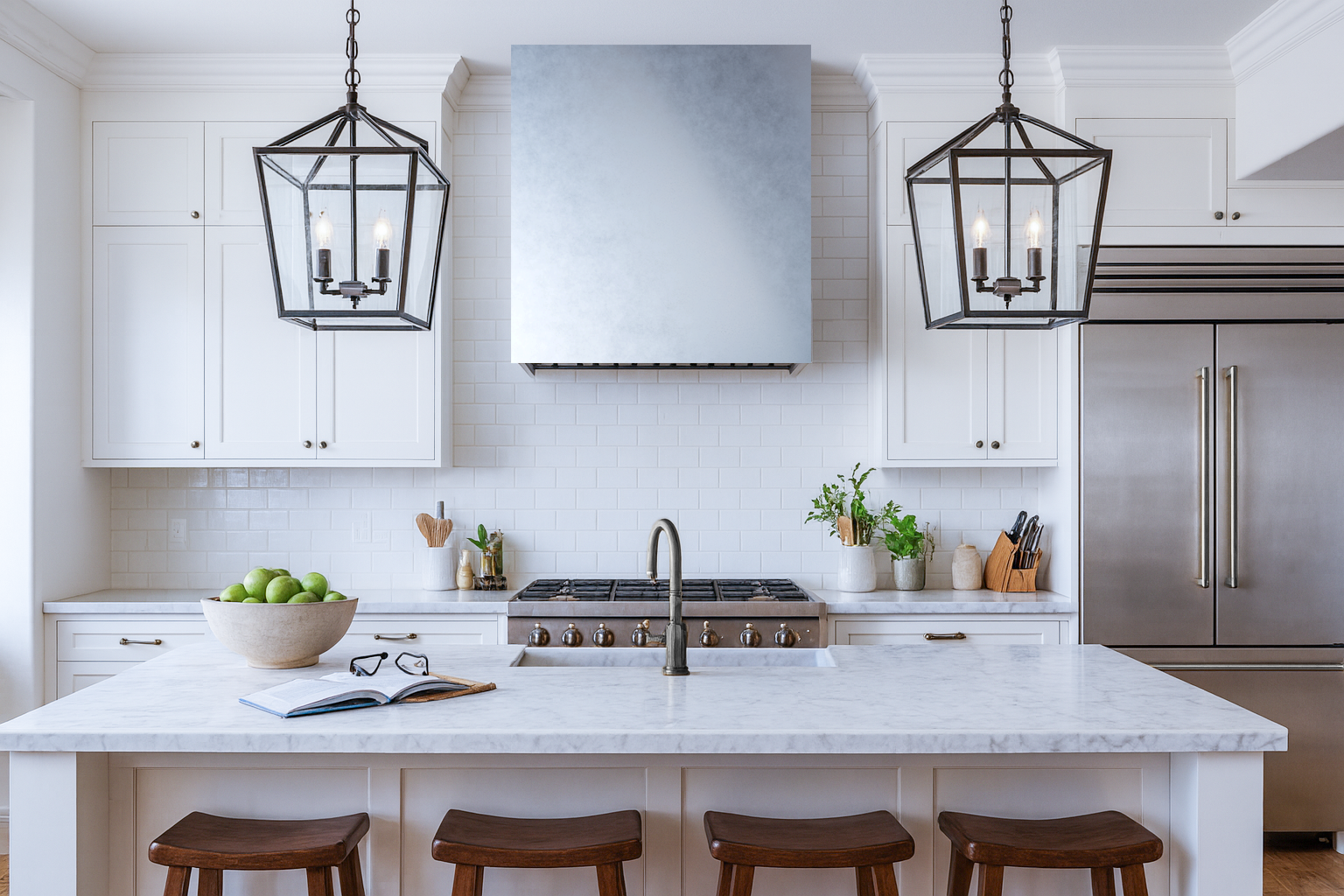
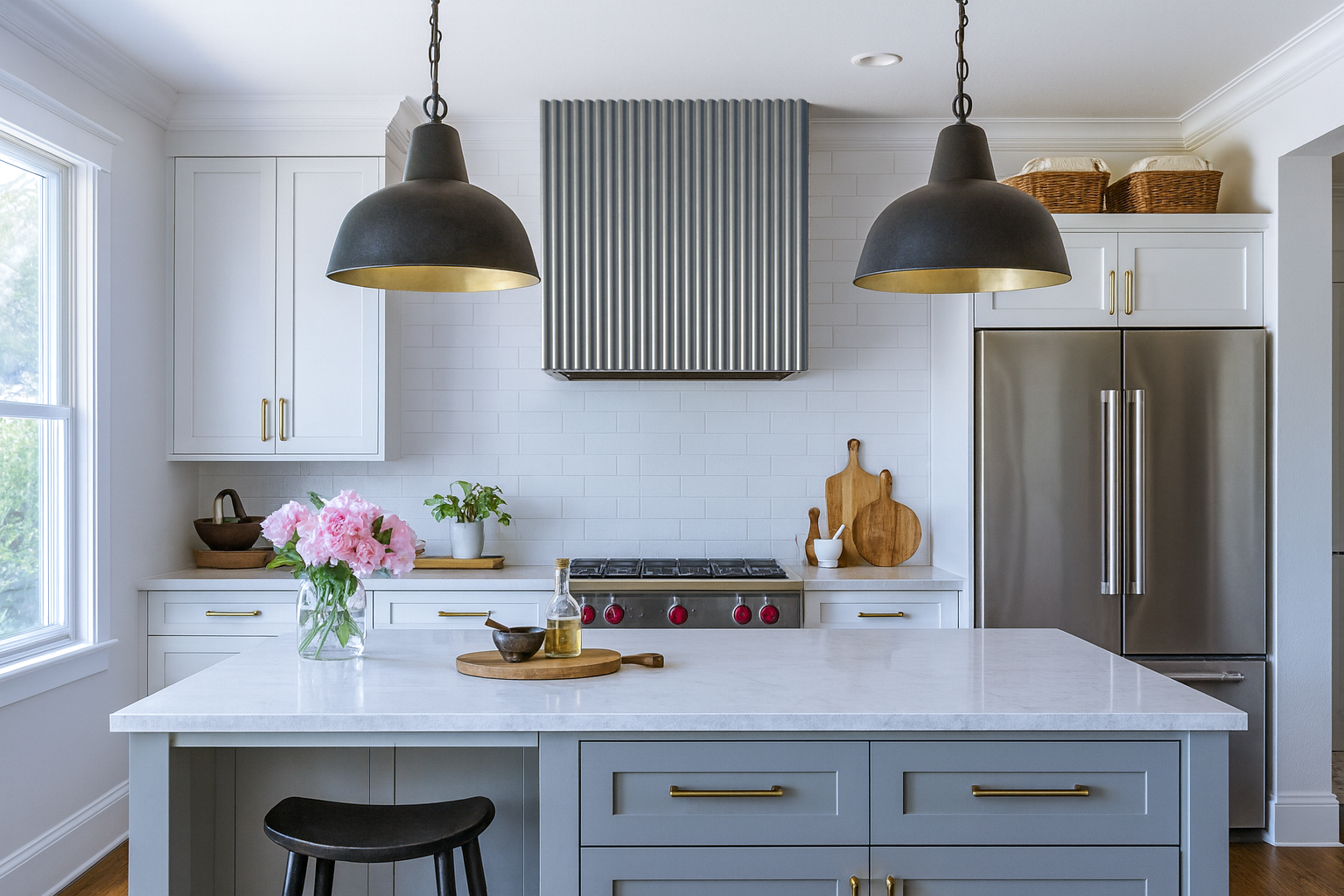
Luxury residential clients in 2025 are thinking about their metal countertops not as isolated surfaces but as integrated architectural elements. This means the countertop, the range hood, and the bar top are increasingly conceived as a cohesive metalwork program within a single space.
A cast zinc countertop paired with a custom zinc range hood creates a visual continuity that reads as deliberate and refined. A brass bar top echoing the profile and finish of brass cabinetry hardware throughout a kitchen elevates the entire room. These coordinated metalwork programs are among the most sophisticated design moves in luxury residential interiors right now.
We handcraft custom range hoods in zinc, pewter, brass, bronze, and copper to match or complement countertop specifications precisely — same alloy, same finish stage, same edge detailing if desired. Every range hood is fabricated to exacting specifications and equipped with a premium liner for seamless integration, making this kind of architectural coordination both practical and visually cohesive.
Trend 5: Domestic Craftsmanship and Material Provenance
In 2025, where a surface is made matters as much as what it is made from. Luxury residential clients — and the designers and architects who serve them — are asking sourcing questions with genuine seriousness.
The trend toward domestically fabricated, artisan-crafted metal surfaces reflects both quality concerns and a broader cultural value placed on transparency and intentionality. Mass-produced countertop surfaces, regardless of the material, cannot offer the same level of specification control, finish quality, or design collaboration that a dedicated domestic fabricator can.
All La Bastille metalwork is sourced, designed, and fabricated in the USA by our on-staff designers and skilled artisans. Our alloys are among the highest quality available in North America. That is not a marketing statement — it is a material reality that shows in the density, the finish consistency, and the long-term performance of every piece we produce.
FAQ: Custom Metal Countertop Trends in Luxury Residential Design
Are living metal countertops practical for everyday kitchen use?
Absolutely. Zinc, pewter, brass, bronze, and copper are all durable and appropriate for daily use. Each material has specific care considerations — zinc and pewter, for example, are sensitive to prolonged acidic exposure — but none require impractical maintenance. The patina that develops with use is part of the design intention, not a sign of wear.
How long does it take to fabricate a custom metal countertop?
Our standard lead time is 12–14 weeks from approved design. We encourage designers and homeowners to begin the conversation early in a project timeline. Our team responds to initial inquiries within one to two business days.
Can the patina finish be specified, or does it develop on its own?
Both. We can hand-apply patina finishes to a specified stage before delivery, giving clients a surface that arrives with the aged character they want. Over time, the surface will continue to evolve naturally. The starting point and the trajectory can both be designed with intention.
Do you work directly with architects and interior designers?
Yes — the majority of our projects are initiated through partnerships with architects, interior designers, and design-build firms. We provide full design support, technical shop drawings, and dedicated project coordination throughout the process.
What is the difference between zinc and pewter countertops?
Both are living metals that develop patina over time, and both have rich European heritage. Zinc is grey with a blue-grey undertone and is perhaps more architectural in character. Pewter is a tin-based alloy with a warmer, more silvery tone that can be maintained to a high polish or allowed to develop a soft charcoal patina. The right choice depends on the specific design aesthetic and desired maintenance approach.
Closing Thought: Surfaces That Tell a Story
The most significant thing about the custom metal countertop trends shaping luxury residential design in 2025 is what they collectively signal: a return to surfaces with genuine history, genuine craft, and genuine individuality.
Living metals do not pretend to be permanent in the way an engineered stone does. They are honest about what they are — materials shaped by human hands, responding to the life lived around them, growing richer with every passing year. That honesty is, in the current moment, a form of luxury that no factory can replicate.
If you are working on a high-end residential project and exploring cast zinc, brass, bronze, pewter, or copper countertops, we welcome the conversation. Our in-house design team is ready to collaborate from concept through completion.