

Choosing between brass and bronze for a luxury countertop, bar top, or architectural surface is one of those decisions that looks simple on the surface — and reveals remarkable depth the closer you look. Both are copper-based alloys. Both carry centuries of design history. Both develop a living patina that no manufactured finish can replicate. But they are meaningfully different materials, and understanding those differences is what allows designers and architects to make confident, lasting specification decisions.
What Are Brass and Bronze, Exactly?
Before comparing their design applications, it helps to establish what each alloy actually is — not just colloquially, but metallurgically.
Brass is an alloy of copper and zinc. The ratio of these two elements varies, but most architectural brass runs between 60–85% copper and 15–40% zinc. That zinc content is what gives brass its characteristic warm golden color, its relative workability, and its slightly lighter weight compared to bronze. Brass is a highly ductile metal, which makes it well-suited to detailed edge profiles, rolled surfaces, and precision fabrication.
Bronze is an alloy of copper and tin — though modern formulations sometimes include aluminum, silicon, or phosphorus, depending on the intended application. Historically, bronze predates brass by thousands of years. It is a harder, denser metal with a richer, deeper color range and a notably more complex patina behavior over time. The tin content in bronze suppresses some of the bright golden quality you see in fresh brass and gives the material a more muted, antique warmth straight from the foundry.
In practical terms: brass tends toward bright gold; bronze tends toward a deeper, browner gold. Both will shift dramatically with age, finish treatment, and use.
Brass vs Bronze Countertops: The Core Differences at a Glance
| Property | Brass | Bronze |
|---|---|---|
| Alloy Base | Copper + Zinc | Copper + Tin |
| Initial Color | Warm yellow-gold | Rich golden brown |
| Hardness | Moderate | Significantly harder |
| Patina Behavior | Active, responsive | Rich, sculptural |
| Finish Range | Polished to satin to antiqued | Polished golden to deep antiqued brown |
| Common Applications | Bar tops, countertops, range hoods, details | Countertops, bar tops, sculptural surfaces |
| Fabrication Quality | Highly workable, detailed profiles | Demanding; requires skilled hands |
At La Bastille, we work with both of these living metals regularly, and we’re happy to tell you: neither is inherently superior. The right choice depends on your project’s aesthetic direction, the level of use the surface will see, and the patina story you want the piece to tell over time.
Finish Ranges: What You Can Actually Achieve
Brass Countertop Finishes
Fresh brass arrives with a bright, almost jewelry-like golden quality. From that starting point, fabricators can move the material in several directions:
- High-polish brass reflects light aggressively and reads as contemporary or Art Deco, depending on the surrounding design language.
- Satin or brushed brass softens the reflectivity and introduces a warmer, more textural quality — excellent for residential kitchens and hospitality bar tops where you want warmth without flash.
- Antiqued or darkened brass chemically patinates the surface to a deeper brown-gold, compressing the timeline of natural aging into the fabrication process itself.
- Unlacquered brass is left raw and alive — meaning it will patinate naturally with use, oxygen, and touch. This is the choice for clients who want a surface that genuinely evolves.
Bronze Countertop Finishes
Bronze’s finish range is, if anything, even more dramatic. Because the alloy itself starts from a richer, less overtly golden tone, its finish options run from:
- Polished golden bronze, which has some visual similarity to antiqued brass but with greater depth and warmth underneath
- Medium statuary bronze, which introduces a warm brown-gold with highlights — the classic look of well-maintained architectural bronze
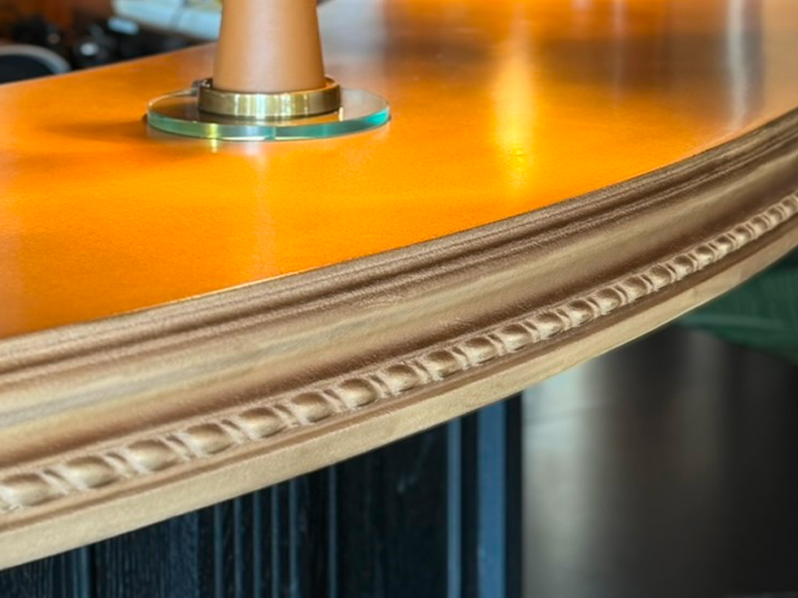
- Dark antique bronze, which moves toward rich brown and near-black recesses with golden highlights on raised areas — an exceptional choice for ornate edge profiles or heavily detailed surfaces
- Natural patina bronze, which, when left unsealed, will shift over years toward verdigris and deep earthy browns
At La Bastille, we work with a variety of bronze formulations and finish treatments, bringing that same meticulous, hand-finish approach to bronze that we apply across all of our cast metals. The breadth of finish possibility is one of the primary reasons bronze is experiencing such a genuine resurgence in both residential and commercial design.
Patina Behavior: The Living Quality of Each Metal
This is where brass and bronze diverge most dramatically — and where the decision becomes most personal.
How Brass Patinates
Brass patinates actively and relatively quickly in high-use environments. The zinc component in the alloy makes it reactive to oxygen, moisture, and the oils from human hands. In a busy bar environment, an unlacquered brass top will show use patterns within months — darkening where hands rest most frequently, brightening where it is wiped down. This is not a defect. This is the material doing what living metals do.
In a residential kitchen with more controlled use, brass patinates more gradually and evenly. Left unsealed, it will move from bright gold toward a warmer, honey-toned amber over time, eventually settling into a rich antique gold with deeper shadow tones in corners and recesses.
Brass can be maintained at a polished state with regular care, or allowed to age entirely on its own. Most of our clients who specify brass surfaces ultimately choose the latter — the patina becomes part of the story of the space.
How Bronze Patinates
Bronze patinates more slowly and with a distinctly more sculptural quality. Because it is a significantly harder alloy, it resists surface wear more assertively. Its patina tends to develop with a depth and layering that brass, being slightly softer, cannot quite replicate.
Over time, unprotected bronze moves through phases — from its initial finish toward warmer brown tones, eventually developing the verdigris (blue-green oxidation) that we associate with centuries-old statuary and architectural bronze. For a countertop, this process is slower and more controlled than it is on an exterior architectural element, but the directional movement is the same.
For clients who want a surface that reads like a piece of sculpture — one that carries genuine material history and becomes more visually interesting with every year — bronze is often the more compelling specification.
Brass vs Bronze for Specific Project Types
Luxury Residential Kitchens
Brass is often the first choice here, particularly for clients who want warmth and approachability alongside luxury. A brass countertop with a brushed or satin finish integrates beautifully with natural stone, custom cabinetry, and warm wood tones. Its slightly lighter visual weight keeps it from overwhelming the space.
Bronze works exceptionally well in residential kitchens where the design direction is more dramatic — think deep-toned cabinetry, stone with strong veining, or a kitchen designed to feel like a professional, almost ceremonial workspace. The harder alloy and richer patina behavior suit that kind of gravitas.
High-End Bars and Hospitality Surfaces
For bar tops in high-volume restaurants, hotels, and bars, both metals perform well — but their stories diverge quickly with use.
Brass bar tops develop a highly individual patina that becomes a visual record of the establishment’s life. Many of our hospitality clients specifically want that quality. A brass bar top in a luxury hotel bar or boutique restaurant communicates authenticity in a way that no manufactured surface can.
Bronze bar tops in commercial settings tend to hold their finish definition more assertively and develop patina with slightly more subtlety. For operators who want the living metal quality without quite the same degree of active change, bronze is a thoughtful choice.
Boutique Hotels and Commercial Interiors
Bronze’s association with architectural history — from bank lobbies to museum doors to civic buildings — gives it a natural authority in commercial contexts. A bronze countertop or reception surface in a boutique hotel carries a material narrative that guests intuitively recognize, even if they cannot always name it.
Brass in commercial interiors reads as contemporary-luxe — the warm gold finish suits the current direction of high-end hospitality design and communicates craftsmanship without heaviness.
A Note on Fabrication Quality
One thing that gets lost in surface-level comparisons of brass and bronze is the degree to which fabrication quality determines everything about how these metals perform and age.
Both alloys require skilled hands. Brass, though more workable, demands precision to achieve clean edge profiles and consistent surface character. Bronze, being significantly harder, is more demanding to work with and less forgiving of shortcuts.
At La Bastille, we handcraft every brass and bronze surface from the highest quality alloys available, sourced and fabricated entirely in the USA. Our in-house team of designers and artisans brings both technical and artistic expertise to every project — from the initial design conversation through technical shop drawings, fabrication, and delivery. There are no shortcuts in our process, and it shows in the finished piece.
Each project we produce is entirely one of a kind. When you specify a brass or bronze countertop, bar top, or range hood through La Bastille, you are commissioning an heirloom-quality piece built precisely to your specifications — not a product pulled from inventory.
FAQ: Brass vs Bronze Countertops
Is brass or bronze more durable for countertops?
Bronze is the harder alloy and is more resistant to surface scratching and wear. For very high-use commercial applications, bronze’s hardness can be an advantage. That said, brass performs exceptionally well in both residential and hospitality environments and develops a beautiful patina with use.
Will brass or bronze countertops stain?
Both metals will react with acidic substances — citrus, vinegar, certain cleaners — and can develop localized discoloration if not wiped promptly. This is a characteristic of all living metals and is part of their authentic appeal. Sealing options are available for clients who prefer more predictable maintenance.
Can brass and bronze countertops be refinished?
Yes. One of the genuine advantages of solid cast brass and bronze surfaces is that they can be refinished over time — stripped back, re-treated, and re-patinated — extending their service life indefinitely in ways that no laminate or composite surface can match.
How long does it take to fabricate a custom brass or bronze countertop?
At La Bastille, our standard lead time for custom metal countertops and surfaces is approximately 12–14 weeks from approved design. We recommend beginning the design conversation as early as possible in your project timeline.
How do I get started with a custom brass or bronze project?
Reach out to our team directly. We respond to project inquiries within one to two business days and will connect you with one of our in-house designers to begin the specification process. Whether you have a detailed concept or simply a direction, we are here to help you find the right metal, the right finish, and the right design for your space.
The choice between brass and bronze is ultimately a question of character. Brass brings warmth, luminosity, and a responsive, personal patina. Bronze brings depth, sculptural richness, and a material authority rooted in millennia of architectural use. Both are extraordinary in the right hands.
We would be glad to help you determine which is right for yours.