

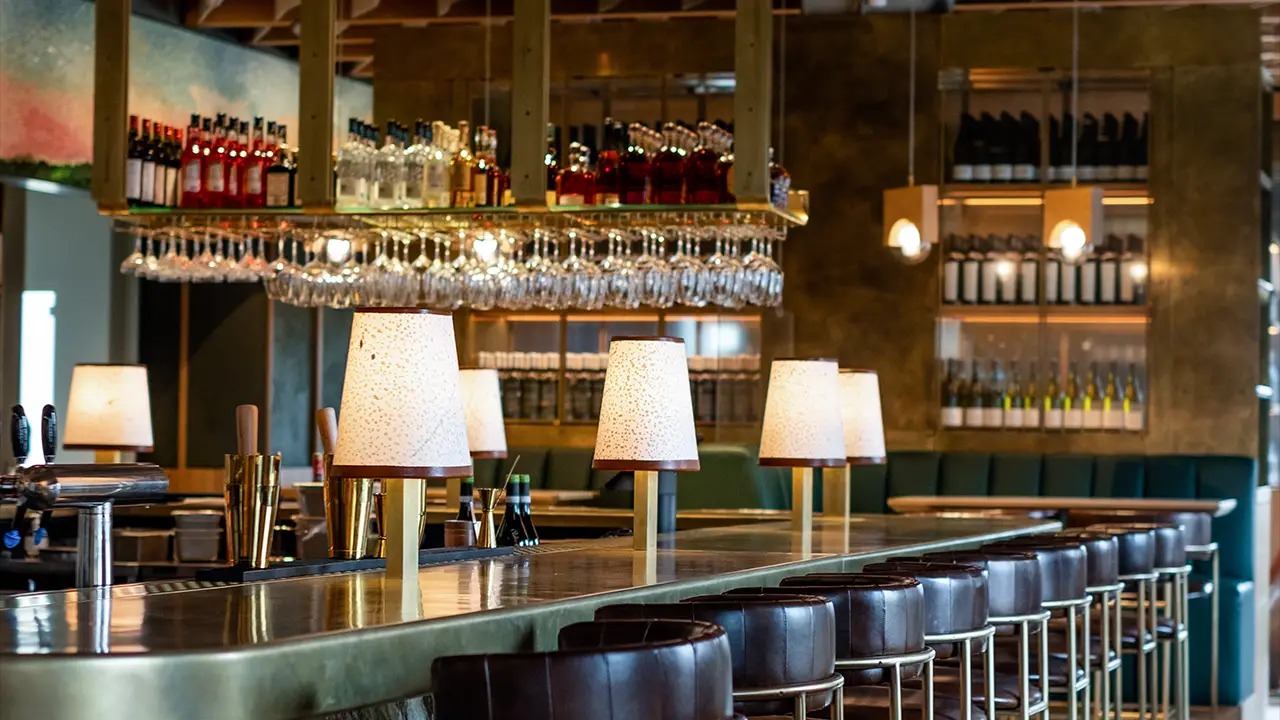
Brass has earned its place in the vocabulary of serious hospitality design—not as a trend, but as a material with genuine staying power. From the long mahogany bars of historic London clubs to the sleek counter frontages of modern boutique hotels in Nashville and New York, a brass bar top signals something specific: intentionality, warmth, and a willingness to invest in surfaces that improve with age. If you are specifying a bar top for a high-end commercial environment, understanding how brass performs, which finishes suit which contexts, and how a custom fabricator brings these surfaces to life is essential before any drawings are finalized.
What Makes Brass a Compelling Choice for Commercial Bar Tops
Brass is a copper-zinc alloy, and its particular balance of those two metals determines its final character—both visually and structurally. In commercial bar applications, brass offers a combination of properties that few other materials can match: it is dense enough to withstand heavy daily use, warm enough in tone to anchor an entire room’s palette, and expressive enough in finish range to serve everything from a Gilded Age revival dining room to a stripped-back minimalist cocktail lounge.
Unlike stainless steel, which reads as industrial and cold, or marble, which is beautiful but porous and demanding under service conditions, brass occupies a middle ground. It is a living metal—meaning it evolves. Its surface responds to the oils of hands, the acidity of citrus, the wear of bar tools, and the passage of time. Properly specified and maintained, a brass countertop does not simply survive a commercial environment; it absorbs it, deepening in character as the years accumulate.
At La Bastille, we handcraft custom brass bar tops for high-end restaurants, hotel bars, and boutique hospitality spaces across North America. Each surface is fabricated in-house by our team of skilled artisans—no shortcuts, no outsourced production. The result is a surface built precisely to your specifications, designed to perform beautifully for decades.
Brass Finish Options: A Practical Guide for Designers and Specifiers
One of the most consequential decisions in specifying a brass bar top is finish selection. Finish determines not only the initial visual impression but also the maintenance requirements, the aging trajectory, and the appropriateness of the surface for the overall design program.
Polished Brass
A polished brass surface reflects light brilliantly, with warm golden tones that catch ambient and pendant lighting in dramatic ways. This finish reads as formal and luxurious—well-suited to classic hotel bars, grand hotel lobbies with bar service, and fine dining environments where the design language skews traditional or Art Deco.
The trade-off is maintenance. A polished brass countertop will show fingerprints, rings, and micro-scratches more readily than a matte or patinated surface. In a high-volume bar environment, polished brass requires a disciplined maintenance protocol to remain at its best. It rewards attentive staff and an ownership team committed to upkeep.
Satin or Brushed Brass
A satin brass finish is achieved through a directional brushing process that leaves fine, consistent linear texture across the surface. This finish softens the metal’s reflectivity while retaining its warmth. It is arguably the most versatile finish for commercial brass bar tops—sophisticated enough for luxury environments, understated enough to work within contemporary design programs.
Satin brass hides minor wear and surface marks more graciously than polished brass, which makes it a practical choice for high-traffic hotel bars where the surface endures consistent daily use across multiple years.
Antiqued or Aged Brass
An antiqued brass finish accelerates the patination process, delivering a surface that appears to have been in place for generations. Achieved through controlled chemical treatments and hand-finishing techniques, this look suits environments where the design narrative includes heritage, craft, or a sense of curated history—think bespoke whiskey bars, members’ clubs, or boutique hotels with a storied, literary aesthetic.
At La Bastille, we hand-finish each surface individually, which means no two antiqued pieces are exactly alike. The depth and variation of the patina are genuine—a reflection of the artisan’s hand rather than a printed or applied effect.
Unlacquered Living Finish
Brass can be specified unlacquered, which allows the metal to patinate freely and continuously throughout its life in service. This is the most expressive option and the most fitting for clients and designers who embrace the philosophy of living metals—the idea that a surface should grow richer and more particular over time, not be frozen in its original state.
An unlacquered brass bar top in year three of operation will look markedly different from the day it was installed, and that difference will be earned: the result of thousands of service hours, of spilled cocktails and polished cloths, of the specific human activity that took place in that room. It becomes, in its own way, irreplaceable.
Lacquered Brass
For clients who want the appearance of bright or satin brass without the commitment to active maintenance, a lacquered finish offers a protective barrier that slows patination and reduces fingerprint visibility. It is the lower-maintenance choice, though it does come with the understanding that the lacquer itself will eventually require attention, particularly along edges and high-contact areas.
Durability in High-Traffic Hospitality Environments
A genuine concern when specifying any specialty metal surface for commercial use is durability. Bar tops sustain constant mechanical stress: heavy glassware, shaker tins, poured liquids, ice, citrus, and the repetitive motion of bar service from opening to close, seven days a week.
Brass handles these conditions well when properly fabricated. Key considerations include:
- Gauge and backing: A commercial brass bar top should be fabricated at appropriate gauge with a solid substrate backing—typically wood—to prevent flexing and ensure long-term dimensional stability. La Bastille builds each surface with these structural requirements as part of the fabrication process, not as afterthoughts.
- Edge details: Edge profiles are not merely aesthetic decisions; they protect the most vulnerable part of the surface. A well-executed edge—whether a simple flat edge, a rounded bull-nose, or a more ornate ogee profile—seals the material correctly and prevents delamination or wear at the boundary.
- Seams and joints: Custom brass bar tops for long runs require carefully considered seam placement and execution. Our in-house team works through these technical details during the design phase, ensuring that seams are both structurally sound and visually minimal.
- Heat resistance: Brass has reasonable heat tolerance, though direct contact with extremely hot vessels over prolonged periods is not advisable for any specialty metal surface. In practice, standard bar service does not present this as a significant concern.
The honest truth about brass in commercial environments is this: it does not require babying, but it does reward respect. A team trained to care for the surface—using appropriate cleaning agents, addressing spills promptly, and understanding that the surface is meant to develop character—will find that a well-fabricated brass bar top only gets more compelling over time.
Design Possibilities: Integrating Brass into Luxury Bar and Hotel Interiors
The aesthetic case for a custom brass bar top extends well beyond the surface itself. Brass is a material that anchors a room. Its warm tonality introduces depth into neutral palettes, provides contrast against dark woods and painted millwork, and creates a point of visual gravity that draws guests toward the bar.
Pairing Brass with Other Materials
Some of the most successful luxury bar designs we have contributed to pair brass surfaces with complementary materials thoughtfully selected to either echo or contrast the metal’s warmth:
- Dark walnut or ebony millwork with polished brass creates a classic Gilded Age richness
- White oak and satin brass delivers a Scandinavian-inflected warmth increasingly common in boutique hotel design
- Exposed concrete and antiqued brass introduce a sophisticated industrial tension
- Marble back bars with a brass counter allow the stone to serve as the showpiece while the metal grounds the work surface in something harder-working and more tactile
Profiles and Edge Details
Edge profiles are among the most underspecified elements in bar top design, yet they dramatically affect the final character of the piece. La Bastille offers a broad range of edge options—from clean, modern flat edges to more traditional or architectural profiles. These choices are made collaboratively with designers and architects during the design phase, ensuring that the final piece is coherent with the broader millwork and interior language of the project.
Custom Dimensions and Configurations
No two commercial bars are identical. Curved bars, peninsula configurations, multi-height surfaces for ADA compliance, integrated drain channels, and built-in recesses for service equipment are all elements that require a fabricator equipped to handle genuine custom work. Our in-house design team produces detailed technical shop drawings for every project, giving architects and general contractors the documentation they need to coordinate installation with precision.
Working with La Bastille on Your Brass Bar Top Project
Our process begins with a conversation—typically a project brief submitted through our website or a direct call with our team. Within one to two business days, one of our in-house designers will follow up to discuss your specifications, timeline, and design direction in detail. From there, we develop technical shop drawings and a full design packet for your review.
Lead times for custom brass bar tops and brass countertops run approximately twelve to fourteen weeks from design approval, depending on project scope. We work directly with designers, architects, interior design firms, and hospitality groups across North America, and we are accustomed to coordinating within the often-complex schedules of commercial construction and renovation projects.
Every surface we produce is designed and fabricated entirely in the USA by our dedicated team of artisans. We source only the highest quality alloys, and we apply no shortcuts in the fabrication or finishing process. The result is heirloom-quality metalwork built to perform beautifully under commercial conditions and to grow more distinctive with every year of service.
Frequently Asked Questions
How does a brass bar top compare to zinc or copper for commercial use?
Each living metal has its own character. Zinc ages to a cool blue-grey patina and has a long history in European bistro and brasserie design. Copper is warmer and redder in tone, developing green-brown patina over time. Brass offers the warmest initial color and the greatest finish variety, making it particularly versatile for luxury hotel and upscale bar applications. The right choice depends on your design program, maintenance preferences, and the specific atmosphere you are building.
Will a brass bar top scratch in a commercial environment?
Brass will develop surface wear over time—this is inherent to any living metal and is, for many designers and clients, precisely the point. Minor scratches tend to blend into the surface as the patina develops. For clients who prefer a more consistent appearance over time, a lacquered or satin finish will show wear less visibly than a polished surface.
Can brass be used for bar tops in outdoor or semi-outdoor environments?
Brass can be used in covered outdoor environments, though exposure to rain, standing water, and temperature extremes will accelerate patination significantly. We recommend discussing your specific project conditions with our design team so that fabrication and finish decisions are made with full knowledge of the environment.
What is the typical lead time for a custom brass bar top from La Bastille?
Our standard lead time for custom brass bar tops is twelve to fourteen weeks from design approval. We encourage early engagement—ideally during the design development phase of your project—so that our timeline integrates cleanly with yours.
How do I care for a brass bar top in a bar or hotel environment?
Daily maintenance involves wiping down the surface with a soft cloth and a pH-neutral cleaner. Avoid abrasive scrubbers and harsh chemical cleaners, which can damage the finish or strip a lacquered surface prematurely. For unlacquered or patinated brass, occasional polishing can restore brightness if desired, or the surface can simply be allowed to age naturally.
A brass bar top is never merely a surface. It is a decision about what kind of place you are creating—one that values material authenticity, rewards close attention, and offers guests something they can feel as much as see. When that decision is made with care and executed by skilled hands, the result is a piece of the room that earns its place every day it is in service.
If you are working on a luxury bar or hotel project and want to explore what a custom brass countertop or bar top from La Bastille could contribute, we would welcome the conversation.