

For design firms specifying bespoke surfaces, the question is rarely whether to use a custom metal countertop — it's which metal will serve the project's aesthetic vision, performance requirements, and long-term maintenance story. The answer is rarely universal. Cast zinc, pewter, brass, bronze, and copper each carry a distinct material identity, and matching that identity to the right application is where specification becomes craft.
This guide maps each metal's character, patina behavior, maintenance profile, and ideal project type so your team can move from concept to confident specification.
Why Architectural Metal Countertops Are the Specification Standard in Luxury Interiors
Stone is predictable. Metal is alive. That distinction matters deeply to the designers and architects who choose handcrafted cast metal for their most demanding projects.
Living metals — zinc, pewter, brass, bronze, copper — age in response to their environment and use. They develop patina, warmth, and depth over time. A surface installed in a Michelin-starred restaurant in 2026 will tell a richer visual story in 2031, not a diminished one. That irreplaceable quality of authentic wear is precisely what high-end residential and hospitality clients are willing to invest in.
At La Bastille, we fabricate every countertop, bar top, and range hood from the highest quality alloys sourced and handcrafted entirely in the USA. Our in-house team of designers and skilled artisans partners with design firms, architects, and hospitality groups across North America to deliver custom metalwork that performs as beautifully as it presents.
Cast Zinc: The Benchmark for Versatility
Aesthetic Profile
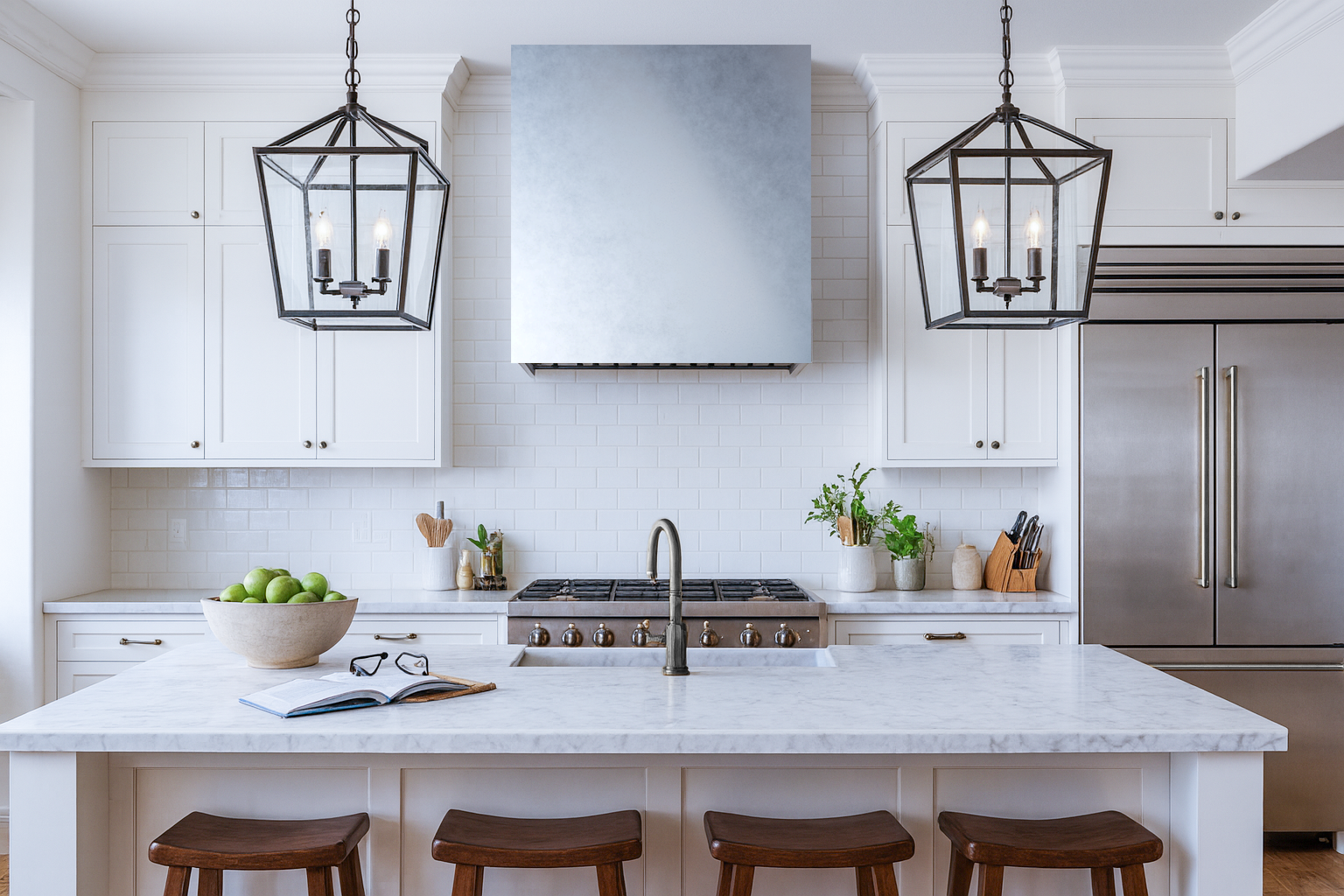
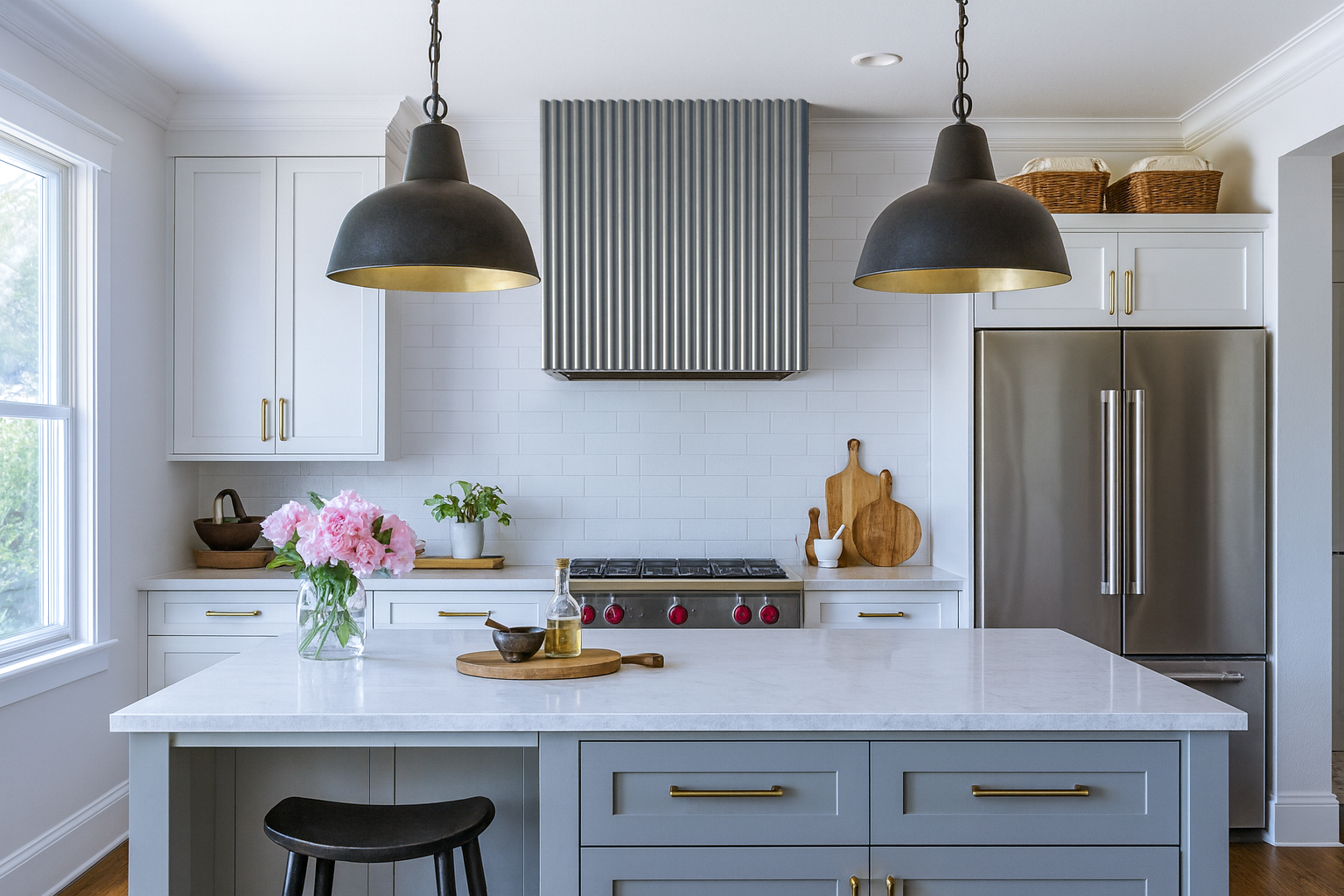
Zinc is grey with a distinctive blue-grey hue. It sits comfortably in both modern and historically referential interiors — from sleek, minimal kitchen countertops with clean edge profiles to richly ornate architectural bar surfaces that look as though they have occupied the space for generations. That range of expression is zinc's signature strength.
Because zinc has a long history in architectural applications — roofing, decorative tiles, ornamental downspouts — it carries an inherent material credibility that sophisticated clients recognize and respond to. A cast zinc countertop never looks applied. It looks architectural.
Patina and Aging
With use and time, zinc develops character and warmth. The surface deepens, softens, and acquires a richness that is impossible to replicate artificially. We can also hand-finish a zinc countertop to an aged appearance from the moment of installation — ideal for projects where the designer wants immediate visual authority rather than waiting for the patina to accumulate naturally.
Maintenance Profile
Zinc is relatively low maintenance. It does not require sealing. Daily cleaning with a soft cloth and mild soap maintains the surface. Acidic substances — citrus, vinegar — can mark the surface, which is worth communicating to residential clients during the specification conversation.
Ideal Applications
- High-end restaurant and bar countertops where the living finish becomes part of the dining experience
- Luxury residential kitchens where the client wants warmth without the weight of stone
- Commercial bar tops in boutique hotels and members' clubs
- Range hoods in both standard and fully custom configurations
La Bastille is known internationally for our cast zinc countertops and bar tops. It is our most versatile offering and an excellent entry point for firms specifying architectural metal for the first time.
Pewter: The Parisian Standard, Rediscovered
Aesthetic Profile
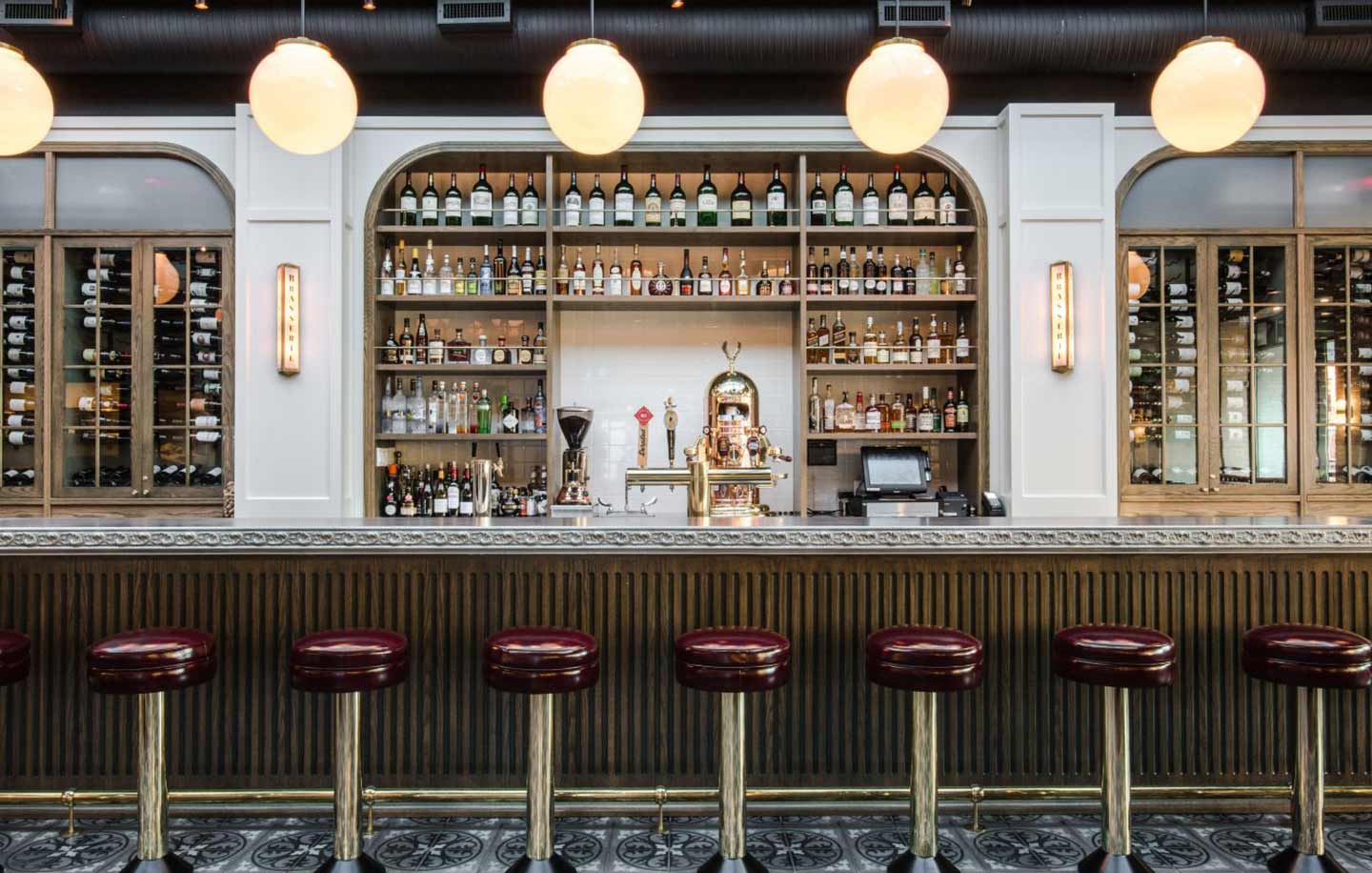
There is a reason bars across France have been called le zinc for centuries — though the surfaces in those legendary Parisian brasseries were actually pewter. That distinction matters for the specification conversation: pewter occupies a specific cultural and visual register that zinc does not.
Polished pewter has a vibrant, silvery tone. It is luminous and sophisticated in a way that reads as simultaneously historical and contemporary. For interiors referencing classical European hospitality design — French bistros, Belle Époque brasseries, Viennese cafés — pewter is the authentic specification choice.
Patina and Aging
Like zinc, pewter is a living finish. Over time it develops a luxurious muted grey or charcoal patina that deepens its sophistication. Alternatively, pewter bar tops and countertops can be maintained to a near-mirror finish through regular polishing — giving the designer and client control over the surface's long-term presentation. This dual-mode aging story is unusual among architectural metals and makes pewter exceptionally versatile across client preferences.
Pewter is a malleable alloy composed primarily of tin. It is also an eco-conscious material choice, which is increasingly relevant in luxury residential and hospitality specifications.
Maintenance Profile
Pewter is lower maintenance than many designers expect. Left to patina naturally, it requires only routine cleaning. If the mirror finish is the client's preference, periodic polishing is required — a straightforward process that can be managed by the client or their household staff.
Ideal Applications
- French bistro and brasserie-inspired restaurant interiors
- High-end bar tops where the silvery luminosity becomes a visual anchor
- Luxury residential kitchen countertops for clients drawn to European design heritage
- Hospitality projects where the surface's dual aging story offers long-term flexibility
We offer pewter with an expanded selection of both traditional and modern edge profiles, ensuring the material works across the full spectrum of contemporary and historical design languages.
Bronze: Sculptural Weight and Material Authority
Aesthetic Profile
Bronze is a harder alloy than zinc or pewter — significantly so — and that hardness translates directly to visual presence. Bronze countertops and bar tops carry a sculptural weight that the softer metals simply do not. Historically, bronze was the material of monuments and lasting things. That association is not lost on clients who choose it.
The finish range for bronze is remarkably wide. Polished golden bronze sits at one end of the spectrum — warm, luminous, almost amber in direct light. Rich antiqued brown occupies the opposite end, with the depth of a century-old architectural detail. Between those poles, the design possibilities are extensive.
Patina and Aging
Bronze develops its own distinctive patina over time, and those use patterns add genuine character and charm. For high-traffic commercial environments, this means the surface rewards use rather than suffering from it. For residential applications, bronze ages into something that genuinely cannot be replicated by any applied finish.
Maintenance Profile
Bronze's hardness makes it one of the more durable options in the architectural metal category. It is more resistant to surface marking than zinc or pewter, making it a strong specification for projects with demanding use patterns. Standard care involves routine cleaning; polished finishes can be maintained with appropriate metal care products.
Ideal Applications
- High-end restaurant and bar surfaces where visual authority and durability are both priorities
- Luxury residential countertops for clients drawn to sculptural, historically rooted material choices
- Boutique hotel interiors where the surface is intended to function as a design statement rather than background material
- Architectural detail elements — edges, inlays, decorative components — where bronze's sculptural heritage is directly relevant
Brass and Copper: Warmth, Richness, and Unmistakable Presence
Brass
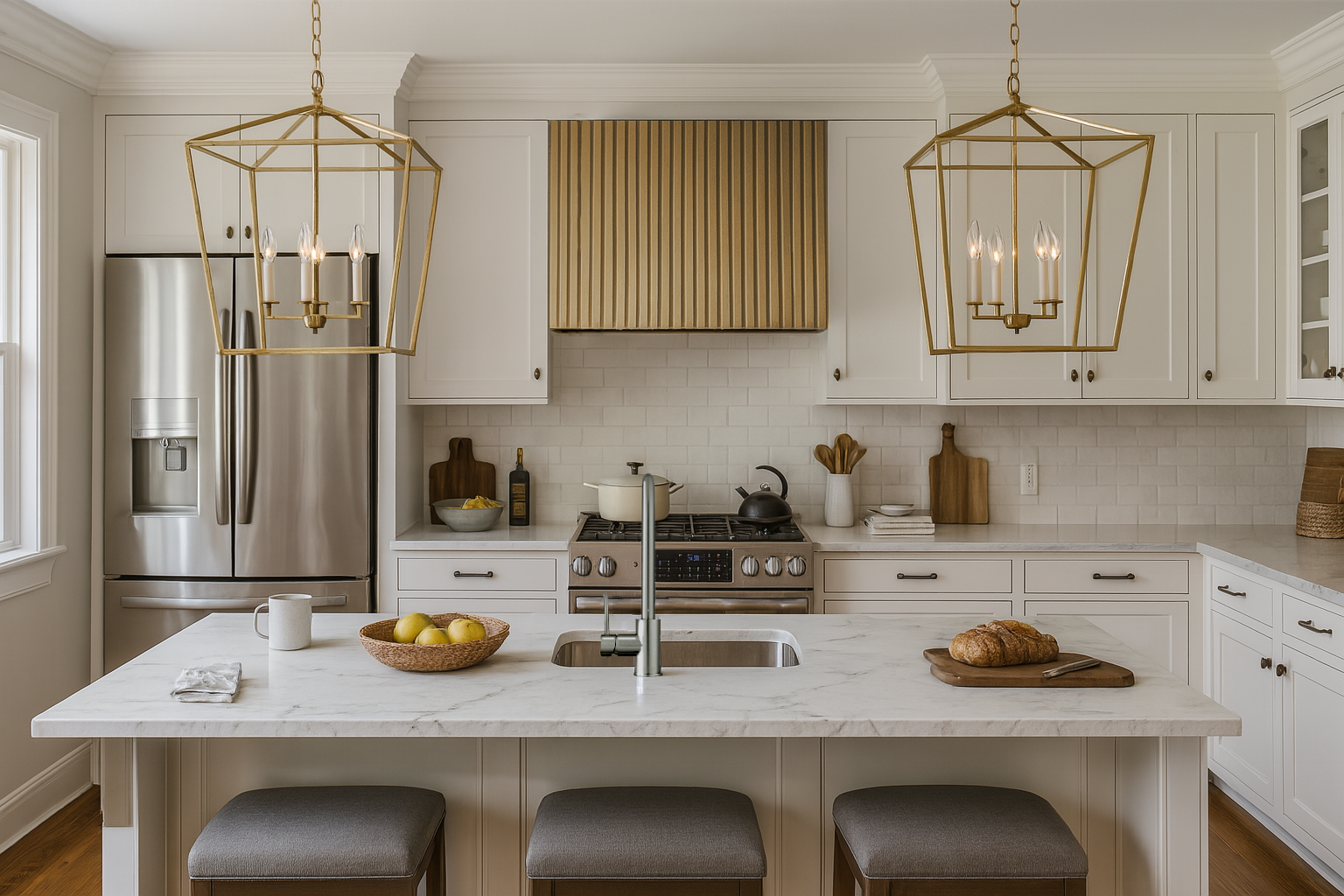
Brass brings warmth and golden richness to a surface that few other materials can replicate. In high-end residential kitchens and boutique hospitality interiors, brass countertops and bar tops create an immediate sense of luxury that clients respond to intuitively.
Brass is a living metal: it will develop a patina over time, shifting from its initial bright golden tone toward warmer, deeper amber and brown tones. For designers who want to control the aging process, brass can be maintained to its original finish with periodic care.
Ideal applications: Luxury residential bar tops and kitchen countertops; boutique hotel reception surfaces; high-end restaurant bar fronts where warmth is a design priority.
Copper
Copper is the most expressive patina story in the architectural metal category. Its aging journey — from warm rose-gold through amber and brown to the eventual blue-green verdigris — is well-documented and immediately recognizable. For the right project, that aging story is the specification.
Copper countertops and bar tops are handcrafted to the same exacting standards as all La Bastille metalwork, with finish options that allow the designer to specify the starting point of the patina journey with precision.
Ideal applications: Artisan kitchen and bar environments; hospitality interiors where the patina story becomes part of the guest experience; residential projects for clients who want a surface that actively evolves.
Metal Countertop Specification Guide: Quick-Reference Summary
| Metal | Color / Tone | Hardness | Patina Behavior | Best Project Type |
|---|---|---|---|---|
| Cast Zinc | Blue-grey | Moderate | Rich, warm aging | Restaurant, bar, residential kitchen |
| Pewter | Silver / charcoal | Moderate | Muted grey patina or maintained mirror | French bistro, luxury bar, residential |
| Bronze | Golden to antiqued brown | High | Sculptural, deep character | Commercial, hospitality, residential statement |
| Brass | Warm gold | Moderate-high | Amber and brown deepening | Residential bar, boutique hotel |
| Copper | Rose-gold to verdigris | Moderate | Most expressive patina range | Artisan kitchen, experiential hospitality |
Frequently Asked Questions
What lead times should design firms plan for when specifying custom metal countertops?
Custom cast metal countertops and bar tops from La Bastille typically carry a 12–14 week lead time from approved design packet to delivery. Our team responds to specification inquiries within 1–2 business days, and we provide full technical shop drawings to support your project documentation.
Can architectural metal countertops be specified for outdoor applications?
Some metals — particularly zinc and bronze — have historical precedent in exterior architectural applications and can be appropriate for covered outdoor environments. We recommend discussing the specific project conditions with our in-house design team before specifying for exterior use.
How do living metal surfaces perform in high-traffic commercial environments?
Very well, when specified correctly. Bronze is the most durable option for the highest-traffic applications. Zinc and pewter perform reliably in commercial environments and their patina behavior is actually an advantage: the living finish improves with use rather than showing wear in the way that coated or sealed surfaces do.
Does La Bastille fabricate metal range hoods in addition to countertops?
Yes. We fabricate fully custom range hoods in cast zinc, pewter, brass, bronze, and copper — each built to exacting specifications and equipped with a premium liner for seamless integration. We also offer the Bastille Collection, a trade-only curated range hood line in cast zinc and brass, available in standard sizes for design firms and builders requiring volume with consistent quality.
What is the difference between cast zinc and pewter for a bar top specification?
Both are living metals with similar patina behavior, but they serve different design registers. Cast zinc reads as architectural and contemporary-historical — at home in both modern and antique-influenced interiors. Pewter carries a more specifically European, brasserie-rooted heritage and offers the additional option of a maintained mirror finish. The choice often comes down to the visual reference the project is working within.
Partnering on Your Next Specification
Every material in our portfolio is handcrafted in the USA by our dedicated team of on-staff designers and skilled artisans. We use the highest quality alloys available — not as a marketing claim, but as a production standard that directly affects the durability, finish quality, and longevity of every piece we fabricate.
If you are in the early stages of a specification, our team welcomes the conversation. We work directly with designers and architects throughout the process — from initial material selection through technical shop drawings and final installation — and we treat every project as the one-of-a-kind commission it is.
Reach out to La Bastille to begin your specification conversation. We respond within 1–2 business days and are glad to support your concept from the first question to the final detail.