

Copper has a way of stopping people at the door. Before a guest orders their first drink or runs a hand along the rail, the bar top has already made an impression — warm, luminous, and unmistakably alive. That quality is not accidental. It is the nature of the metal itself, and it is exactly why copper bar tops have held a place in exceptional hospitality interiors for centuries.
This guide covers everything a designer, architect, or hospitality operator needs to know before specifying a copper bar top for a commercial space: the visual character, the antimicrobial properties, how patina develops and why that matters, and what realistic maintenance looks like in a working bar environment.
Why Copper Works in Commercial Bar Settings
The Visual Impact Is Immediate
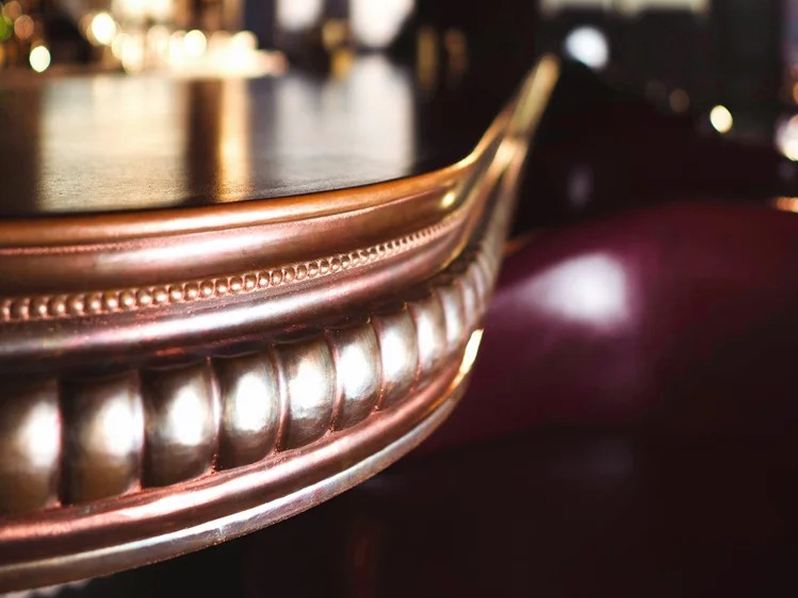
Copper occupies a unique position in the palette of living metals. Unlike the cool grey of zinc or pewter, or the darker warmth of bronze, copper opens with a bright, reddish-gold tone that reflects candlelight and ambient bar lighting in a way that feels genuinely theatrical. In the right space — a dim cocktail lounge, a classic brasserie, a boutique hotel bar — a copper bar top can anchor the entire atmosphere.
At La Bastille, we work with designers and hospitality groups across North America who come to us specifically because they want a surface that performs as a design element in its own right, not simply a utilitarian counter. Copper delivers that. It commands attention without competing with the experience at the bar. It ages visibly, beautifully, and in a way that is entirely its own.
A well-fabricated copper bar top is not a static object. It is a living surface. That phrase — living metal — is something we use deliberately, because it reflects something true about how copper behaves over time.
Antimicrobial Properties: Function That Matches Form
Copper’s visual appeal in hospitality environments is well-documented, but its functional properties deserve equal attention in a commercial specification conversation.
Copper is inherently antimicrobial. The EPA has registered copper alloys as the first solid antimicrobial material, and peer-reviewed research has confirmed that copper surfaces kill a significant percentage of bacteria — including E. coli and Staphylococcus aureus — within hours of contact, without any added chemicals or coatings. In a high-volume bar environment where spills, hand contact, and glass placement are constant, that is a meaningful functional advantage.
This does not make copper maintenance-free, and we would not suggest otherwise. But it does mean the surface you are installing in your bar is doing quiet, continuous work on your behalf — a quality that no laminate, stone, or sealed wood surface can match.
Understanding the Copper Patina Timeline
What Patina Actually Is
Patina is not damage. It is chemistry. When copper is exposed to oxygen, moisture, and the organic compounds present in a busy bar environment — citrus from cocktails, the oils from countless hands, the trace minerals in cleaning products — it begins to oxidize and develop a layered surface character that deepens over time.
This process is what makes copper a living metal. The surface you install is not the surface you will have in two years, and that is precisely the point. Copper ages the way quality leather ages: with use, with handling, and with exposure to the environment it inhabits.
The Patina Progression in a Commercial Bar
The timeline will vary depending on your bar’s volume, climate, and how the surface is maintained, but here is what most operators can expect:
Weeks 1–4: The surface retains its original warm, reddish-gold brightness. Some early darkening may appear at high-contact areas — the rail, pour zones, areas where glasses regularly rest.
Months 1–6: The color begins to shift, deepening toward a rich amber-brown. High-contact areas develop earlier and more pronounced variation. The surface starts to tell the story of how the bar is actually used.
6–18 months: The patina deepens and matures. Colors range from warm chestnut to deep sienna and, in areas exposed to persistent moisture or citrus, early hints of green or teal may appear. The surface has now developed what can only honestly be called character — something no new installation can replicate.
2+ years: A fully developed copper patina is genuinely one of a kind. No two bars look alike. The surface maps the history of the space, and guests often remark on it without knowing exactly why the bar feels the way it does.
Can the Patina Be Slowed or Controlled?
Yes, within limits. A protective wax applied consistently will slow oxidation and help maintain a brighter, more uniform tone. Operators who want to preserve the original copper color more aggressively can commit to a regular waxing and polishing regimen. We work with clients to establish a maintenance protocol that matches their operational style and design intent from the start, because it is much easier to plan for the patina you want than to reverse one you did not.
What Honest Maintenance Looks Like in a Working Bar
Day-to-Day Care
Copper bar tops in commercial environments require more attentive care than sealed stone or resin surfaces, and we want to be direct about that. The trade-off — a surface with depth, warmth, and antimicrobial character that improves with age — is worth it for the right operator. But understanding the commitment upfront prevents disappointment.
Daily:
- Wipe down with a soft cloth after service. Avoid abrasive scrubbing pads.
- Remove citrus juice, wine, and acidic spills promptly. Prolonged acid contact accelerates localized patina and can create uneven color development.
- Avoid leaving wet bar towels or damp items sitting on the surface for extended periods.
Weekly:
- Apply a quality paste wax (food-safe formulations are available) to protect the surface and provide a modest barrier against moisture and staining.
- Buff lightly to maintain consistency of sheen.
Periodically:
- Depending on your desired aesthetic, a light polish with a copper-safe compound can brighten areas that have developed patina faster than the rest of the surface.
- If a more uniform or refreshed appearance is desired, a professional re-finishing is always an option.
What to Avoid
A few things will damage a copper bar top that would not affect harder or sealed surfaces:
- Bleach-based cleaners: Chlorine will aggressively and unevenly attack copper. Never use bleach near a copper surface.
- Abrasive cleaning pads: Steel wool and abrasive sponges will scratch the surface and create uneven texture that catches oxidation differently.
- Long-term acid exposure: Citrus garnishes, wine rings, and beer puddles left overnight will leave marks. This is not catastrophic — it is part of copper’s living character — but operators who want a more controlled patina progression will want to be disciplined about cleanup.
Custom Copper Bar Tops: What the Fabrication Process Involves
Precision Matters at This Scale
A commercial copper bar top is not a decorative accent piece. It is a working surface fabricated to exact specifications, installed across potentially twenty or forty linear feet of bar, and expected to perform for decades. The difference between a well-fabricated copper bar top and a poorly fabricated one is not always visible on day one — it becomes apparent over years of use.
At La Bastille, every copper bar top we produce is handcrafted in the USA by our in-house team of skilled artisans. We do not outsource our fabrication, and we do not take shortcuts. The copper we source is the highest quality available for commercial and architectural applications. Our in-house designers work directly with your project team from early concept through technical shop drawings, ensuring that dimensions, edge profiles, drain slopes, mounting systems, and finish specifications are resolved before fabrication begins.
Custom Design Options
A copper bar top from La Bastille is entirely one of a kind. Our design capabilities include:
- Edge profiles: From simple beveled or bullnose edges to more ornate architectural detailing, edge treatment is one of the most visible design decisions in a bar top specification. We offer a wide selection and can fabricate custom profiles to match your concept.
- Surface texture: Smooth, hammered, and hand-textured finishes are all available. Surface texture influences both the visual character and the patina development pattern over time — hammered surfaces, for example, develop patina differently in the recesses than on the high points, creating a dimensional quality that is visually compelling.
- Integrated features: Drain grooves, recessed rail sections, and integrated sink cutouts can all be incorporated into the fabrication design.
- Starting finish: We can deliver copper in its bright natural state, or we can apply a pre-aged or antiqued finish that advances the surface into an earlier stage of its patina journey — useful when a freshly installed bar needs to feel like it has been there for years.
Lead Times and Project Planning
Our standard lead time for custom copper bar tops is 12–14 weeks from approved design and deposit. We recommend engaging our team early in your project timeline — ideally at the design development phase — so that material selection, edge profiles, and technical specifications are resolved without creating delays downstream. Our team typically responds to new project inquiries within one to two business days.
Copper Versus Other Living Metals: A Brief Comparison
Copper is one of several living metals we work with at La Bastille, and the right choice depends on the specific project. A brief comparison may help clarify where copper excels and where another material might better serve your design intent.
| Metal | Color Character | Patina Direction | Relative Hardness | Best For |
|---|---|---|---|---|
| Copper | Warm reddish-gold | Browns, ambers, teal-greens | Moderate | Warm, dramatic bar tops; antimicrobial priority |
| Zinc | Blue-grey | Muted grey-charcoal | Moderate | Modern or industrial interiors; antique aesthetics |
| Pewter | Bright silver | Charcoal-grey | Moderate | French brasserie or classic bistro look |
| Bronze | Golden brown | Deep amber-brown | Hard | Sculptural detail; durable high-traffic surfaces |
| Brass | Bright yellow-gold | Warm honey-brown | Hard | Transitional and contemporary interiors |
Each material has its own personality and its own demands. We are happy to discuss which living metal — or which combination — best fits your concept and operational reality.
FAQ: Copper Bar Tops in Commercial Settings
Does copper scratch easily in a bar environment?
Copper is a moderately soft metal, and yes, it will develop small surface marks and scratches with commercial use. In most cases, these integrate naturally into the patina and become indistinguishable from the character of the surface over time. Operators seeking a mirror-smooth finish indefinitely will need a consistent maintenance commitment.
Is a copper bar top food-safe?
Yes. Copper’s natural antimicrobial properties make it one of the few surface materials that actively reduces bacterial load. Our copper is fabricated without coatings that would compromise food safety. We recommend food-safe wax formulations for ongoing maintenance.
Can a copper bar top be repaired if it is damaged?
In most cases, yes. Dents, deep scratches, and localized patina issues can be addressed by a skilled metalsmith. As part of our commitment to our clients, we provide guidance on repair and maintenance, and we can discuss refinishing options for surfaces that need to be brought back to a more consistent appearance.
How do I get a quote for a custom copper bar top?
Contact our team directly at La Bastille with your project dimensions, concept direction, and timeline. We will respond within one to two business days and assign an in-house designer to your project. From there, we develop a design packet and technical shop drawings before fabrication begins.
Closing Thoughts: The Right Surface for the Right Space
A copper bar top is not the right choice for every project. It demands thoughtful maintenance, accepts no shortcuts, and will change over time in ways that cannot be fully predicted or controlled. For operators and designers who understand that — and who want a surface with genuine warmth, antimicrobial function, and the kind of aged character that can only be earned — it is a material without equal.
We handcraft each copper bar top to your exact specifications, using the highest quality copper available, fabricated entirely in the USA by our in-house team of artisans and designers. The result is an heirloom-quality surface built not just for the opening night, but for every night after.
If you are specifying a copper countertop for a restaurant, a custom copper bar top for a new hospitality concept, or exploring living metals more broadly, we would welcome the conversation. Reach out to the La Bastille team to begin.