

Choosing among Custom Metal Home alternatives comes down to four questions: which metals the maker works in, whether they cast or fabricate from sheet, how large a project they can deliver on schedule, and whether design support is in-house. For luxury residential and hospitality work, the best-matched fabricator is the one whose core specialty fits your material, finish, and volume, not the one with the longest portfolio. This guide surveys the main types of architectural metalwork makers, explains how to compare them, and shows how to match a fabricator to your brief.
As a maker of cast zinc, pewter, brass, bronze, and copper surfaces, we have a point of view here, and we state it plainly. We also respect that different projects call for different partners, so this survey is written to help you decide, not to steer you.
The Short Version: Match the Maker to the Brief
| If your project needs… | Look for… |
|---|---|
| Bar tops or countertops in zinc, pewter, or bronze with an aged, living finish | A specialist in cast and hand-finished living metals |
| Large-scale cladding, façades, or structural elements | An architectural metal fabricator with sheet, plate, and engineering capacity |
| Sculptural or ornamental pieces (railings, gates, lighting) | A blacksmith or art-metal studio |
| High-volume stainless or steel kitchen equipment | A commercial kitchen fabricator |
| A custom range hood with a premium liner | A maker offering hoods as a core product line, not a side service |
| Repeatable quality across multiple hospitality sites | A maker with documented processes and a standard-size or curated line |
What "Custom Metal Home" Alternatives Actually Means
People search for alternatives for different reasons: a lead time that doesn't fit, a material that isn't offered, a project scale that is too large or too small, or a wish to compare before committing. The category is broad. "Bespoke metal fabricator" can describe a one-person studio, a regional architectural shop, or a national manufacturer. These are not interchangeable.
Compare makers on specialty first and price second. A fabricator who excels at powder-coated steel staircases is not automatically the right choice for a pewter bar top, and the reverse is also true.
The Main Types of Architectural Metalwork Makers
1. Living-Metal Specialists (Zinc, Pewter, Brass, Bronze, Copper)
These makers focus on surfaces meant to age. Zinc develops a blue-grey patina. Pewter, a malleable alloy composed mostly of tin, can be left to mellow to a muted grey or charcoal or polished toward a mirror finish. Bronze is a significantly harder alloy and takes finishes from polished golden tones to antiqued brown.
Best for: bar tops, countertops, range hoods, and feature surfaces in restaurants, bars, boutique hotels, and luxury kitchens.
Strengths: depth of material knowledge, finish control, edge profiles, and surfaces that gain character with use.
Consider: lead times reflect hand processes. Our own typical lead time is 12–14 weeks, and any maker offering dramatically less on a fully custom surface deserves questions about how the work is done.
2. Architectural Sheet-Metal and Cladding Fabricators
These shops work in zinc, copper, stainless, aluminum, and weathering steel, typically formed from sheet or plate. Their strength is scale: façades, roofing details, column wraps, soffits, and large interior wall treatments, often with engineering and installation crews.
Best for: building envelopes, large feature walls, and projects coordinated with a general contractor on a construction schedule.
Consider: their expertise lies in forming and installing, so countertop-grade surface finishing and edge detail may not be their focus.
3. Art-Metal Studios and Blacksmiths
Sculptural railings, gates, light fixtures, and furniture bases come from these studios. Work is intensely individual and often beautiful.
Best for: singular decorative elements and small quantities.
Consider: capacity is limited, and documentation such as technical shop drawings may be lighter. Confirm how they handle food-contact surfaces if your piece will be a counter or bar.
4. Commercial Kitchen and Stainless Fabricators
Stainless steel work surfaces, hoods, and equipment are built for code compliance and hard daily use, typically in back-of-house settings.
Best for: performance-driven kitchens where durability and cost efficiency lead.
Consider: the aesthetic is utilitarian. For front-of-house or design-forward residential kitchens, a different specialty usually serves better.
5. Millwork and Cabinetry Shops with Metal Capability
Many high-end millwork shops offer metal-clad or metal-topped pieces, often by wrapping a substrate with sheet.
Best for: integrated casework where one vendor handles wood and metal.
Consider: ask whether the metal is fabricated in-house or subcontracted, and how seams, corners, and edges are handled.
How to Compare Makers: Eight Criteria
1. Material Depth
Ask which metals they work in every month, not which they can theoretically source. A maker fluent in zinc may handle pewter very differently, since the alloys behave differently in casting, forming, and finishing.
2. Process: Cast, Formed, or Clad
Cast metal, sheet-formed metal, and metal laminated over a substrate look and wear differently. Ask directly:
- Is the surface solid metal or a thin skin over a core?
- How are seams and joints made and finished?
- Which processes are done by hand, and which by machine?
3. Finish and Patina Control
Living metals change. A good maker explains what the surface will look like on day one, in six months, and in five years, and offers finish options that suit your tolerance for change. Request physical samples, because photographs flatten color and sheen.
4. Origin and Traceability
Ask where metals are sourced and where the work is fabricated. Our zinc, pewter, brass, bronze, and copper are sourced, designed, and fabricated in the USA, which simplifies quality oversight and communication. Whatever the maker's location, you should get a clear answer.
5. In-House Design Support
Confirm who will actually draw your piece. The strongest partnerships include an on-staff designer who produces a design packet and technical shop drawings for approval before fabrication begins. Ask for a named contact early.
6. Scale and Repeatability
One bar top and forty hotel vanities are different undertakings. For multi-unit work, ask about:
- Maximum production capacity per month
- How consistency is maintained across pieces
- Whether a curated or standard-size line exists for repeat orders
7. Timeline Transparency
Request a written lead time that distinguishes design approval, fabrication, finishing, and shipping. Make sure the schedule accounts for your site's readiness, and respect that quality hand-finishing cannot be compressed without trade-offs.
8. Installation and Aftercare
Ask about delivery, installation guidance, and care instructions for your specific metal. Zinc, pewter, and copper each have their own maintenance rhythm. A maker who explains it openly is signaling confidence in the product.
Matching a Fabricator to Your Project Type
Luxury Residential Kitchens
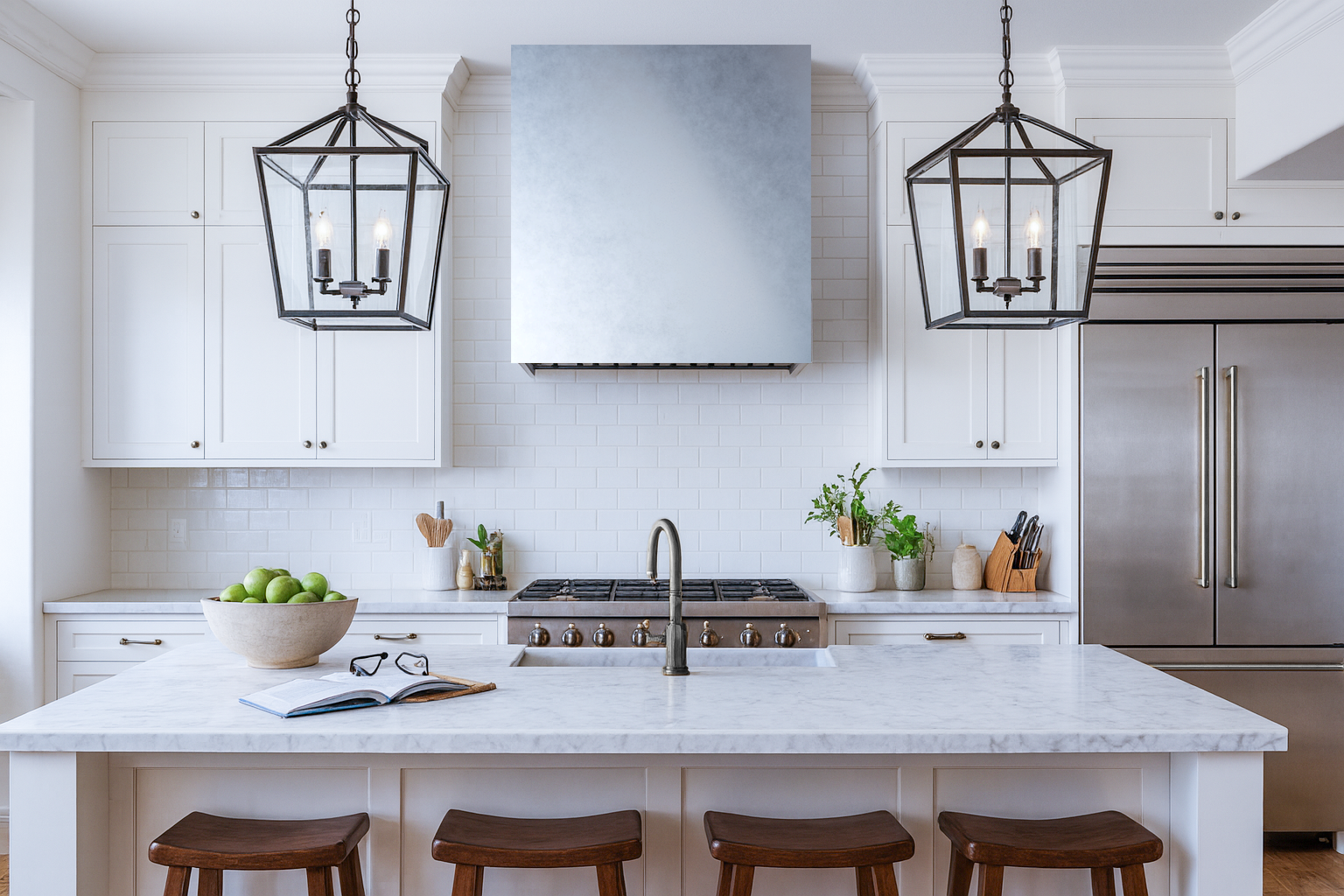
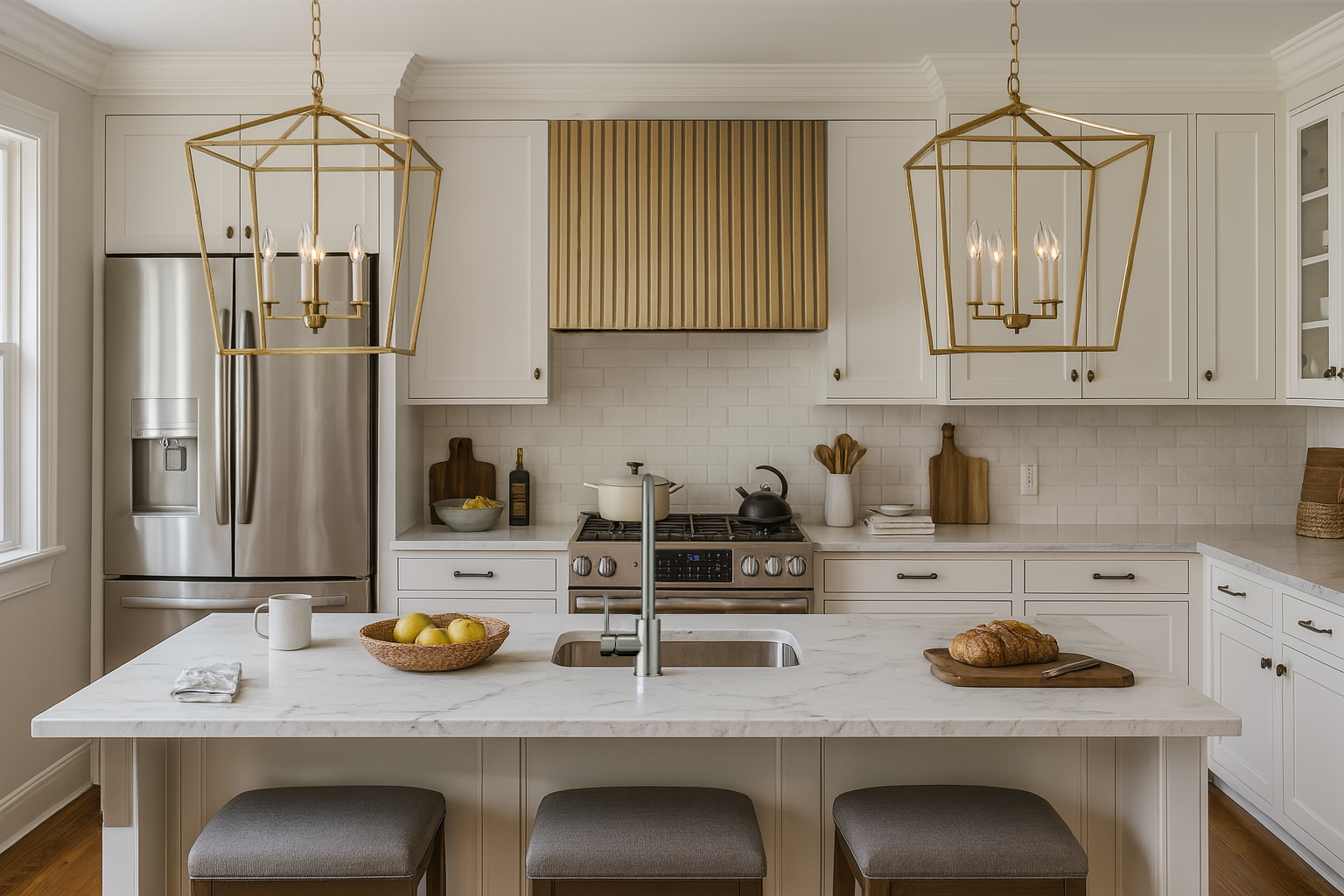
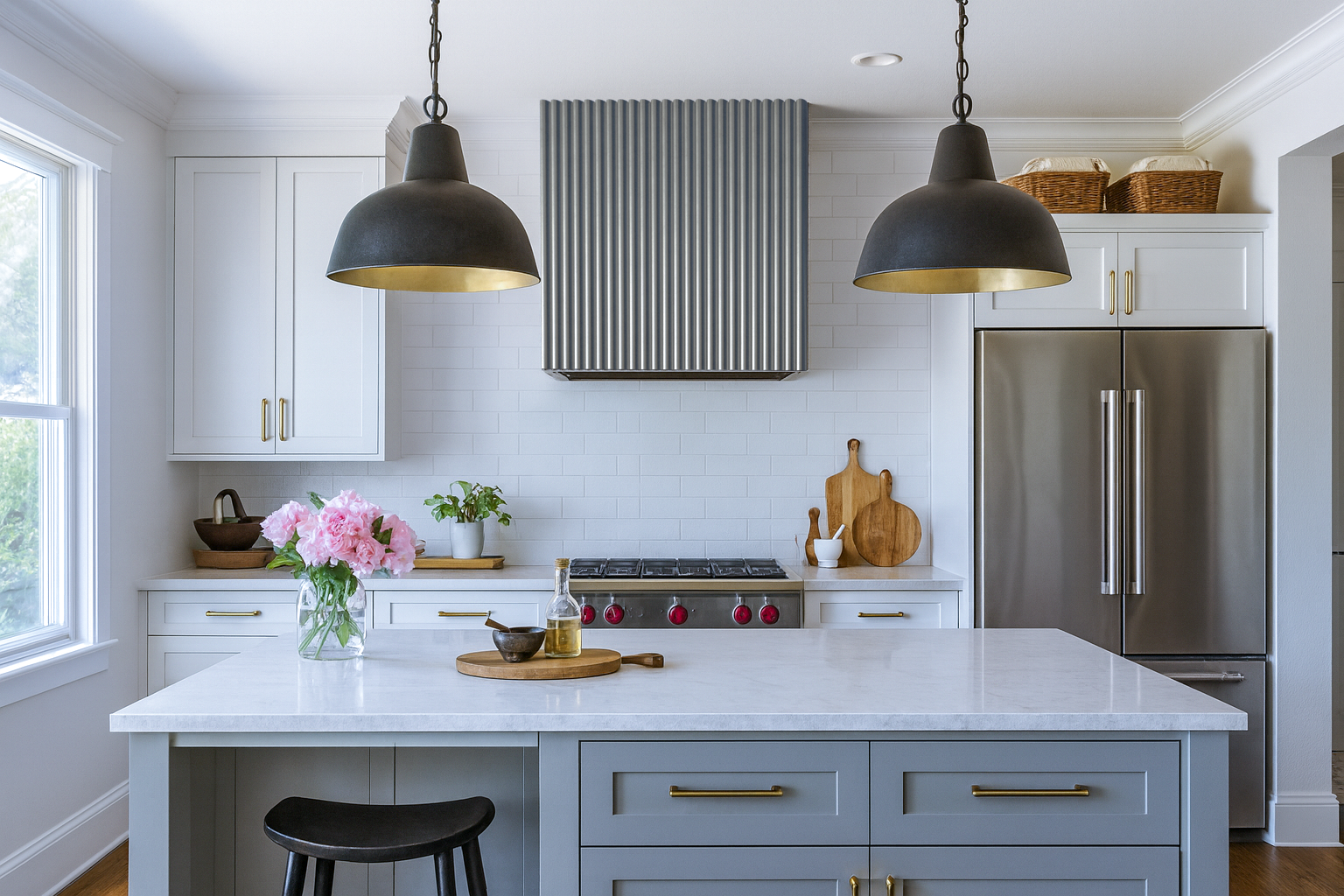
Homeowners and designers typically want a signature surface or hood that feels one of a kind. Prioritize a living-metal specialist with hand-finishing and edge options, plus a range hood program that includes a premium liner for seamless integration. Fully custom hoods are designed to exacting specifications, while curated lines suit builders who need consistent quality at volume.
Restaurants and Bars
Bar tops take daily abuse and are seen by every guest. Look for proven performance in hospitality, a robust edge and seam approach, and a patina strategy that suits your concept. French bistros and brasseries have used pewter bar surfaces for centuries, and the tradition endures because the material wears gracefully.
Boutique Hotels
Hotels combine feature surfaces in public spaces with repeatable elements in rooms. A maker that can do both a bespoke lobby bar and a more standardized run of pieces reduces vendor complexity.
Large Commercial and Mixed-Use Developments
If metal is part of the building envelope or a large architectural system, an architectural sheet-metal fabricator with engineering capacity is the natural lead. A living-metal specialist can complement them with interior feature surfaces.
Questions to Ask Every Maker Before You Commit
- Is the surface solid metal, and how is it made?
- Which metals do you fabricate weekly?
- Who is my designer, and will I receive technical shop drawings for approval?
- What is the realistic lead time from approved drawings to delivery?
- Can you send samples of the exact finish and edge?
- Where is the work fabricated?
- What will this surface look like after one year of use?
- What care does it require?
Where La Bastille Fits
We are one option among several, and we are most useful when the brief calls for living metals. We handcraft custom metal countertops, bar tops, and range hoods in cast zinc, pewter, brass, bronze, and copper for luxury interiors, restaurants, bars, and boutique hotels. Our on-staff designers and artisans work alongside designers, architects, and hospitality groups across North America.
Our offerings fall into three tiers:
- Fully custom surfaces and hoods: designed and built to your specifications, each one of a kind.
- A curated line of range hoods in cast zinc and brass: for builders and designers who need volume with consistent quality.
- The Bastille Collection: a trade-only collection of three ready-to-order cast metal range hoods in standard sizes.
If your project is primarily structural cladding, sculptural ironwork, or commercial stainless, another maker will likely serve you better, and we are glad to say so.
FAQ
What is the difference between a bespoke metal fabricator and an architectural metalwork maker?
The terms overlap. "Bespoke" emphasizes one-of-a-kind design, while "architectural metalwork" describes metal elements in buildings, from cladding to counters. Judge a maker by specialty, process, and scale rather than by the label.
Which metals age best for countertops and bar tops?
Zinc, pewter, bronze, brass, and copper all develop patina and are often chosen precisely for that reason. Zinc ages to a warm, antique character, pewter mellows to grey or can be polished to a mirror finish, and bronze, a harder alloy, develops its own use patterns.
How long does custom metalwork take?
Hand-fabricated surfaces generally take months, not weeks. Our lead time is 12–14 weeks, following design approval. Confirm schedules in writing with any maker.
Is pewter the same as zinc?
No. Pewter is a malleable alloy composed mostly of tin, while zinc is a distinct metal with a blue-grey tone. Parisian bars are often called "le zinc," though many of those surfaces are actually pewter.
Can I request samples before ordering?
You should. Samples show finish, color, and sheen far better than photographs, and any serious maker will provide them.
Do I need an architect or designer to work with a custom metal fabricator?
Not necessarily, though many projects benefit from one. A good fabricator provides in-house design support and shop drawings to bridge your concept and the finished piece.
Next Steps
Start by writing a one-page brief: the metal or metals you are considering, the dimensions and quantity, the setting, and your target install date. Share it with two or three makers whose specialties fit, request samples, and compare their answers to the questions above.
If living metals are on your list, we would be glad to hear about your concept. Reach us by email or phone, or schedule a time on our calendar through labastille.com. We respond within one to two business days, and we will introduce your designer and sales coordinator early so you know who is working on your piece. Whatever your timeline, we respect your decision process and look forward to the conversation.