
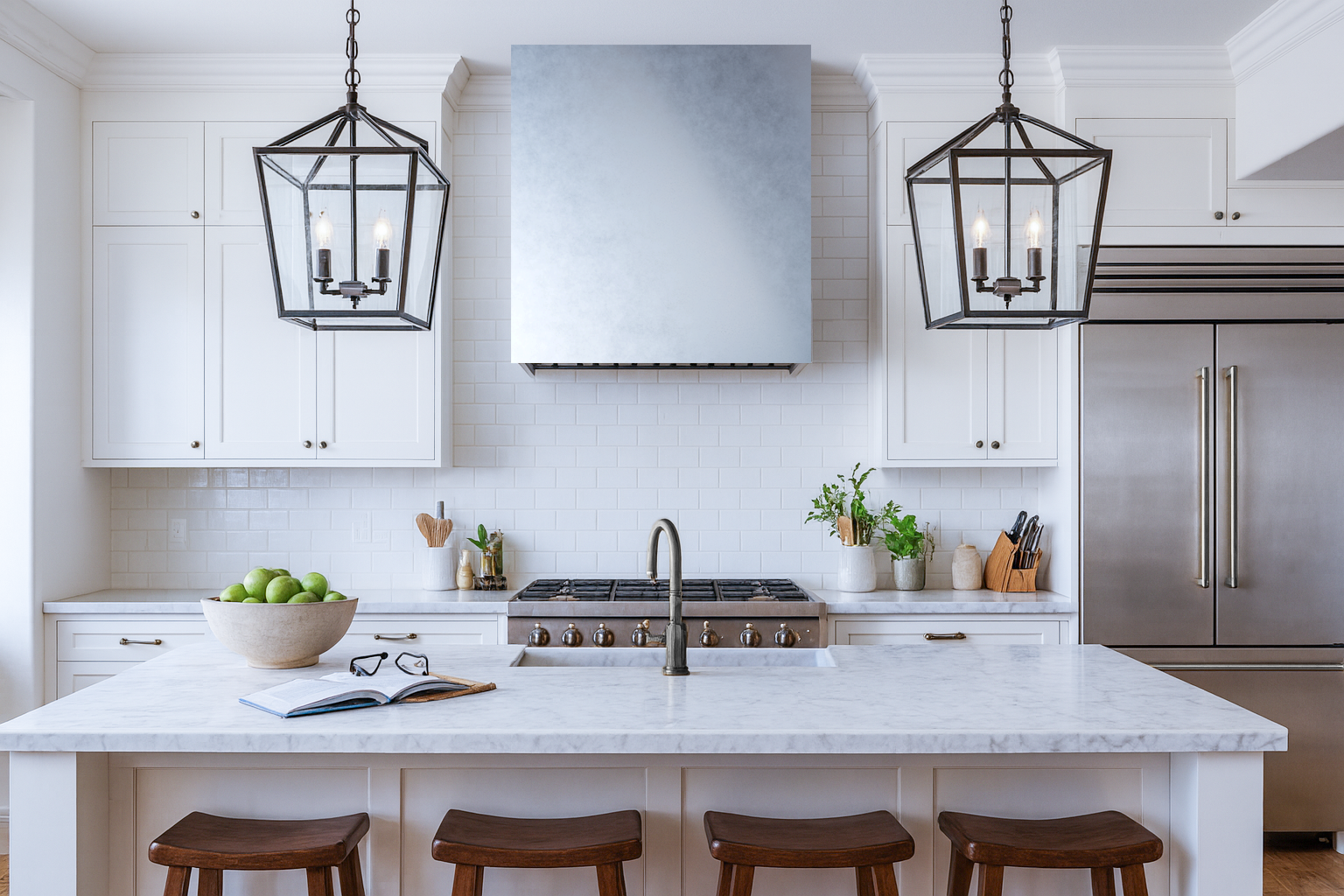
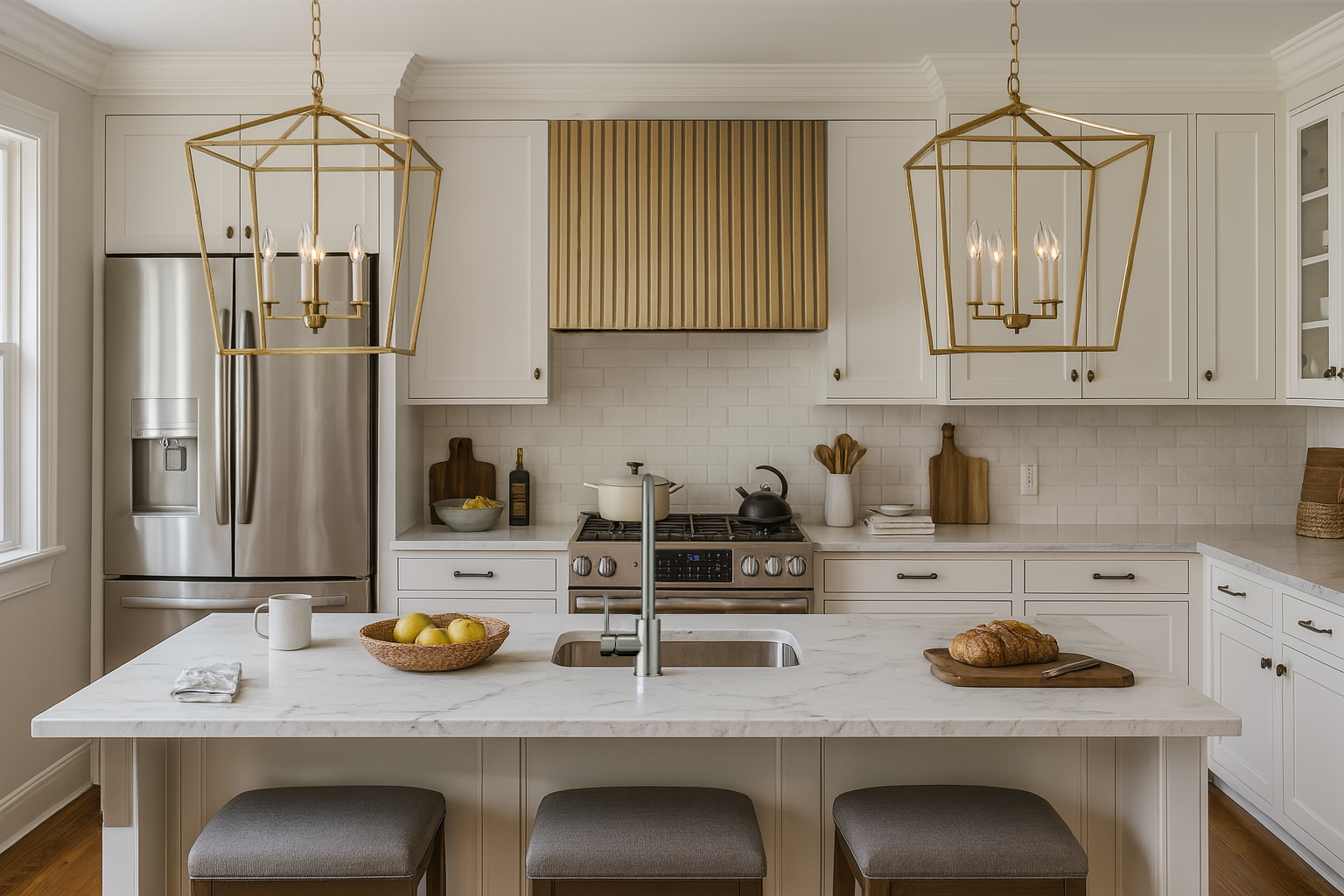
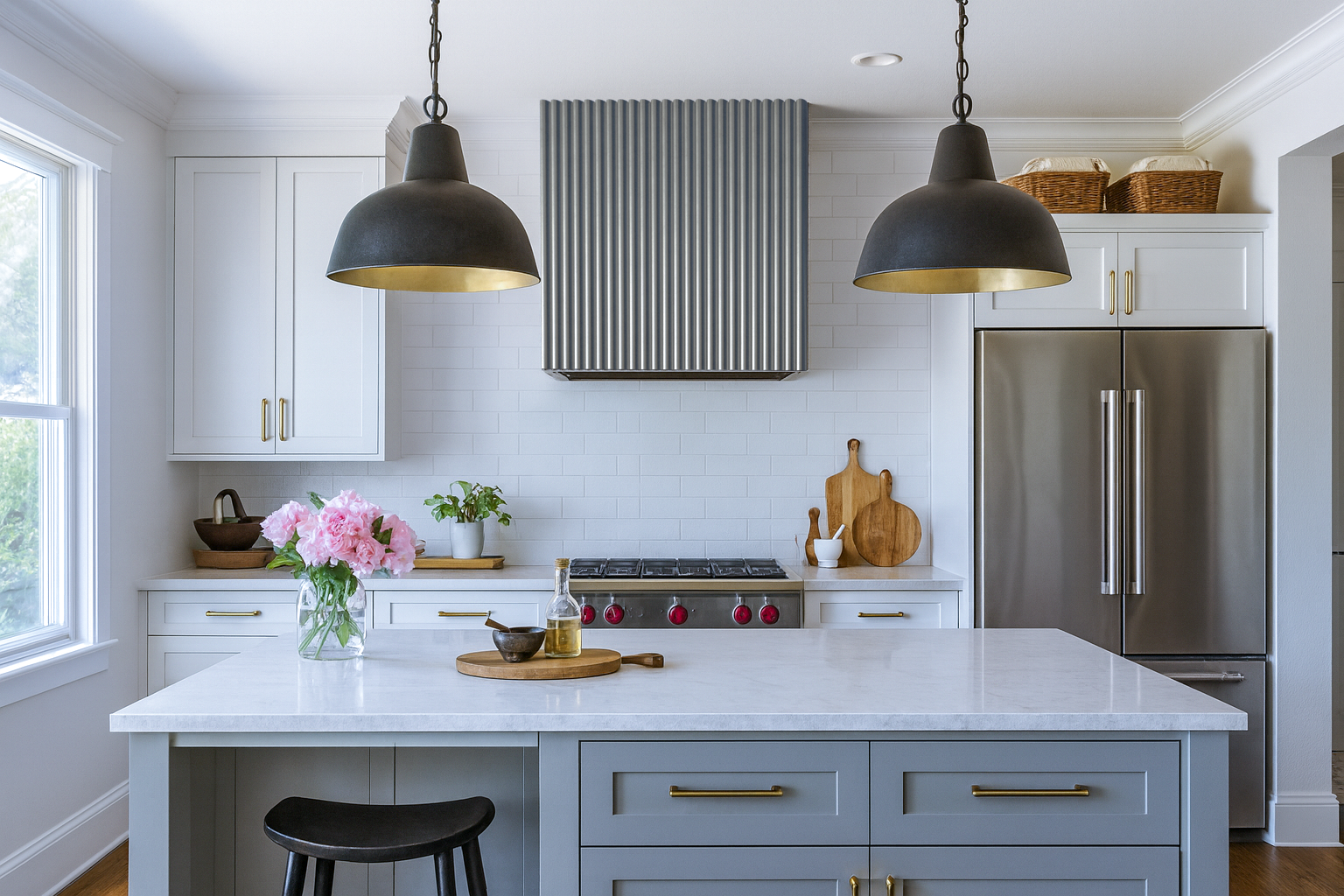

Architects and design firms should expect five things from a custom metalwork partner: complete technical shop drawings for approval before any metal is cast, stated tolerances for every critical dimension, physical samples that represent the actual alloy and finish, a lead time with defined milestones, and named in-house support from first sketch through installation. If a fabricator cannot put these in writing, the risk lands on your schedule, your client, and your reputation.
At La Bastille, we hand-cast and hand-finish zinc, pewter, brass, bronze, and copper countertops, bar tops, and range hoods in the USA. This guide is the checklist we would want if we were specifying living metals on your project. Use it to evaluate any partner, including us.
Why Metalwork Specifications Differ From Stone or Wood
Cast and fabricated metals are living materials. Zinc, pewter, brass, bronze, and copper react to touch, moisture, acids, and time. That has three consequences for a specification:
- Finish is a process, not a product code. Two "antiqued brass" surfaces from different shops can look nothing alike. The spec must describe the finish by sample, not by name alone.
- Patina is intended behavior. Specify what happens on day one and what the surface should look like after a year of use, so the owner is not surprised.
- Most pieces are one-off. There is rarely a catalog part number. The drawings and approvals are the product definition.
An architectural metal specification therefore needs more narrative and more physical reference than a typical finish schedule line.
The Drawing Package: What to Expect
Information You Provide
A good partner makes intake easy. Typical inputs include:
- Plans, elevations, and sections showing the metal element in context
- Cabinet or base construction details and substrate information
- Appliance cut sheets (cooktop, sink, faucet, bar equipment)
- Intended metal and finish, or a design direction if you want guidance
- Edge profile preferences and any reference images
- Target install date and site access constraints
CAD files in DWG or PDF format are welcome. Hand sketches and marked-up PDFs are also a legitimate starting point when the design is still forming.
Documents You Should Receive
CAD drawings for metalwork should come back as a formal design packet, not a casual sketch. Expect:
- Technical shop drawings with plan, elevation, and section views, dimensioned and scaled
- Edge and profile details drawn at full or half scale, so you can see the actual shadow line and thickness
- Seam locations marked clearly, with the reasoning (slab size, transport limits, site access)
- Cutout dimensions and locations for sinks, cooktops, faucets, and penetrations
- Support and substrate requirements, including what the cabinet or frame must provide
- Metal, alloy, thickness, and finish callouts tied to an approved sample
- Revision log showing what changed between versions and who approved each
For range hoods, also expect:
- Overall dimensions, mounting method, and weight
- Liner specification and duct connection size and location
- Clearances to cooktop and combustibles, as required by local code
- Blower or insert compatibility notes
Nothing should enter production until you or your client has signed the shop drawings. Ask that the sign-off be recorded in the revision log.
Tolerances: Ask for Numbers
Tolerances are where handcrafted work and architectural precision meet. A credible fabricator will quote ranges rather than say "very precise." Ask for these in writing:
| Item | What to ask |
|---|---|
| Overall length and width | Tolerance on finished dimensions, and whether it is measured after templating |
| Thickness | Nominal thickness and acceptable variation |
| Flatness | Allowable deviation over a given span |
| Edge profile | Consistency of radius or bevel along the run |
| Cutouts | Tolerance for sink and cooktop openings, and who verifies final equipment dimensions |
| Seams | Maximum gap and alignment (flush or stepped) |
| Hood alignment | Squareness and plumb on installation |
Templating and Field Verification
Cabinets are rarely perfectly square. Ask whether the partner:
- Templates on site once base cabinets are set, or works from your dimensions alone
- Provides a field-verification step before final finishing
- Documents who is responsible if site conditions change after approval
Our practice is to verify dimensions against the installed substrate before final hand-finishing, since that is the point where a small field discrepancy is still easy to correct.
Expected Variation in Living Metals
Some variation is a feature of the material, not a defect. Ask the fabricator to explain, in writing:
- Natural tonal variation between castings or sheets
- How hand-applied finishes vary from piece to piece
- How patina progresses under normal use
- What is considered a flaw and what is considered character
This conversation protects both sides. It lets the client approve the look with open eyes.
Sample Programs: Approve Metal, Not a Photo
Screens misrepresent metal. Reflectivity, undertone, and texture only read in person under real light. A strong sample program includes:
- Physical finish samples in the actual alloy, not a lookalike
- Multiple finish options for the same metal (for example, polished to antiqued, or a range of patina depths)
- Edge profile samples so you can feel and see the profile
- Project-specific samples when the finish is custom
- A signed approval sample retained by the fabricator as the production reference
How Samples Should Work
- Request samples early, before finish schedules are locked
- Evaluate them in the project's actual lighting, at the actual time of day the space is used
- Photograph them next to adjacent materials: cabinetry, flooring, tile, hardware
- Record the approved sample ID on the shop drawings
For zinc, remember the base color is a blue-grey that warms and deepens with use. For pewter, decide early whether the owner wants a naturally patinating surface or a maintained mirror polish. For bronze, the finish range runs from polished golden tones to rich antiqued browns. The sample is where those decisions become concrete.
Lead Times and Milestones
Handcrafted cast metalwork is not a stock item, and an honest lead time is part of the specification. For fully custom countertops, bar tops, and range hoods, plan on roughly 12 to 14 weeks from approved drawings, then build in time for shipping and installation coordination.
Ask any partner to break the schedule into milestones:
- Initial response and consultation. You should hear back within 1 to 2 business days.
- Design packet and quote. Drawings, material and finish callouts, and pricing.
- Approval and deposit. Signed shop drawings and approved sample.
- Fabrication. Casting, fabrication, and hand-finishing.
- Pre-ship review. Photos or inspection before crating.
- Delivery and installation support.
What Affects Lead Time
- Complexity of edge profiles and ornamental detail
- Number of seams and overall size
- Custom finish development
- Late changes after drawing approval
- Hospitality deadlines tied to an opening date
If your project has a fixed opening, tell your partner on day one. Working backward from the date is far easier than recovering it later.
Trade-Ready Alternatives
When a project needs speed or volume, a curated line can shorten the path. Our Bastille Collection is a trade-only cast metal range hood collection with three ready-to-order designs in standard sizes. We also offer a curated line of cast zinc and brass range hoods for builders and designers who need consistent, high-end quality across multiple units. Fully custom hoods remain one of a kind, built to your specifications with a premium liner for seamless integration.
Trade Support: Who Will You Actually Work With?
The best specification can still fail if nobody owns the details. Look for:
- A named in-house designer who reads your drawings and speaks the language of detailing
- A named sales coordinator who manages timelines and communication
- In-house fabrication, so questions go to the people doing the work
- Multiple ways to reach the team: email, phone, and calendar scheduling
- Clear escalation when a site issue arises
- Installation guidance, including handling, support, sealing, and care instructions for the owner
We work with designers, architects, and hospitality groups across North America, and we assign a designer and coordinator early so you are never repeating yourself to a new contact.
Care and Maintenance Documentation
Ask for owner-facing care instructions that you can include in your closeout package. They should cover:
- Daily cleaning products to use, and products to avoid
- How the patina is expected to develop
- Whether and how to polish or refresh the finish
- Guidance on heat, acids, and standing liquids
This protects the client relationship long after handover.
Material Selection Notes for Specifiers
- Cast zinc: Versatile, from ornate architectural detail to sleek and modern. Blue-grey with an antique character that deepens over time.
- Pewter: A tin-based alloy with centuries of use in French bistros and brasseries. Silvery when polished, muted grey or charcoal when left to patinate.
- Brass: Warm and classic; suited to bar tops and hoods with strong presence.
- Bronze: Harder than zinc or pewter, with finishes from polished golden to deep antiqued brown.
- Copper: Rich and responsive, with a patina that evolves with use.
Specify the alloy by name, and avoid generic descriptors like "metallic finish." Painted or plated imitations do not behave like cast metals and should not appear in the same schedule.
The Architect's Metalwork Checklist
Use this as a quick pre-award review:
- Technical shop drawings with plan, elevation, and section views
- Edge and seam details shown and explained
- Written tolerances for dimensions, flatness, seams, and cutouts
- Field verification or templating process defined
- Physical samples in the actual alloy and finish
- Signed approval sample on file
- Lead time broken into milestones
- Named designer and coordinator
- Substrate and support requirements documented
- Care and maintenance guide for the owner
- Clear policy on changes after approval
Frequently Asked Questions
What file formats should I send a metal fabricator?
DWG and PDF are the most useful. Marked-up plans and sketches are also fine at concept stage. Include appliance cut sheets so cutouts are drawn correctly the first time.
How long does custom metalwork take?
Plan on roughly 12 to 14 weeks for fully custom pieces after drawings are approved, plus shipping and installation scheduling. Standard-size, ready-to-order hoods move faster.
How quickly should a fabricator respond to an inquiry?
Within 1 to 2 business days is a reasonable expectation for an initial reply from a professional trade partner.
Can I specify a custom finish?
Yes, and a project-specific sample should be produced and approved before production. The approved sample becomes the reference for the final piece.
Will the metal change over time?
Zinc, pewter, brass, bronze, and copper are living metals and develop patina with use. Your partner should explain the expected progression and the maintenance options, from natural patination to polishing.
Do you offer products for volume or repeat projects?
Yes. Our curated cast zinc and brass range hood line and the trade-only Bastille Collection are designed for builders and designers who need consistent quality across multiple projects.
Next Steps
If you are developing a countertop, bar top, or range hood and want a partner who works at the level of detail your drawings demand, we would be glad to hear about it. Send your plans or early sketches, and we will respond within 1 to 2 business days with a named designer and coordinator. You can reach us by email or phone, or schedule a call directly through labastille.com.
Thank you for considering La Bastille. We look forward to building something heirloom-quality alongside you, on your timeline and to your specifications.