

Some design projects begin with a blank slate. Le Suprême began inside one of Detroit’s most recognizable landmarks.
Located on the ground floor of Book Tower, Le Suprême is a Parisian-inspired brasserie designed by Method Studios in partnership with Stokes Architecture + Design. The 6,200-square-foot restaurant layers classic French references with details rooted in Detroit, all within a building that has been part of the city’s story for nearly a century.
At the center of the restaurant is a traditional zinc bar fabricated by La Bastille. But to understand the design of Le Suprême, it helps to begin with the building around it.
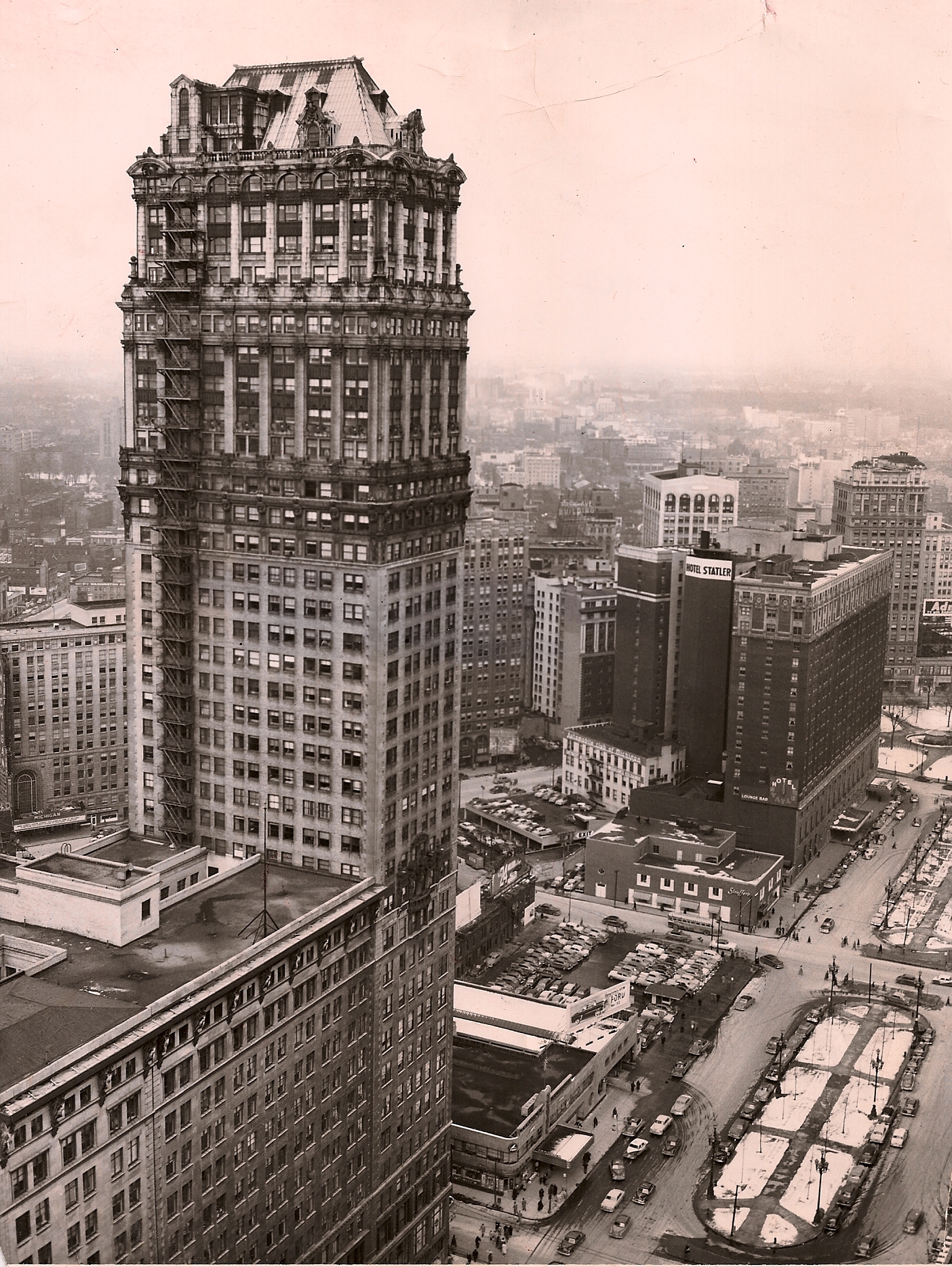
The Story of Book Tower
Commissioned by the Book brothers and designed by architect Louis Kamper, Book Tower opened on Washington Boulevard in 1926.
At 38 stories, it was the tallest building in Detroit when it was completed. The Italian Renaissance Revival structure was conceived as more than an office tower. Its elaborate interiors originally included shopping and dining alongside workspace, part of the Book brothers’ larger vision to establish Washington Boulevard as one of Detroit’s most fashionable destinations. Over time, the building declined and eventually sat vacant beginning in 2009.
Bedrock acquired Book Tower in 2015 and embarked on an extensive seven-year, $300 million-plus restoration. The project included reinstalling 50,000 square feet of marble, recreating more than 7,000 square feet of ornate ceiling details, restoring the building’s 29 exterior caryatids and replacing all 2,483 windows with historically accurate modern versions.
One of the restoration’s most remarkable elements is the original 1920s art-glass skylight above the building’s three-story rotunda, composed of approximately 6,000 glass panels and more than 7,000 individual glass jewels.
When Book Tower reopened in 2023, it once again became a place to live, work, stay, gather and dine. Le Suprême was the first restaurant to open within the restored building.
A New Chapter for a Detroit Landmark
For Method Co., the hospitality group behind Le Suprême and several of Book Tower’s restaurants and bars, the significance of the building was an essential part of developing the concepts within it.
Method Co. CEO and co-founder Randall Cook described the project as an opportunity to help write “the story of Book Tower’s next 100 years.”
That idea is especially visible at Le Suprême. Rather than treating the historic building as a backdrop, the restaurant feels in conversation with it. Rich materials, traditional detailing and layers of artwork and furniture create a space that feels appropriate for the architecture surrounding it while still establishing an identity of its own.
And although the restaurant draws heavily from the visual vocabulary of the French brasserie, it was never intended to simply recreate Paris in Detroit. Detroit’s own French history, along with the city’s connections to manufacturing, music and automotive culture, informed the concept as well.
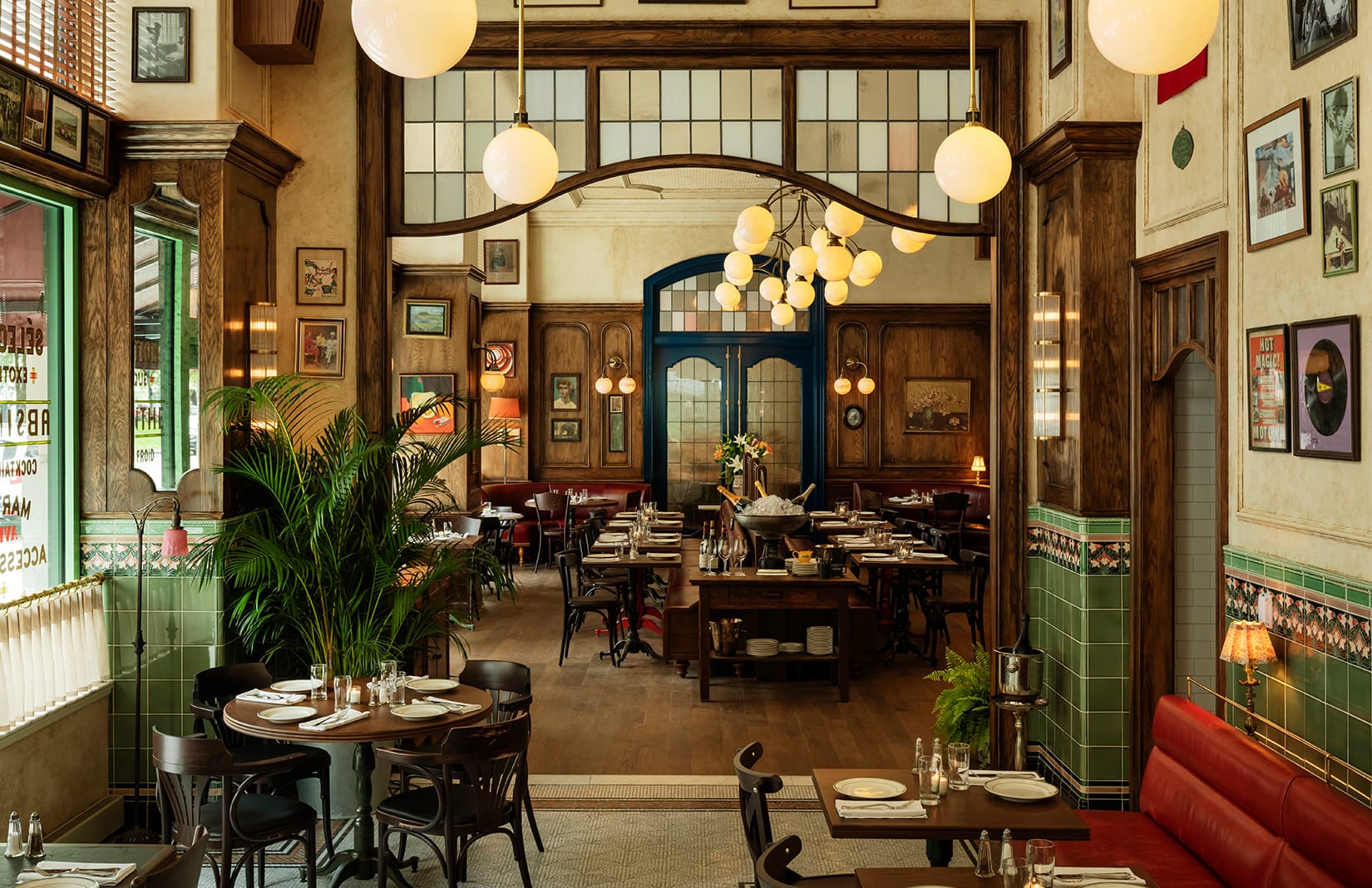
Inside Le Suprême
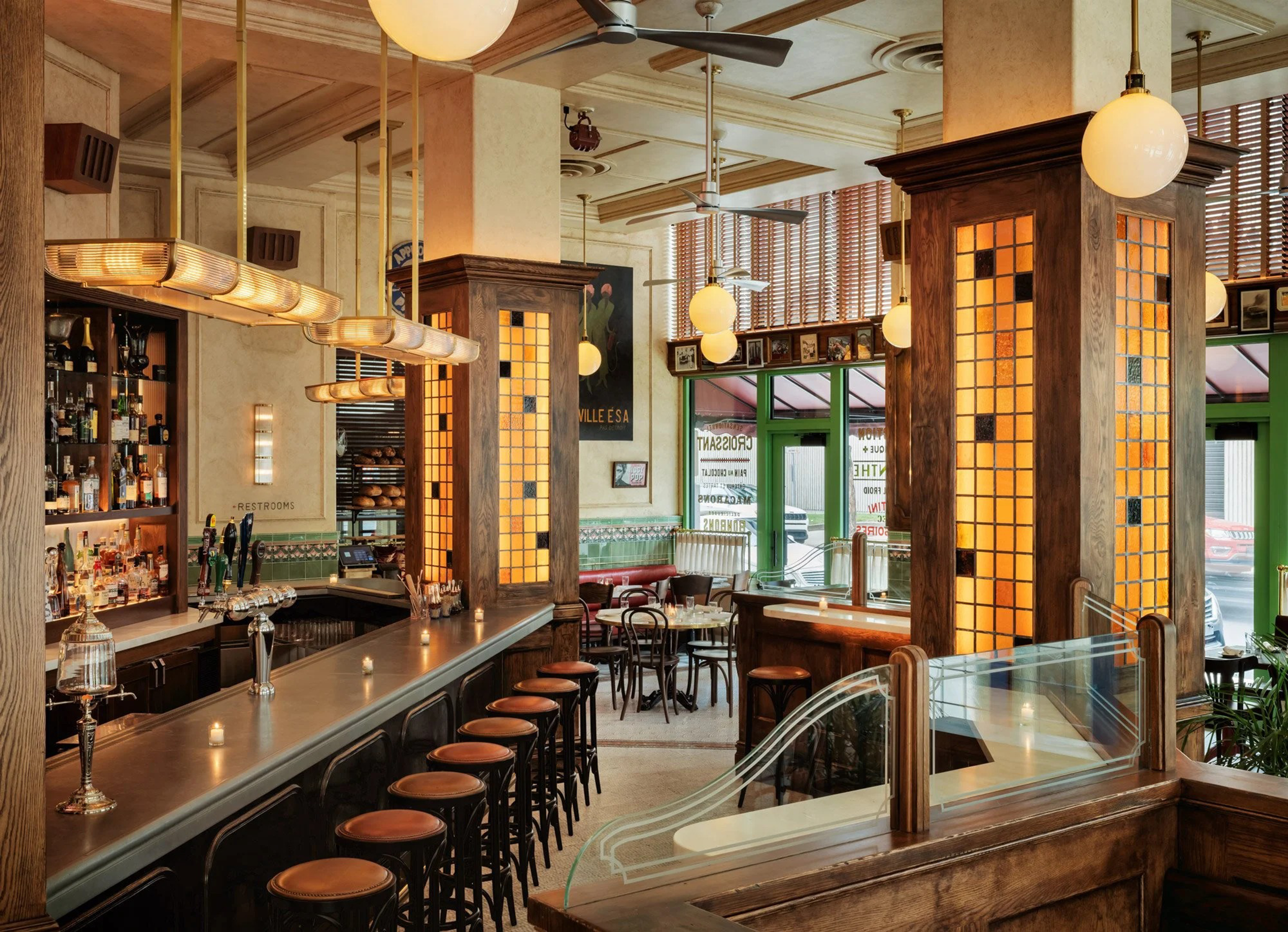
The restaurant brings together an unusually rich mix of materials. Handmade Art Nouveau European tile runs through the space alongside hand-clipped mosaic marble flooring. Oxblood leather booths introduce deep color, while dark walnut millwork, bentwood-style seating, vintage lighting, artwork and furnishings give the restaurant its layered character.
At 6,200 square feet, Le Suprême accommodates approximately 210 guests and includes a private dining room with a fireplace and seating for up to 24. There is also an in-house boulangerie and pâtisserie, a wine list of more than 300 wines and Champagnes and traditional absinthe service, completing the brasserie experience beyond the interiors alone.
Yet for all of those individual details, the strength of the room comes from how naturally they work together. Nothing feels like a standalone design moment. The tile, leather, marble, wood, artwork and metalwork all contribute to one larger visual language.
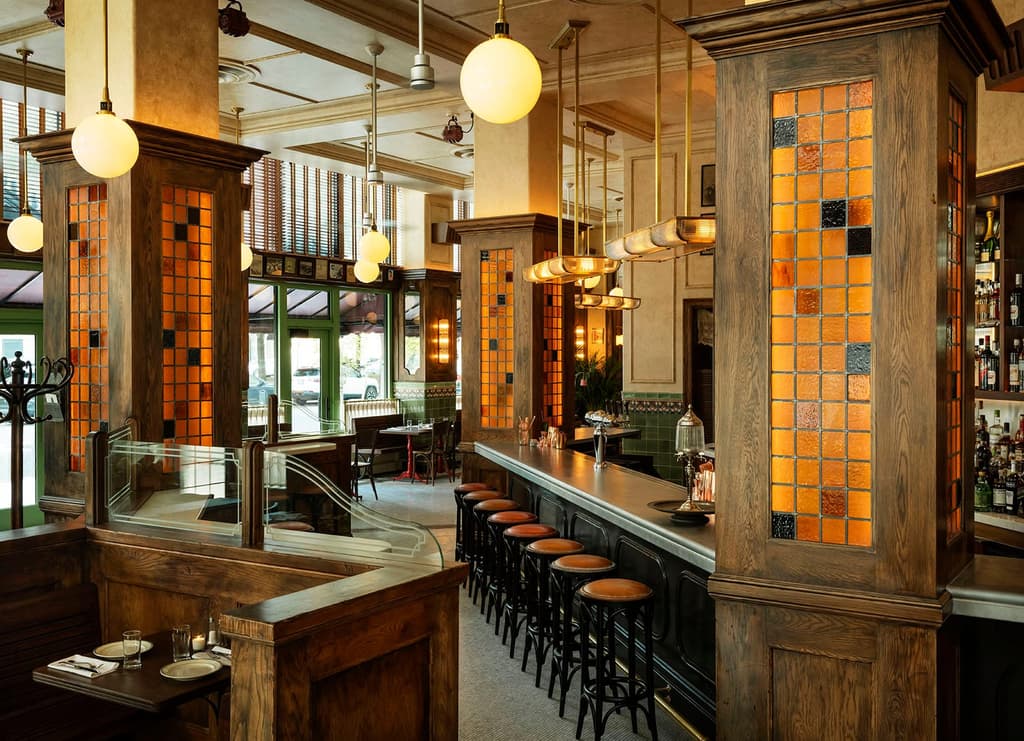
At the Center, a Traditional Zinc Bar
Running through the restaurant is a custom zinc bar fabricated by La Bastille. Surrounded by dark wood, leather seating, patterned flooring and custom lighting, the bar becomes one of the room’s primary gathering points and an important architectural element within the overall composition.
Zinc has a particularly strong connection to traditional French café and brasserie interiors, making it a natural material choice for Le Suprême. But here, it functions as more than a historical reference. It’s soft, silvery surface introduces contrast against the darker woods and the oxblood tones surrounding it, while its handcrafted character sits comfortably alongside the restaurant’s tile, marble and vintage elements.
Most importantly, the material does not compete with the architecture. Instead it belongs to the larger story of the room.
Paris, By Way of Detroit
That balance is perhaps what makes Le Suprême most successful.
There are unmistakable references to the classic Parisian brasserie throughout the restaurant, but the project does not feel transplanted from another city.
Instead, French influences are layered into a distinctly Detroit setting: an iconic Louis Kamper building, painstakingly restored nearly a century after it first opened, and brought back to life with a new generation of hospitality spaces.
In 1926, Book Tower was designed as a place where Detroiters could work, shop and dine. Nearly 100 years later, Le Suprême has helped bring dining back to its ground floor.
For La Bastille, we were proud to fabricate a piece that now sits within that larger story: a traditional zinc bar made for a new restaurant inside one of Detroit’s most historic buildings.
Are you an interior designer looking to add a zinc bar to your next project?
 Reach out through our website, and our Director of Sales will be in touch with you.
Just looking for now?
Download our lookbook here.