
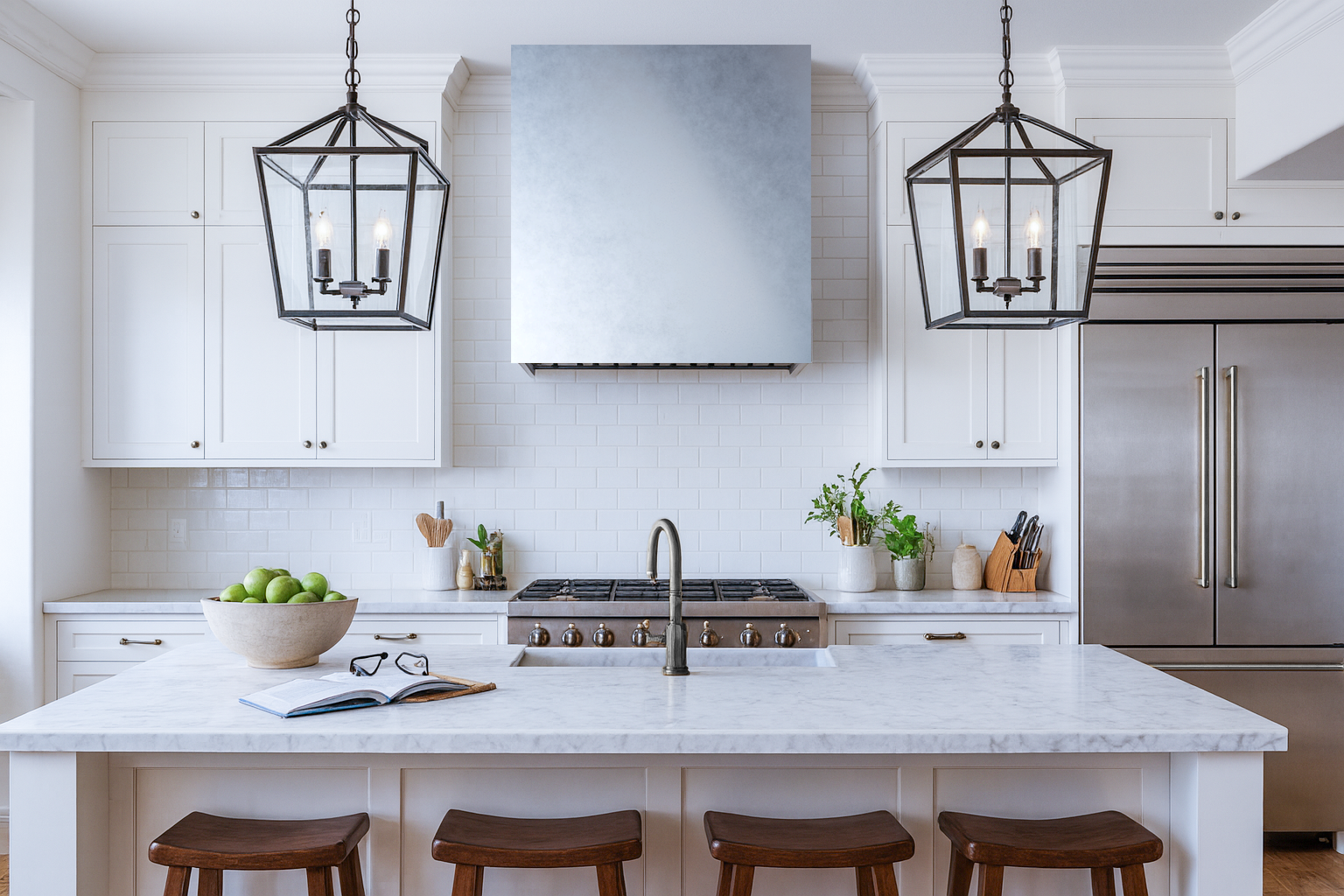



Zinc and pewter countertops need only a few minutes of care each day: wipe with a soft cloth and warm water with a drop of pH-neutral dish soap, dry the surface, and avoid acids, bleach, and abrasive pads. Once or twice a year, a coat of high-quality paste wax protects the finish and evens out the patina. Both metals are living surfaces. They will darken, soften, and show the marks of daily use, and that change is the character you chose them for. The routine below keeps that aging graceful rather than uneven.
We handcraft every zinc and pewter surface at La Bastille, and the guidance here comes from the same understanding of these alloys that shapes how we cast and finish them. Thank you for giving these metals a place in your home or establishment. A little consistent care will let them reward you for decades.
Understanding What You Have: Zinc vs. Pewter
The two metals behave differently, so it helps to know how.
Cast zinc is blue-grey and reactive. It develops a patina through contact with air, moisture, and the oils on your hands. Acids such as lemon juice, vinegar, and wine will etch the surface, leaving lighter or dull marks. Zinc is a relatively soft metal, so it can scratch, though these marks tend to blend into the patina as it deepens.
Pewter is a malleable alloy composed mostly of tin. Polished pewter begins with a bright, silvery hue. Left alone, it settles into a muted grey or charcoal patina. Maintained with regular polishing, it can hold a near mirror-like finish. This is the metal behind the famous Parisian bars often called "le zinc."
Both are softer than bronze, which means gentle tools and a light touch are your best habits. Neither is a "set it and forget it" surface in the way a sealed stone slab might be, and neither needs to be babied. The goal is to prevent the avoidable damage (etching, standing moisture, abrasion) and let the natural aging proceed.
Daily Cleaning Routine
Plan on about two minutes.
- Wipe up spills promptly. Pay particular attention to acidic liquids: citrus, vinegar, wine, tomato, cocktail mixers, and carbonated drinks.
- Wash with warm water and a mild, pH-neutral dish soap. Use a soft cotton cloth or microfiber towel.
- Rinse with a clean, damp cloth. Soap residue left to dry can leave a film.
- Dry completely. Use a soft, dry towel. Drying is the step most often skipped, and it matters most. Standing water is what produces water rings and uneven spotting.
That is the entire daily routine. For busy bar tops, we recommend wiping down at the end of each service and drying thoroughly before close.
Products to Use
- Warm water
- Mild, pH-neutral dish soap
- Soft cotton or microfiber cloths
- Soft-bristled nylon brush (for seams and edge details)
- High-quality paste wax (see below)
Products to Avoid
- Bleach and chlorine-based cleaners. These attack the surface and cause blotchy discoloration.
- Ammonia-based glass cleaners.
- Vinegar, lemon, and other acidic cleaners, including "natural" cleaning sprays.
- Abrasive powders, scouring pads, and steel wool. They scratch and can leave fine metal particles that rust.
- Oven cleaners, drain cleaners, and paint strippers.
- Dishwasher detergents and harsh degreasers.
- Metal polishes not intended for your specific metal. Some contain acids or abrasives that will strip a zinc patina.
Waxing: Your Most Important Periodic Step
Wax is the closest thing zinc and pewter have to a protective sealant. It creates a thin barrier that repels water and slows the effect of mild acids, giving you time to wipe up a spill before it marks the metal.
How Often to Wax
- Residential kitchens: every 3–6 months for zinc, every 6–12 months for pewter, adjusted to how heavily the surface is used.
- Restaurant and bar tops: monthly, or more often in high-traffic areas.
A good test: if water no longer beads on the surface, it is time to re-wax.
Step-by-Step Waxing
- Clean and dry the surface fully. Wax applied over residue seals in grime.
- Apply a thin layer of paste wax with a soft cotton cloth, working in small circular motions. A high-quality carnauba or microcrystalline paste wax is a good choice. Avoid waxes with added abrasives or cleaning solvents.
- Let it haze. Follow the manufacturer's directions, typically 10–20 minutes.
- Buff with a clean, dry cloth in long strokes until the surface is smooth and glossy to the touch.
- Allow a short cure time before heavy use, ideally a few hours.
Less is more. A thick coat looks cloudy and attracts fingerprints. If the surface feels tacky, you have applied too much; buff longer with a fresh cloth.
Waxing will deepen and unify the patina over time. Zinc in particular takes on a warm, softly lustrous look with regular waxing. If you prefer a more matte, naturally weathered appearance, wax less often and accept more variation.
Polishing Pewter
Pewter offers a choice. You can let it patina naturally to a soft charcoal, or you can polish it to keep it bright.
To Maintain a Bright Finish
- Clean and dry the surface.
- Apply a pewter-safe, non-abrasive polish with a soft cloth, following the product's directions. Test in an inconspicuous area first.
- Work with the grain or in the direction of existing finishing marks.
- Buff off all residue with a clean cloth.
- Finish with a coat of paste wax to slow re-dulling.
Expect to repeat this every few weeks to a few months if you want to maintain a mirror-like shine. Polished pewter will always trend toward a muted grey as it ages, so deciding early which look you prefer will save frustration.
To Embrace the Patina
Skip the polish. Clean daily, wax a couple of times per year, and let the surface darken evenly. Pewter ages gracefully this way and is genuinely low maintenance.
A note on zinc: we generally do not recommend polishing zinc to brighten it. Aggressive polishing removes the patina and exposes raw metal that will then re-patina unevenly. If you want to refresh a zinc surface, use the gentle methods below instead.
Treating Etching, Water Rings, and Scratches
These three issues are the most common questions we hear. Most are manageable at home, and many fade into the patina over time.
Etching
Etching occurs when an acid reacts with the metal and leaves a dull or lighter mark, often with a slightly rough texture.
What to do:
- Clean and dry the area.
- Rub gently with a very fine abrasive pad (such as an ultra-fine, non-metallic pad) lightly dampened with water, moving in the direction of the surface finish. Use minimal pressure.
- Wipe clean and dry.
- Apply wax to the area and buff, blending outward into the surrounding surface.
Fresh etches often disappear as the surrounding area darkens. Deep etches, such as those from a long-standing acid spill, may need professional attention. Because each piece is hand-finished, we can advise on the right approach for your specific finish.
Water Rings
Water rings are caused by moisture sitting on the metal, which creates a localized patina difference.
What to do:
- Clean the area and dry it fully.
- Buff the ring gently with a soft cloth and a small amount of paste wax.
- If a faint ring persists, use the ultra-fine pad method described above, then re-wax.
Prevention is far easier than correction: use coasters, trivets, and mats, and dry the surface after cleaning. Waxing regularly makes rings much less likely.
Scratches
Because zinc and pewter are relatively soft, light scratches are a natural part of their life.
- Surface scratches: Often disappear with waxing and buffing, or soften as the patina develops. Many owners come to regard these marks as part of the surface's story.
- Moderate scratches: Use the ultra-fine pad method in the direction of the finish, then wax.
- Deep scratches or gouges: Contact us before attempting a repair. Over-sanding can create a visible low spot or mismatched area.
Use cutting boards for knife work, and lift rather than drag heavy cookware, ceramics, and bar equipment.
Heat, Moisture, and Everyday Habits
- Heat: Pewter has a low melting point, and both metals can discolor under direct heat. Always use trivets under hot pots, pans, and appliances.
- Standing water: Do not leave wet sponges, cloths, or damp items on the surface.
- Planters and metal items: Terra cotta and wet containers can leave rings or stains. Place a barrier underneath.
- Rubber mats: Some rubber and vinyl products can discolor metal. Avoid prolonged contact.
- Hand oils and fingerprints: These will contribute to the patina. A wipe-down and occasional wax keeps it even.
When to Call a Professional
Contact us if you notice:
- Deep etching or large discolored areas
- Gouges, dents, or seam concerns
- Uneven patina after a spill or cleaner mishap
- A desire to restore the original finish or change the look of the surface
We are happy to review photos, recommend products suited to your finish, and advise on refinishing options. Reach out through labastille.com by email, phone, or by scheduling a call with our team, and we will typically respond within one to two business days.
Frequently Asked Questions
Can I use vinegar to clean a zinc countertop?
No. Vinegar is acidic and will etch zinc. Use warm water and mild, pH-neutral dish soap instead.
How often should I wax a zinc countertop?
Typically every 3–6 months in a home kitchen, and monthly on commercial bar tops. Re-wax when water stops beading on the surface.
Is pewter food safe?
Our pewter countertops and bar tops are fabricated for food-preparation and service environments. As with any surface, keep it clean, and use cutting boards to protect the finish.
Will my zinc countertop stain?
Zinc can mark from acids, oils, and standing moisture, but this is part of its living-metal character. Regular waxing and prompt cleanup minimize visible marks, and the patina tends to blend most of them over time.
Can I put hot pans on zinc or pewter?
We advise against it. Use trivets, especially with pewter, which has a lower melting point.
Can scratches be removed?
Light scratches can usually be buffed or blended into the patina. Deeper damage should be assessed by a professional.
What is the best wax for metal countertops?
A high-quality, non-abrasive paste wax, such as carnauba or microcrystalline, applied thinly and buffed well. Avoid waxes with added solvents or cleaners.
Should I polish my zinc countertop?
Generally no. Polishing removes the developing patina. Clean gently, wax periodically, and let the surface age.
A Surface Meant to Grow With You
Zinc and pewter are not static materials. They respond to your kitchen, your bar, and your habits, and over time they become entirely your own. With a gentle daily routine, periodic waxing, and prompt attention to acids and moisture, your heirloom-quality surface will continue to deepen in warmth and character.
If you have a question about caring for an existing La Bastille piece, or you are considering a custom zinc, pewter, brass, bronze, or copper countertop, bar top, or range hood, we would be glad to hear from you. Our team will take the time to understand your space and answer your questions, at whatever pace suits your decision.