

When an architect or designer specifies custom metalwork for a luxury hospitality or residential project, the fabricator chosen shapes everything that follows—timeline, budget certainty, finish quality, and the long-term integrity of the installation. This guide is written for design professionals who need a clear, criteria-driven framework for evaluating custom metal bar top fabricators, architectural metal range hood suppliers, and the broader field of luxury hospitality metalwork. It is not a ranked list; it is a professional tool for asking the right questions before any commitment is made.
What Separates a Serious Metal Fabricator from a General Shop
Not every metalworking shop is equipped to deliver the caliber of work that high-end restaurants, boutique hotels, and luxury residences demand. A custom zinc bar top, a hand-cast pewter range hood, or a bespoke bronze countertop requires a very specific convergence of material expertise, design capability, and production discipline. Before you shortlist any fabricator, the following distinctions matter considerably.
Material Sourcing and Alloy Quality
The single most consequential variable in custom metal fabrication is alloy quality. A zinc countertop cast from inferior stock will not age gracefully—it will pit unevenly, resist finishing, and fail to develop the rich, living patina that defines the material’s appeal. Pewter composed of low-grade tin compounds can be inconsistent in color and malleable in the wrong direction. Brass and bronze sourced without specification control introduce variations in hardness and tone that no amount of hand-finishing can correct.
When evaluating any fabricator, ask directly:
- Where is your metal sourced, and can you document alloy specifications?
- Is your zinc, pewter, brass, bronze, or copper sourced domestically or internationally?
- Do you work with a consistent materials supplier, or does sourcing vary by project?
USA-sourced materials are not merely a patriotic preference. They carry traceable quality standards, consistent metallurgical composition, and shorter supply chain risk—all of which directly affect your project’s outcome and timeline.
Cast Metal vs. Sheet Metal Fabrication
This distinction is often overlooked and frequently misrepresented. Many shops offer “metal countertops” that are, in practice, thin-gauge sheet metal stretched over a substrate. While sheet metal has legitimate applications, it does not behave, age, or present like a properly cast metal surface.
Cast metal fabrication—particularly in zinc and pewter—produces a thicker, denser surface with superior durability, more refined finishing potential, and the kind of tactile weight that registers immediately in a hospitality environment. A cast zinc bar top, for example, carries a depth of material that absorbs daily use with grace rather than showing wear as damage.
Ask fabricators specifically whether their countertops and bar tops are cast or sheet-based. The answer tells you a great deal about what you are actually specifying.
In-House Design Capability
Architectural projects rarely arrive with a simple rectangle and a finish request. They involve curved bar fronts, integrated drains, bookmatched seams, custom edge profiles, apron details, and range hood forms that must align precisely with cabinetry and ventilation specifications. Fabricators who rely on outside drafting or generic shop drawings introduce communication gaps that cost time and money.
An in-house design team—one that includes dedicated designers and skilled artisans working under the same roof—compresses the interpretation gap between your concept and the finished piece. Technical shop drawings produced in-house mean fewer revision cycles, tighter specifications, and a fabricator who owns the outcome rather than delegating it.
Key Criteria for Evaluating Custom Metal Bar Top Fabricators
1. Custom Capability Across Multiple Metals
A fabricator worth specifying for luxury work should be proficient in at least the core architectural metals: zinc, pewter, brass, bronze, and copper. Each material has distinct fabrication requirements, finishing characteristics, and long-term aging behavior. A shop that works only in one or two metals is likely optimized for volume production rather than bespoke design.
For hospitality projects in particular, the ability to match metals across multiple surfaces—a zinc bar top, a brass range hood, a bronze accent panel—under one fabricator’s quality standard is a significant coordination advantage.
2. Range Hood Fabrication Expertise
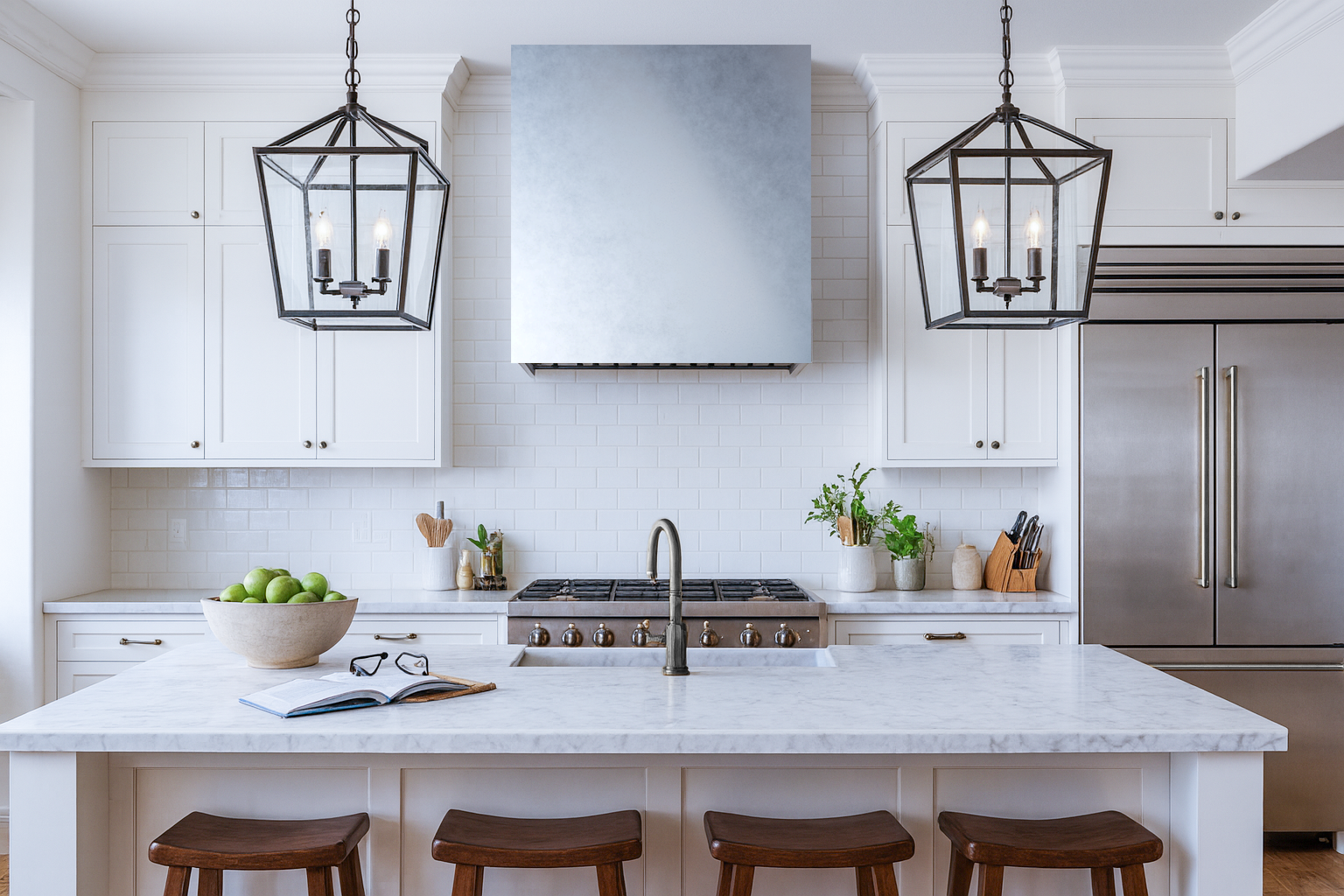
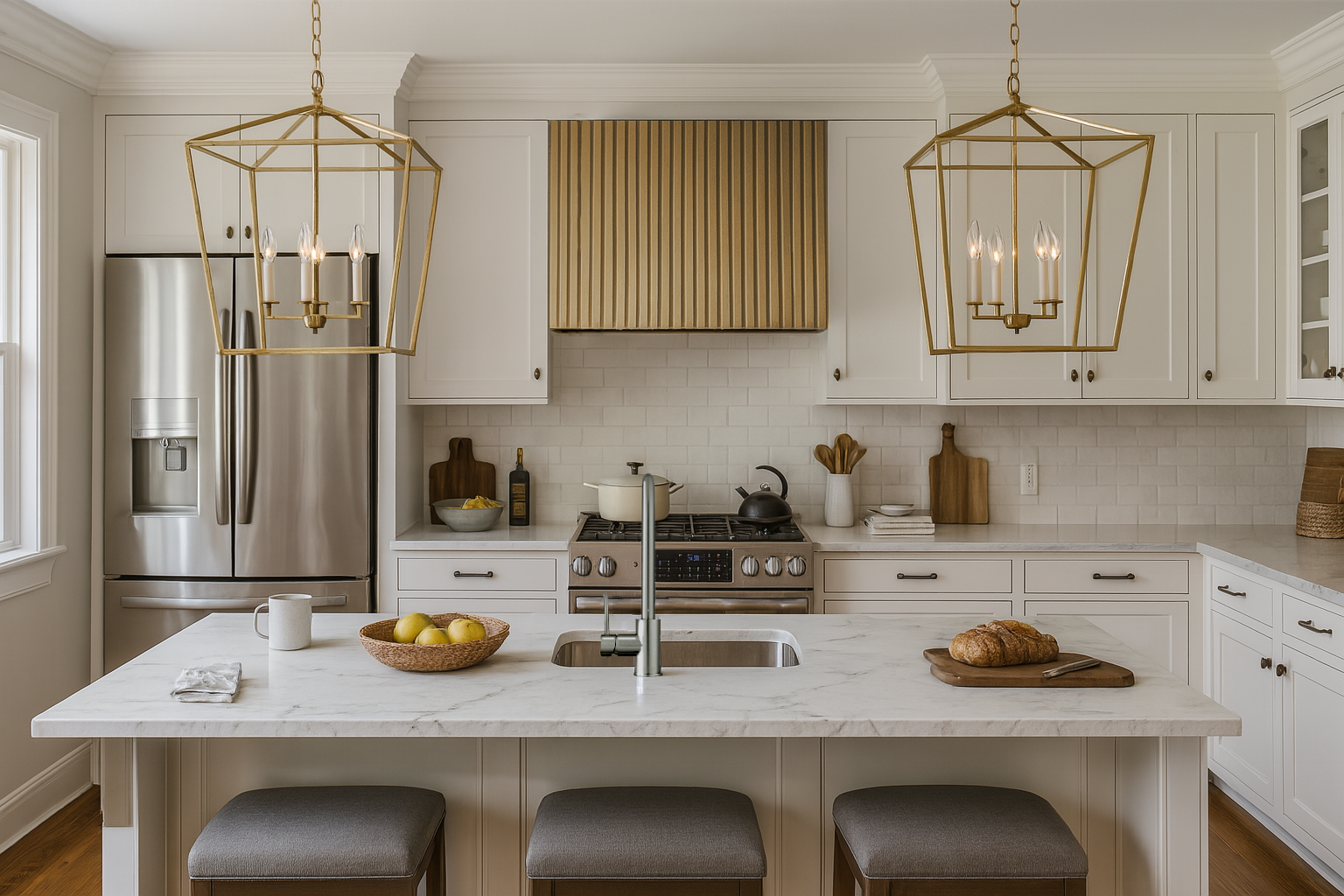
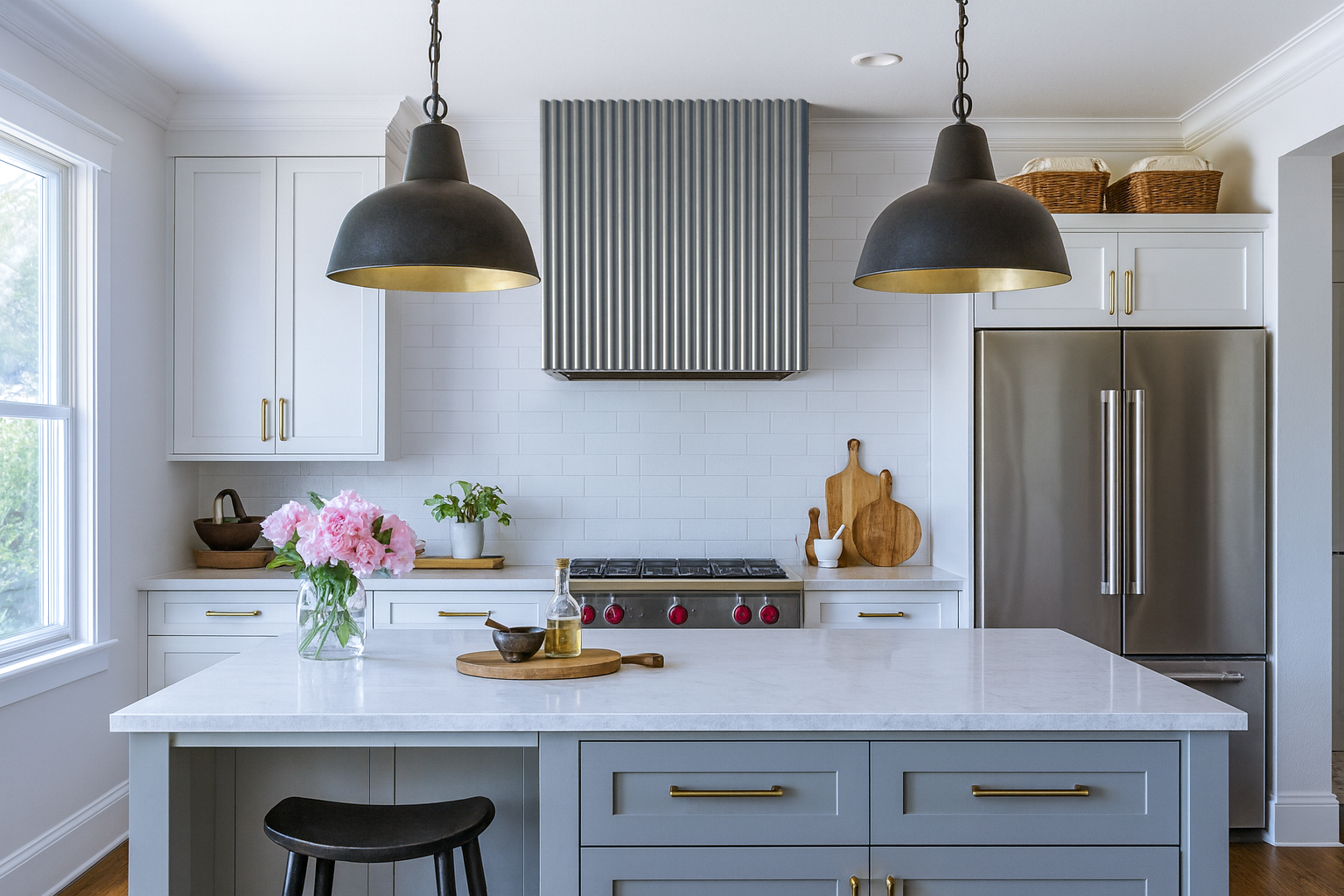
Architectural metal range hoods are among the most complex pieces in a kitchen or restaurant specification. They must reconcile precise ventilation engineering with visual presence, and they must integrate seamlessly with the cabinetry envelope, ceiling height, and surrounding finishes. A fabricator offering custom metal range hoods should be able to demonstrate:
- Experience designing hoods to client-supplied specifications (height, width, projection, liner type)
- A fully equipped hood with a premium liner included, not as an afterthought
- The ability to produce entirely one-of-a-kind forms, not just catalog modifications
- A curated, ready-to-order option for volume projects requiring consistent quality at scale
For design firms managing multiple projects simultaneously, access to a trade-exclusive collection of standard-size range hoods in cast zinc and brass—available at volume with documented quality standards—can be a meaningful resource worth asking about.
3. Trade Support Infrastructure
Designers and architects working on commercial or high-end residential projects need a fabricator who understands the trade relationship. That means:
- Dedicated trade pricing and trade-only product access
- A responsive project coordinator who can answer technical questions within a predictable window (one to two business days is a reasonable standard)
- Support for design intent documentation—helping you specify accurately for permitting, client presentations, and contractor coordination
- Willingness to engage early in the design process, not just at the point of order
Fabricators who treat trade professionals as valued partners—rather than simply customers—will invest in your project’s success because their reputation depends on the outcome just as yours does.
4. Lead Times and Production Transparency
Custom metalwork is not a commodity; it takes time to do correctly. However, vague or constantly shifting lead times are a red flag regardless of the quality claim. A well-organized fabricator operating with in-house production capacity should be able to give you a reliable lead time at the point of inquiry and communicate proactively if anything changes.
For planning purposes, 12 to 14 weeks is a reasonable benchmark for custom cast metal countertops, bar tops, and range hoods from a shop managing production at a professional level. Significantly shorter promises for complex custom work warrant scrutiny. Significantly longer timelines without a clear explanation suggest capacity or workflow issues.
5. Portfolio Depth in Hospitality and Luxury Residential
A fabricator’s portfolio should include projects that are genuinely analogous to yours—not just in material but in scale, environment, and application. High-end restaurant bar tops endure a fundamentally different life than residential kitchen countertops. Range hoods in commercial kitchens face different thermal and cleaning demands than those in private homes.
Look for portfolio evidence across:
- Full-service restaurant and bar installations
- Boutique hotel and hospitality venues
- Luxury residential kitchens and entertainment spaces
- Architecturally significant interiors where the metalwork is a design feature, not a background element
Living Metals: Understanding the Materials You Are Specifying
Part of evaluating a fabricator is understanding the materials well enough to assess whether their claims are credible. Here is a concise reference for the five metals most commonly specified in luxury architectural metalwork.
Zinc
Zinc has a distinguished history in architectural applications—roofing, ornamental downspouts, decorative tiles—and has found a prominent place in contemporary design as both a countertop and bar top surface. Its color is a characteristic blue-grey that deepens and warms with age. Zinc is a living metal: it develops a natural patina over time that many designers and clients find more beautiful than the original finish. It can also be finished to appear already aged—deeply patinated and full of character from the first day of installation. Its versatility spans highly ornate architectural profiles and clean, modern planes with equal success.
Pewter
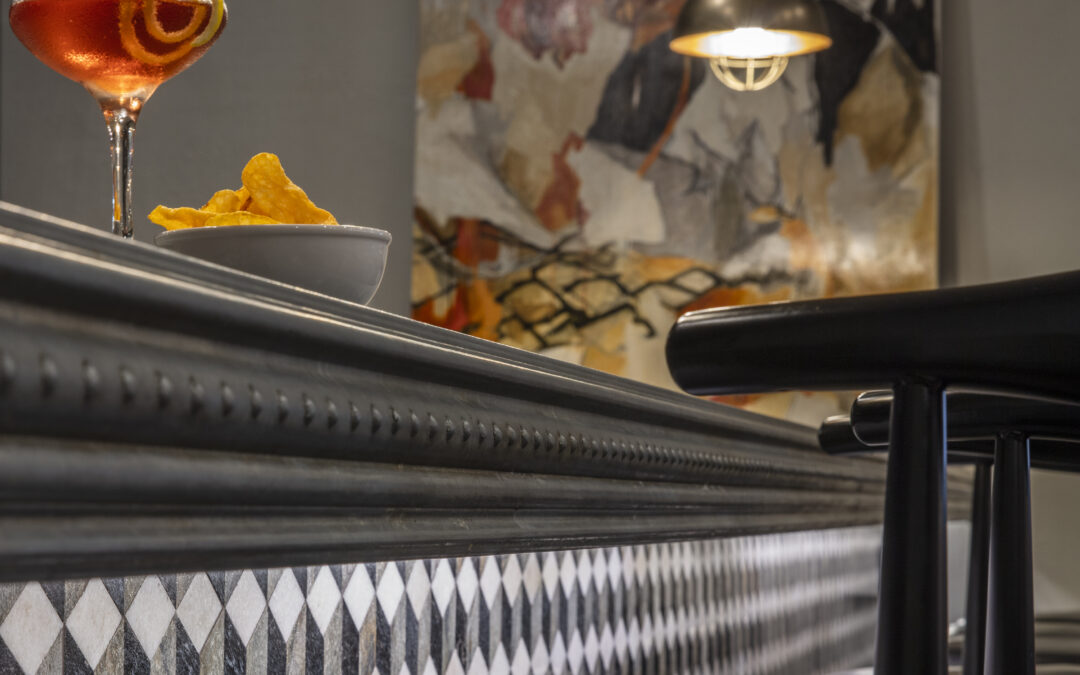
Pewter carries centuries of hospitality history. The famous bar surfaces of Parisian bistros—often called le zinc colloquially—are in fact largely pewter, a malleable alloy composed primarily of tin. Polished pewter has a vibrant silver tone that, left to its own evolution, develops a luxurious muted grey or charcoal patina. It can also be maintained to a near-mirror finish with regular care. For designers referencing European brasserie or bistro aesthetics, pewter is the historically authentic choice, now available with a full range of contemporary edge profiles to suit any design direction.
Brass
Warm, golden, and unmistakably present, brass occupies a central role in luxury hospitality design. It ages to a deeper, richer tone and responds well to a wide range of finishing approaches—from high polish to brushed, antiqued, or patinated. Brass bar tops and range hoods work particularly well in environments seeking warmth and approachability at a high level of refinement.
Bronze
Significantly harder than zinc or pewter, bronze brings a sculptural weight to any application. Its finish range is wide: polished golden bronze at one end, rich antiqued brown at the other, with substantial territory in between. Bronze countertops and range hoods are particularly suited to environments where the metalwork is intended as an architectural statement rather than a background material. Like all living metals, bronze develops use patterns and patina over time that deepen its character.
Copper
Copper is warm, immediately recognizable, and carries strong associations with artisanal food and beverage culture. It ages through a spectrum from polished reddish-gold through warm brown to green patina, and can be maintained at any point along that spectrum. Copper bar tops and range hoods introduce a sense of craft and warmth that few materials can match at the same price point.
A Note on USA Fabrication
For North American architectural projects, domestic fabrication offers advantages that extend well beyond supply chain convenience. USA-sourced and USA-fabricated metalwork carries traceable material standards, supports skilled domestic artisanship, and eliminates the customs, shipping, and communication friction inherent in overseas sourcing. It also means that when a question arises mid-project—about dimensions, finish, timeline, or technical integration—there is a real team available in your time zone, speaking your design language, invested in your project’s success.
This is not a political point; it is a practical one. For projects where precision, accountability, and relationship matter, domestic fabrication reduces risk.
FAQ: Custom Metal Fabrication for Architectural Projects
What is the typical lead time for a custom metal bar top or range hood?
For fully custom cast metal pieces—bar tops, countertops, and architectural range hoods—a well-organized domestic fabricator should be able to deliver within 12 to 14 weeks from approved shop drawings. Simpler or standard-size pieces from a curated trade collection may have shorter windows.
What information does a fabricator need to provide an accurate quote?
At minimum: overall dimensions, material preference, edge profile, finish direction, any integrated features (drains, hardware cutouts, liner specifications for hoods), and installation environment. Experienced fabricators with in-house designers can help develop these specifications if you come with a concept rather than a complete drawing set.
Can the same fabricator handle both countertops and range hoods for one project?
Yes, and for high-end projects there is a real advantage to single-source fabrication. A fabricator who produces both the bar top and the range hood in the same material, under the same quality standard, can ensure finish consistency across pieces—something that is very difficult to achieve when coordinating between separate shops.
Are there trade-only products available in this category?
Some fabricators offer curated, trade-exclusive collections—particularly for range hoods in standard sizes—that give design professionals access to consistent, high-quality pieces without the full custom lead time. These are worth asking about when managing multiple projects or when a client’s design direction aligns with a documented style.
How do living metal surfaces hold up in high-traffic commercial environments?
Cast zinc, pewter, brass, bronze, and copper are all proven performers in commercial hospitality environments. Their patination—often mistaken as wear—is actually the material developing character. Properly cast and finished metal surfaces are designed to be used, and most improve visually with age and service rather than degrading.
Making Your Evaluation Decision
The right fabricator for your architectural project is one who brings both technical mastery and genuine design partnership to the table. Material quality, domestic sourcing, true custom capability, responsive trade support, and honest production timelines are the criteria that distinguish exceptional work from merely acceptable work. A fabricator confident in their craft will welcome specific questions about alloy sourcing, production process, and portfolio depth—and will answer them directly.
At La Bastille, every project begins with a conversation. Our in-house designers and skilled artisans are available to review your concept, discuss material options across our full range of living metals, and provide the technical support your project deserves from concept through installation. We welcome inquiries from designers, architects, and hospitality groups across North America and respond within one to two business days.
Explore our work at labastille.com and reach out when you are ready to talk through your project.