

The Performance Case for Commercial Metal Bar Tops in Hospitality Design
When restaurant owners and bar operators weigh their options for bar top material, the conversation almost always returns to the same conclusion: custom metal bar tops outperform every alternative in durability, hygiene, design flexibility, and long-term brand value. Hardwood warps. Epoxy chips. Quartz cracks under the thermal shock of commercial service. Cast metals — zinc, pewter, brass, bronze, copper — are built for exactly the kind of punishment a busy bar delivers every single night.
This isn’t a new discovery. Parisian bistros and brasseries have relied on pewter and zinc bar surfaces for centuries. What has changed is the range of design possibilities now available to hospitality groups across North America, and the growing recognition that the right bar top isn’t a finishing detail — it’s a statement about who you are as an establishment.
Why Material Choice Matters More Than Most Operators Realize
A bar top is one of the highest-contact surfaces in any commercial space. It bears the weight of glasses, bottles, and elbows. It absorbs spills, cleaning chemicals, temperature shifts, and the slow grind of daily service. It is also, quite literally, the first surface a guest touches when they sit down.
Most materials are designed to look good on day one. Commercial metal bar tops are designed to perform on day one and look better on day five hundred.
That distinction is the heart of the performance case for cast metal in hospitality environments.
Durability That Matches Commercial Demands
Cast Zinc
Zinc has a long architectural history — roofing, ornamental downspouts, facade cladding — precisely because it endures. When properly hand-cast and finished for bar top use, zinc delivers a surface that resists moisture, handles the impact of daily service, and ages with remarkable character rather than degrading.
A cast zinc bar top will develop a rich, blue-grey patina over time. This isn’t a flaw — it’s the material doing what it’s designed to do. Operators often tell us that their zinc bar top looks more intentional, more established, and more interesting at the three-year mark than it did at installation. That patina communicates history and permanence in a way no synthetic surface can replicate.
Pewter
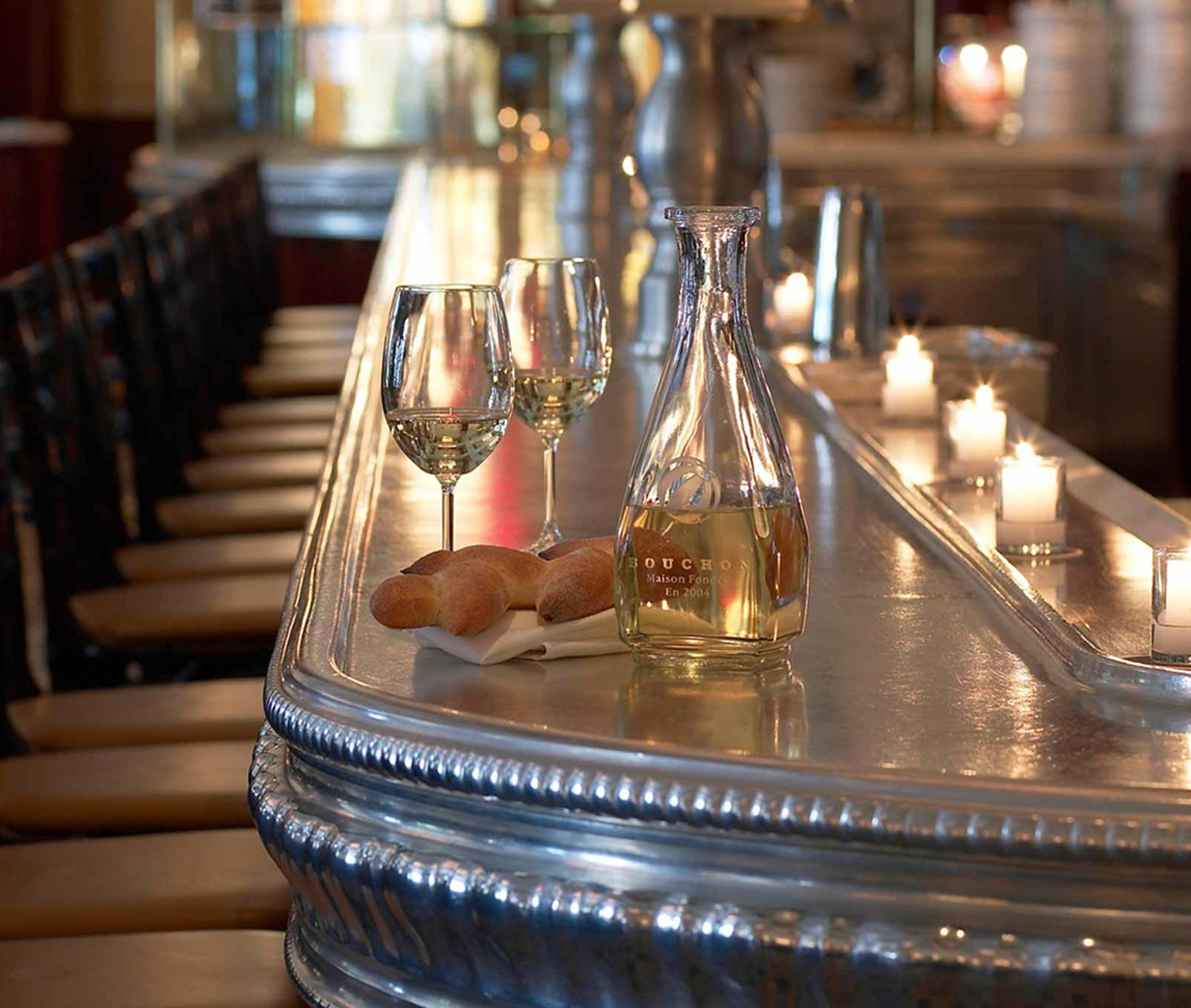
Pewter — a malleable tin-based alloy — has been the surface of choice in French brasseries for generations. In France, bars are colloquially called le zinc, though the surface is frequently pewter. That centuries-long track record in some of the world’s most demanding commercial environments is itself a durability credential.
Polished pewter offers a vibrant silvery surface that can be maintained to a near-mirror finish with regular care, or left to develop a muted charcoal patina naturally over time. Both outcomes are beautiful. Both are intentional. The surface accommodates commercial service without losing its elegance.
Bronze and Brass
Bronze is a significantly harder alloy than zinc or pewter, lending itself to high-traffic bar environments where surface hardness is a priority. Originally the material of sculpture and architectural monuments, bronze bar surfaces bring a sculptural presence to commercial interiors that heavier hospitality brands — steakhouses, whiskey bars, boutique hotels — find perfectly aligned with their identity.
Brass offers warmth and a golden richness that photographs beautifully and ages into a deeper, more complex tone over time. For establishments cultivating a warm, upscale atmosphere, a hand-finished brass bar top operates as both functional surface and design centerpiece.
Hygiene Advantages in a Commercial Setting
Hygiene requirements in restaurants and bars are non-negotiable. This is one area where cast metals hold a clear, practical advantage over porous materials and surface-sealed alternatives.
Non-porous metal surfaces do not harbor bacteria the way wood or composite materials can. There are no grout lines, no surface seams in high-wear areas, and no subsurface cavities where organic material accumulates. Spills on a zinc or pewter bar top are wiped clean without penetrating the material. Cleaning is straightforward and compatible with standard commercial protocols.
Copper, in particular, carries well-documented antimicrobial properties. While a copper bar top is selected primarily for its visual warmth and artisanal appeal, the material’s natural resistance to bacterial growth is a practical advantage in any food and beverage environment.
For operators navigating health inspections and staff training around surface sanitation, cast metal simplifies the equation.
Design Flexibility That Serves Any Hospitality Concept
One of the most common misconceptions about commercial metal bar tops is that they belong exclusively to industrial or rustic aesthetics. The reality is the opposite. Cast zinc, pewter, brass, bronze, and copper are among the most design-flexible materials available to hospitality interiors.
Finish Range
Each metal is available in a wide range of finish options. Bronze alone spans from polished golden tones to rich antiqued brown, offering dramatic variation within a single material. Zinc can be finished to read as sleekly modern or deeply antique, depending on the processing and patina treatment applied. Pewter can be delivered with a mirror polish or allowed to develop the soft, sophisticated matte tone preferred in French-inspired brasserie settings.
Edge Profiles and Custom Detailing
A La Bastille bar top is fabricated to exact specifications, including the edge profile, dimensions, integrated sink cutouts, drain channels, and any custom surface detailing the design calls for. Traditional edge profiles evoke Old World craftsmanship. Cleaner, more architectural edges suit contemporary interiors. Ornamental details — hand-tooled surface textures, embossed motifs, cast architectural relief — are available for projects where the bar top is intended to function as a statement piece.
No two projects are identical, because no two hospitality concepts are identical. That’s the point.
Collaboration with Designers and Architects
We partner directly with interior designers, architects, and hospitality groups across North America. Our in-house team of designers and skilled artisans works from your design intent — whether that arrives as a sketch, a full design packet, or a concept conversation — and develops technical shop drawings for your review before fabrication begins. This collaboration ensures that the finished bar top reflects your vision precisely, not a close approximation of it.
The Prestige Factor: What Metal Communicates to Guests
There is a dimension to the material choice that goes beyond performance data, and hospitality operators understand it intuitively: metal communicates permanence.
A custom zinc or pewter bar top tells guests, without a word, that this establishment was built to last. It signals investment in craft, attention to material, and a refusal to take shortcuts. These are precisely the qualities guests associate with exceptional hospitality experiences.
The French bistro aesthetic — le zinc, the gleaming bar surface, the sense of a room that has been there for a hundred years and will be there for a hundred more — has endured as a design ideal precisely because it communicates something that cannot be purchased off a shelf. It communicates conviction.
A brass bar top in a modern whiskey lounge communicates the same thing in a different register. So does a patinated bronze counter in a boutique hotel bar, or a polished copper surface in a craft cocktail bar where the whole identity is built around visible craftsmanship.
Cast metal surfaces give hospitality brands a physical, tactile expression of their values. Guests notice. They run their hands along the edge. They remember it. That kind of sensory impression has real value in a market where differentiation is everything.
Longevity and the True Cost of a Bar Top
When evaluating bar top materials against budget, the single-largest mistake operators make is comparing upfront costs without accounting for replacement cycles.
Wood warps and stains. Epoxy-coated surfaces chip and require recoating. Laminate delaminates under the humidity and temperature variation common in bar environments. Even quartz, which performs well in lower-traffic settings, is vulnerable to impact cracking and thermal shock in commercial use.
A properly handcrafted cast metal bar top — installed correctly, maintained simply — does not require replacement. It requires no recoating, no sealing schedule, no surface restoration cycle. It ages, and in aging, it deepens in character rather than deteriorating in condition.
Operators who calculate cost per year of service — not cost per installation — consistently find that custom metal bar tops represent the more economical choice over a ten-year horizon. The heirloom-quality construction that makes them feel like a premium investment at the outset is the same quality that eliminates the replacement costs that quietly inflate the total cost of ownership for lesser materials.
FAQ: Commercial Metal Bar Tops
What metals are best suited for high-traffic commercial bar environments?
Cast zinc, pewter, brass, bronze, and copper all perform well in commercial settings. Zinc and pewter are the most historically established bar surface materials. Bronze offers greater hardness for the highest-traffic applications. The right choice depends on your design aesthetic, maintenance preference, and how you want the surface to age over time.
Do metal bar tops require special maintenance?
Maintenance is straightforward. Cast zinc and pewter develop a natural patina that requires no intervention. Pewter can also be polished periodically to maintain a brighter finish. Bronze and brass surfaces are similarly low-maintenance. None of our metals require sealing or recoating cycles.
How long does it take to fabricate a custom metal bar top?
We typically work within a 12–14 week lead time from design approval to delivery. Our team responds to new project inquiries within one to two business days and moves through the design and shop drawing phase efficiently to protect your project timeline.
Can metal bar tops be fabricated with integrated sinks and drain channels?
Yes. Every bar top we fabricate is fully custom. Integrated sink cutouts, drain channels, and any other functional details are incorporated into the technical drawings and fabricated as part of the piece.
Where does La Bastille fabricate its metal bar tops?
All of our work is sourced, designed, and fabricated in the USA by our in-house team of designers and skilled artisans. We serve hospitality clients across North America.
Ready to Explore Custom Metal for Your Project?
Whether you are early in the concept phase or working from a completed design package, we welcome the conversation. Our team brings both technical and artistic expertise to every project, and we partner with designers, architects, and operators who share our commitment to doing it right.
Reach out to La Bastille to begin discussing your custom bar top — and we’ll have a response for you within one to two business days.