

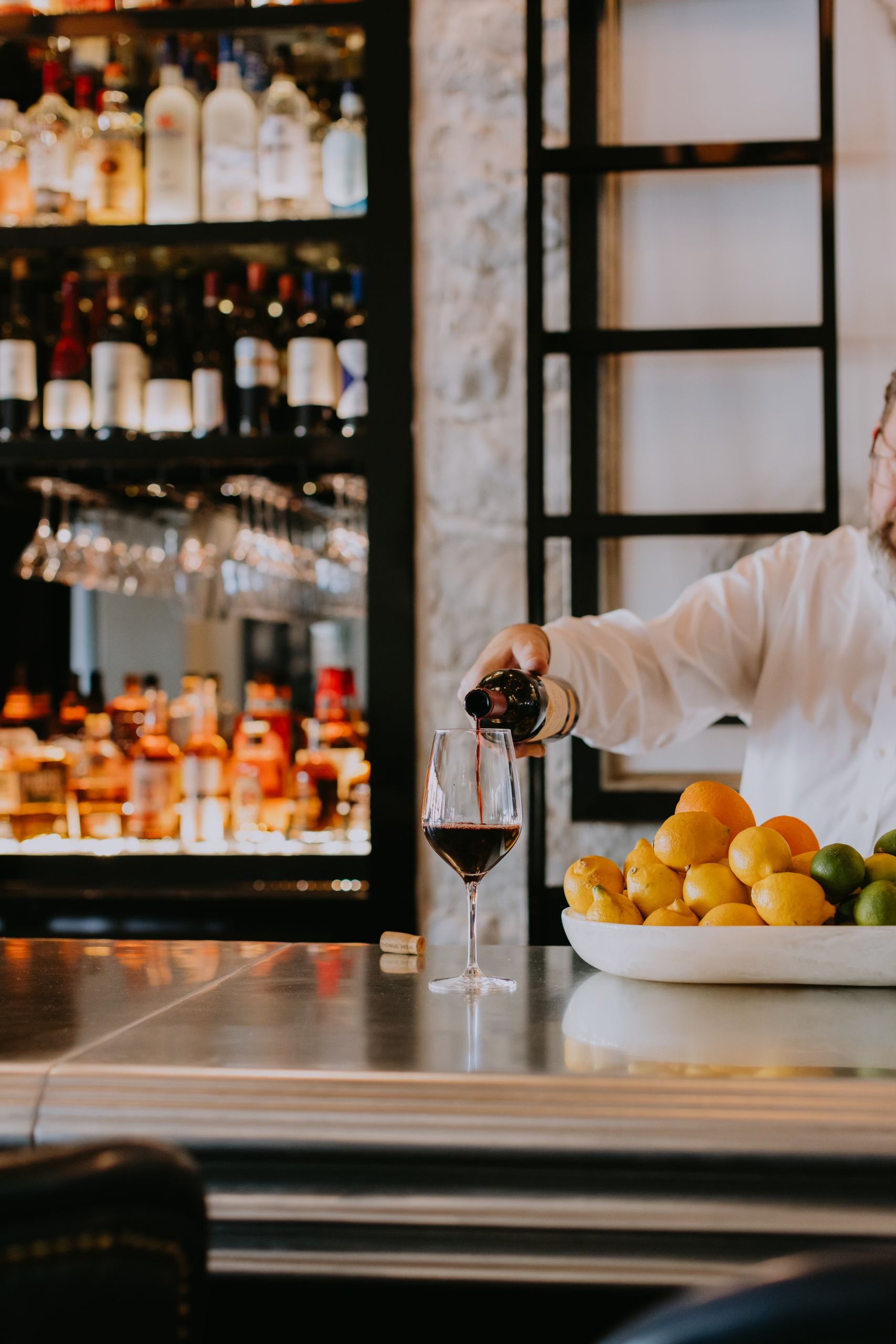
For a designer selecting materials for an upscale bar environment, the right metal makes every difference — not just aesthetically, but in how the surface holds up to daily service, how it ages over years of use, and how it communicates the identity of the space to every guest who pulls up a stool. Custom metal bar tops are one of the most visible, tactile, and demanding surfaces in any hospitality or residential installation, and choosing between zinc, brass, copper, pewter, and bronze requires a clear understanding of what each material brings to the table — literally.
This guide evaluates each metal across the criteria that matter most to discerning designers: durability, patina behavior, maintenance requirements, and design application.
Why Metal Bar Tops Belong in High-End Design
Metal surfaces have furnished the bars of Europe’s great brasseries for centuries. They carry weight — historical, visual, and literal. When handcrafted from cast metals with proper alloy composition and finished by skilled artisans, a metal bar top becomes a defining architectural element rather than simply a work surface.
Unlike stone or wood, living metals evolve with use. Handled surfaces take on warmth. Edges develop depth. Character accumulates. For designers working in luxury hospitality and residential environments, this quality — the promise that the material improves with age — is precisely what makes custom metal bar tops such a compelling choice.
The five metals most frequently specified for high-end bar tops are zinc, pewter, brass, copper, and bronze. Each has a distinct personality, maintenance profile, and design vocabulary.
Zinc Bar Tops: Versatile, Architectural, and Built to Age
Why Designers Choose Zinc
Zinc is one of the most architecturally storied metals available. Its use spans centuries of European building — roofing, ornamental facades, downspouts, and, most famously, the bar tops of Parisian cafés. That heritage translates directly into the warmth and credibility that zinc brings to a modern bar installation.
In its natural state, zinc presents a blue-grey tone with subtle depth. Over time, and with the natural humidity and handling of a working bar environment, zinc develops a rich, layered patina — darker in recessed areas, softer at edges — that gives a surface the appearance of having been in place for generations. For designers aiming for an antique or storied aesthetic, zinc achieves this without artifice.
Durability and Performance
Cast zinc is a workhorse. It handles the daily demands of a bar environment — glasses, bottles, moisture, heat — with resilience. While zinc is softer than bronze, it is appropriately robust for bar-top applications and wears in a way that reads as character rather than damage.
Its eco-friendly composition and adaptability make it equally suited to highly ornate, architecturally detailed designs and sleek, modern profiles. Few metals offer that same range.
Maintenance Considerations
Zinc requires minimal intervention. Acids — citrus juice, wine, cleaning chemicals — can affect the surface, but with proper sealing and routine care, these effects are manageable. Many clients specifically appreciate that zinc’s surface evolves rather than needing to look showroom-perfect indefinitely.
Best design fit: French bistro, industrial modern, heritage residential, Parisian-inspired hospitality, farmhouse luxury.
Pewter Bar Tops: The Authentic French Bar Surface
The Historical Context
Here is a distinction worth knowing: the legendary “zinc” bars of Parisian brasseries are, in most historical cases, actually pewter. French establishments traditionally referred to their bar surfaces as le zinc, but the material was pewter — a tin-dominant alloy with a silvery, luminous quality that could be maintained to a near-mirror finish.
Pewter has served European bistros and brasseries for centuries, and its revival in 21st-century design is well-earned. For designers seeking authentic provenance, there is no material more directly connected to the culture of the great European bar than pewter.
Patina and Finish Options
Polished pewter opens with a vibrant silvery hue. Left to develop naturally, it transitions to a muted grey or charcoal patina — sophisticated, subdued, and deeply elegant. Alternatively, pewter bar tops can be maintained to a high, mirror-like polish with regular care, offering the client flexibility in how the surface evolves over time.
This dual nature — the ability to age beautifully or remain brilliantly polished — makes pewter one of the most versatile metals in a high-end bar context.
Durability and Maintenance
Pewter is a living finish, meaning it will respond to its environment. It is softer than bronze but handles bar environments well when properly fabricated and sealed. The low-maintenance patina option is particularly appealing in commercial settings where staff time is limited.
Best design fit: French brasserie, classic European bistro, silver-toned luxury residential, boutique hotel bars seeking historical authenticity.
Copper Bar Tops: Warmth, Drama, and Living Color
The Visual Case for Copper
Copper is perhaps the most immediately arresting of the bar-top metals. Its warm, reddish-gold tones read as luxurious and inviting in virtually any lighting condition — candlelight especially. For bars designed to feel intimate, warm, and memorable, copper creates an atmosphere that no other metal replicates.
Beyond its initial appearance, copper is a living metal in the truest sense. Exposure to air, moisture, and handling accelerates a patination process that moves through warm amber tones toward deeper browns and, eventually, the greenish verdigris associated with aged copper architecture. Each copper bar top develops a unique, one-of-a-kind surface over time.
Performance in a Bar Environment
Copper holds up well under the conditions of a working bar. It is naturally antimicrobial — a well-documented property of copper alloys — which is a meaningful consideration in food and beverage environments. Like zinc and pewter, it will respond to acidic substances, and proper sealing is recommended for high-volume commercial applications.
Maintenance Approach
Copper can be maintained at various stages of its patina journey. Clients who prefer the warm, bright initial tone can polish and seal regularly. Those who appreciate the depth of aged copper can allow the patina to develop naturally. Both approaches result in a beautiful, high-character surface.
Best design fit: Craft cocktail bars, whiskey bars, warm-toned luxury residential, copper-themed hospitality concepts, traditional pub environments.
Brass Bar Tops: Refined, Golden, and Timelessly Upscale
Brass as a Design Statement
Brass is a gold-toned alloy of copper and zinc, and it carries strong associations with refinement, formality, and old-world luxury. In recent years, brass has experienced a significant renaissance in high-end interior design — appearing in hardware, fixtures, furniture, and, prominently, bar tops.
A polished brass bar top communicates quality immediately. The warm, golden surface catches light beautifully and pairs naturally with dark woods, marble, and leather — the material vocabulary of the upscale cocktail lounge and members’ club.
Patina Behavior
Like all living metals, brass will develop a patina over time. Unlacquered brass moves toward deeper, more complex tones — richer and more amber — which many designers consider an improvement on the original finish. This natural aging process adds depth and authenticity that no applied finish can replicate.
Durability and Maintenance
Brass is harder than pure copper and holds up well in bar environments. It responds to acids and strong cleaners, so proper maintenance protocols matter. For designers working with brass in commercial settings, establishing a clear maintenance guide for the client from the outset is essential.
Best design fit: Upscale cocktail lounges, members’ clubs, hotel bars, formal residential entertaining spaces, Art Deco-influenced interiors.
Bronze Bar Tops: Maximum Durability, Sculptural Presence
The Case for Bronze
Bronze is the hardest alloy in this group — significantly more durable than zinc or pewter — and it has a long history in architectural and sculptural applications that gives it an inherent gravitas. Bronze bar tops are a strong choice for commercial environments where the surface will endure heavy use over many years without compromise.
Finish options for bronze span a wide range: from a polished golden bronze that reads warm and luminous, to deep antiqued browns with rich tonal complexity. This breadth of possibility makes bronze one of the most design-flexible metals available.
Patina and Character
Like all specialty metals, bronze develops its own patina and use patterns over time. The surface deepens and enriches, adding to the character and architectural presence of the installation. Bronze ages with distinction — it does not wear out; it wears in.
Maintenance Considerations
Bronze is low-drama in terms of maintenance relative to its surface quality. Its hardness means it resists scratching and marking better than softer alloys. Periodic cleaning and, depending on the desired finish, occasional polishing are typically all that is required.
Best design fit: High-volume commercial bars, luxury restaurant installations, hotel lobbies, traditional or classical design schemes, any application demanding maximum longevity.
Comparing the Metals at a Glance
| Metal | Hardness | Patina Style | Maintenance Level | Design Personality |
|---|---|---|---|---|
| Zinc | Moderate | Blue-grey to warm antique | Low | Rustic, architectural, Parisian |
| Pewter | Moderate | Silver to charcoal grey | Low to moderate | Classic European, bistro, silver-toned |
| Copper | Moderate | Warm amber to verdigris | Moderate | Intimate, warm, artisanal |
| Brass | Moderate-high | Golden to deep amber | Moderate | Formal, refined, upscale |
| Bronze | High | Golden to antiqued brown | Low | Sculptural, durable, traditional |
How La Bastille Approaches Custom Metal Bar Top Design
Every bar top we handcraft at La Bastille begins with a conversation. Our in-house designers and skilled artisans work directly with architects, interior designers, and hospitality groups across North America to understand not just the dimensions of a project, but its identity — the atmosphere it needs to create, the clientele it will serve, and the design language it needs to speak.
We source and fabricate exclusively in the USA, using the highest quality alloys available. Whether you are specifying cast zinc for a French-inspired brasserie, pewter for a boutique hotel bar, or bronze for a flagship restaurant installation, each piece we produce is entirely one of a kind — handcrafted, hand-finished, and built to heirloom-quality standards with no shortcuts.
Our team responds to new project inquiries within one to two business days and provides comprehensive support from concept through installation, including technical shop drawings and detailed specifications tailored to your design packet.
FAQ: Custom Metal Bar Tops
Which metal is most durable for a high-volume commercial bar?
Bronze is the hardest and most resilient option, making it ideal for heavy commercial use. Cast zinc and pewter are also excellent performers and have centuries of proven use in bistro and brasserie environments.
Will a metal bar top scratch easily?
All metals are susceptible to marking, but scratches and patina develop in ways that add character rather than diminish the surface. Bronze and brass are harder and show fewer marks than zinc, pewter, or copper.
Can a metal bar top be kept looking polished, or does it have to patina?
Both approaches are valid. Pewter, brass, and copper can all be maintained to a high polish with regular care. Alternatively, allowing the natural patina to develop is equally intentional and often preferred for its warmth and authenticity.
How long does it take to fabricate a custom metal bar top?
La Bastille’s typical lead time for custom metal bar tops is 12 to 14 weeks. We encourage designers to reach out early in the design process to confirm timelines for your specific project.
Are custom metal bar tops suitable for residential installations?
Absolutely. We handcraft bar tops for luxury residential entertaining spaces as well as commercial hospitality environments. The design possibilities across zinc, pewter, brass, copper, and bronze translate beautifully into both settings.
The right metal for your bar top is ultimately the one that serves your design vision while performing reliably over time. We are here to help you make that determination with confidence — and to handcraft the result to your exact specifications. To begin a conversation about your project, we welcome you to reach out to our team at La Bastille.