
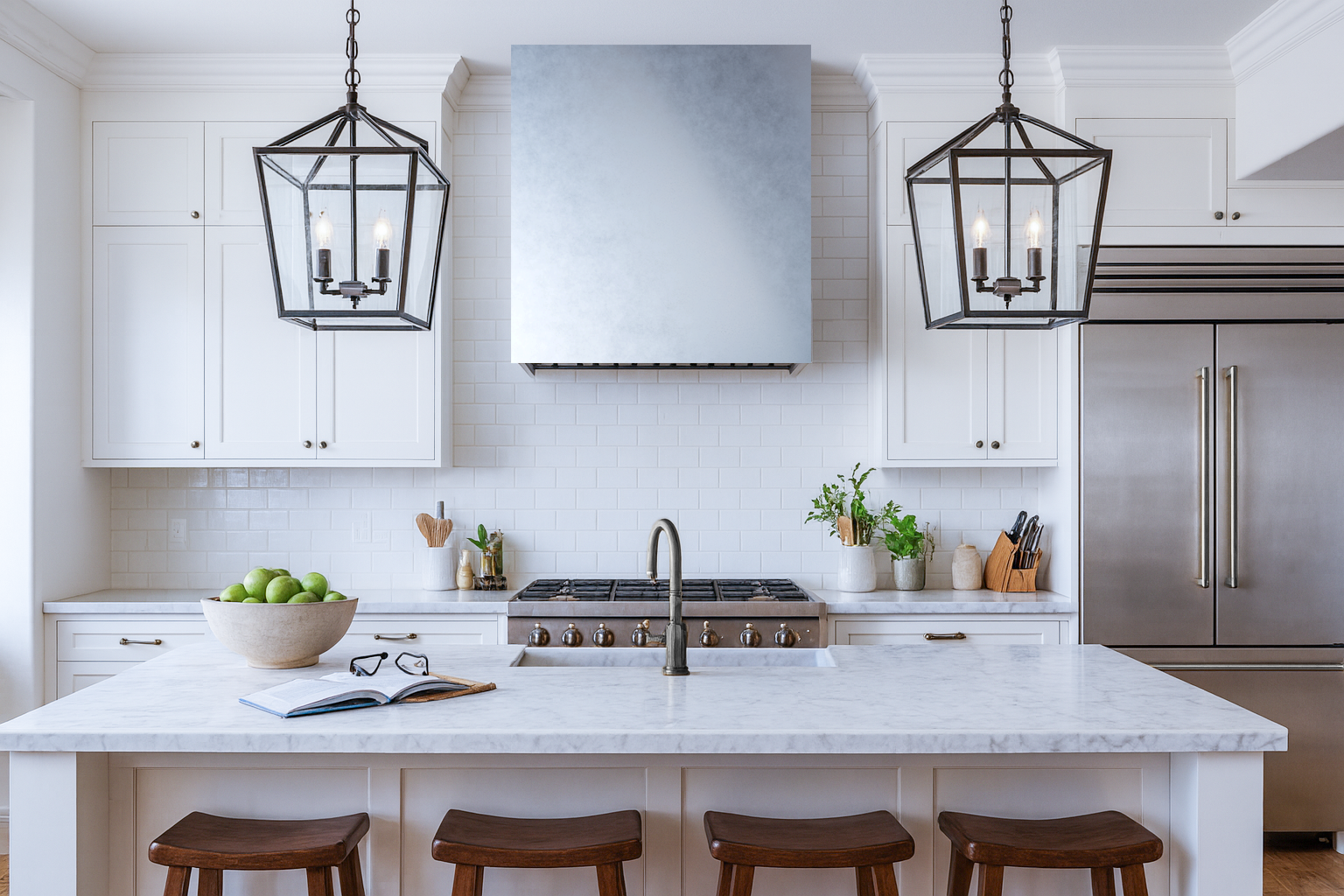
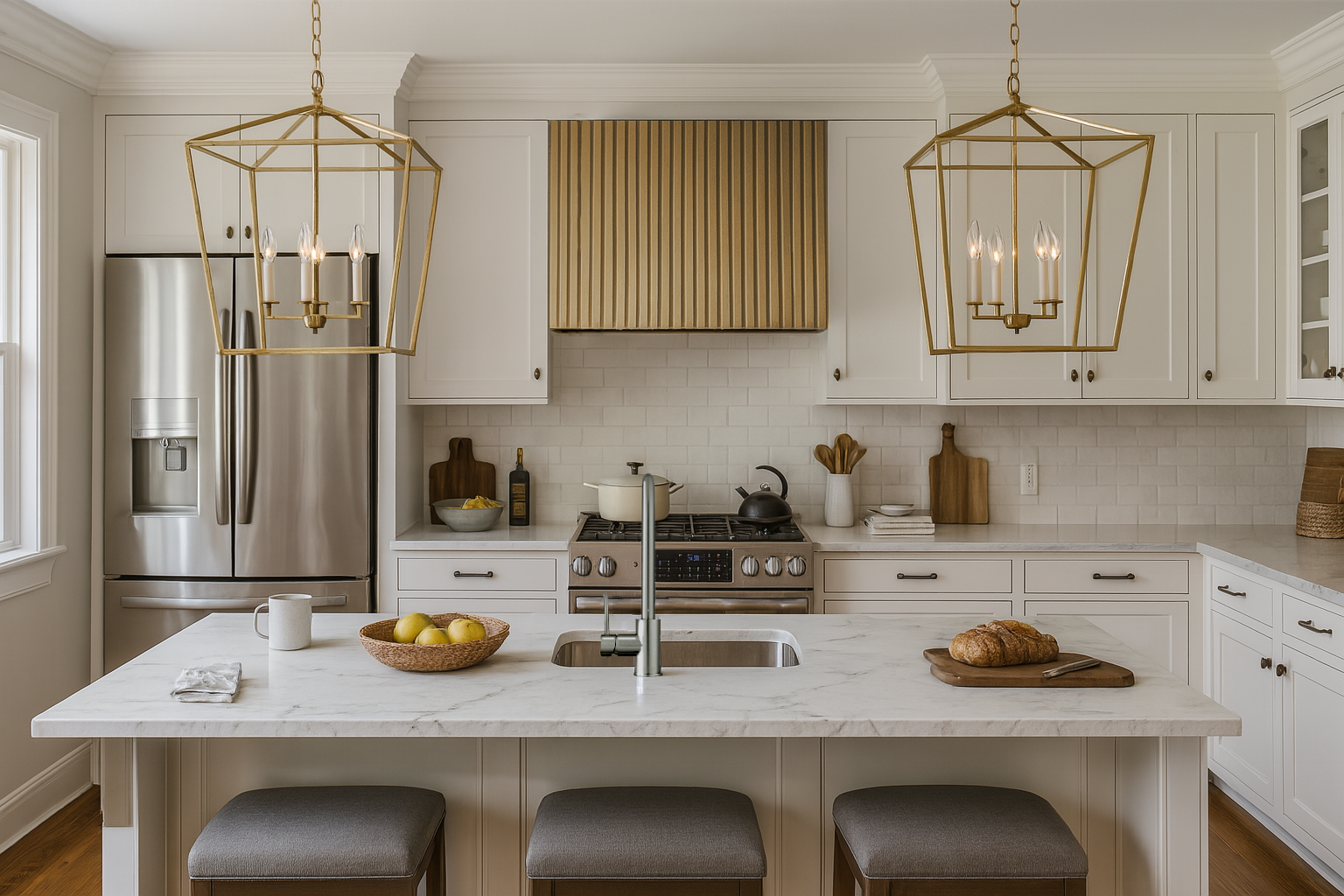
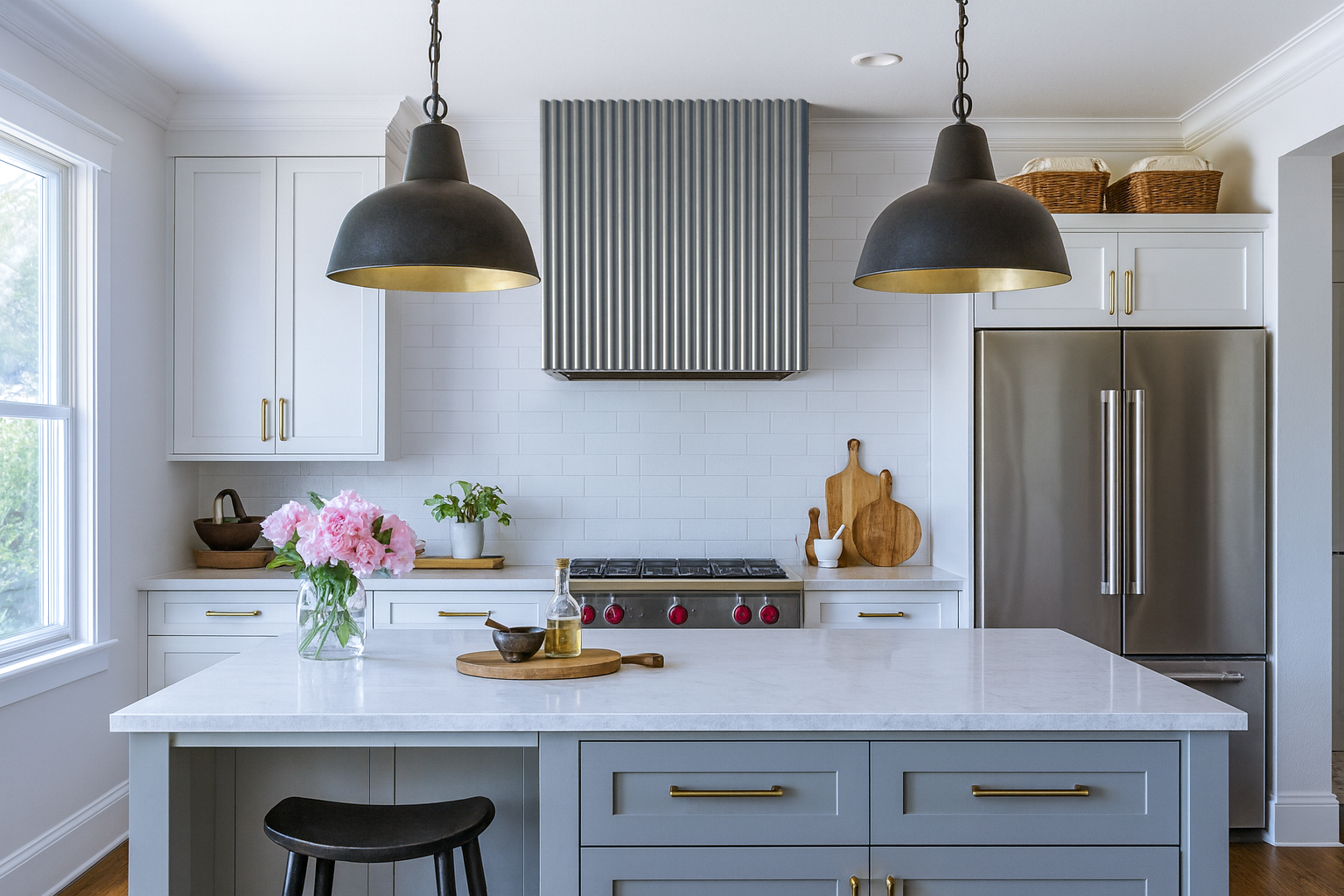

A custom metal countertop typically costs between $150 and $400 per square foot installed for cast zinc, with pewter, brass, bronze, and copper generally running higher depending on alloy, thickness, edge profile, and site conditions. Most residential kitchens land between $12,000 and $35,000 for the countertop scope alone. The final number is not arbitrary. It is the sum of a handful of line items: raw metal, thickness, fabrication hours, edge detail, finish, substrate, templating, delivery, and installation. Understanding each one makes a quote easier to read, compare, and adjust.
These ranges are planning figures, not a quote. Metal markets move, and every La Bastille piece is handcrafted to the project's specifications, so your design packet and technical shop drawings determine the actual price.
The Short Version: How a Metal Countertop Quote Is Built
Most custom metal countertop quotes break down into these components:
- Metal and alloy (material cost per square foot)
- Thickness or gauge (how much metal is used)
- Fabrication and casting labor (hand-forming, seams, cutouts)
- Edge profile (simple eased edge versus built-up or ornate)
- Finish (polished, brushed, antiqued, waxed, pre-patinated)
- Substrate and support (what the metal is bonded to)
- Templating and shop drawings
- Crating, freight, and delivery
- Installation
Metal choice and surface area usually account for the largest share. Edge detail and installation complexity are the factors most often underestimated.
Line Item 1: The Metal Itself
Metal is priced by weight and by the work required to cast and finish it. Each of our living metals behaves differently, and that affects both cost and character.
Sample Price Ranges by Metal (Installed, Per Square Foot)
| Metal | Typical installed range | Character |
|---|---|---|
| Cast zinc | $150–$400 | Blue-grey, ages to a warm, antique look |
| Pewter | $200–$450 | Silvery, develops a soft grey or charcoal patina |
| Brass | $250–$550 | Warm gold tones, deepens with use |
| Bronze | $275–$600 | Harder alloy, golden to rich antiqued brown |
| Copper | $225–$550 | Warm red tones, develops a living patina |
These ranges assume a standard residential layout, mid-complexity edges, and typical access. They are meant to frame a conversation, not replace one.
Why Zinc Is Often the Starting Point
If you are searching for cost per square foot for zinc, you will find it sits at the more accessible end of the spectrum among specialty metals. Zinc has a long architectural history, from roofing to ornamental downspouts, and it is versatile enough to suit ornate detailing or clean, modern lines. It is also workable, which can reduce certain fabrication costs compared with harder alloys.
Why Bronze and Brass Cost More
Bronze is significantly harder than zinc or pewter. That hardness is part of its appeal, but it also means more time and care in forming, finishing, and edge work. Alloy cost is higher as well. Brass and bronze quotes will reflect both.
A Note on Pewter
Pewter is a malleable alloy composed mostly of tin, and tin pricing influences the material line. Pewter is the traditional surface of French bistros and brasseries, where bar tops are often called "le zinc" even though they are pewter. If you want that look, the price reflects genuine alloy and hand finishing rather than a surface treatment.
Line Item 2: Thickness
Thickness is one of the clearest levers on price because it changes how much metal goes into the piece.
- Thinner profiles use less material and weigh less, which can lower both metal and freight costs.
- Heavier profiles give a more substantial, sculptural presence and a more generous edge, but cost more in metal and in handling.
Thickness also interacts with the substrate. A properly supported countertop does not need to be solid metal throughout. What matters is that the visible surface, edge, and seams are built to hold up to daily use and to age well.
As a general planning rule, moving from a lighter to a heavier profile can add 10 to 25 percent to the material line. Bar tops and commercial installations often justify heavier builds because of the wear they see.
Line Item 3: Fabrication Labor and Layout Complexity
This is where handcrafted work differs most from catalog surfaces. Labor covers casting or forming, fitting, seaming, cutouts, and hand finishing. We do not take shortcuts here, and the hours are real.
Factors that raise fabrication cost:
- Number of seams. Longer, uninterrupted runs require careful planning; more pieces mean more fitting.
- Cutouts. Undermount sinks, cooktops, faucet holes, and drainboards each add work.
- Integrated features. Drainboards, backsplashes, and raised splash details are built into the design.
- Curves and radii. Curved bar fronts and rounded corners require more forming time than straight runs.
- Large islands. Oversized pieces demand more handling and sometimes additional structural planning.
A simple L-shaped kitchen with one sink cutout costs meaningfully less to fabricate than a curved bar top with integrated service wells, even at the same square footage.
Line Item 4: Edge Profile
Edge detail is one of the most visible design decisions and one of the most variable cost items. Our edge selection spans traditional and modern profiles, from clean and minimal to ornate.
| Edge type | Relative cost | Notes |
|---|---|---|
| Eased or square edge | Lowest | Clean, modern, minimal hand-finishing |
| Rounded or bullnose | Low to moderate | Soft, comfortable for bar use |
| Built-up or stepped edge | Moderate | Adds visual weight and shadow lines |
| Traditional bistro or rolled edge | Moderate to high | Classic French bar character |
| Ornate or decorative cast edge | Highest | Custom detailing, more hand-finishing |
Edges are priced by linear foot, so the footprint matters. A large island with a simple edge may cost less on that line than a small bar with an ornate one. As a rough guide, edge work can range from $0 for a standard profile to $40 or more per linear foot for elaborate custom detailing.
Line Item 5: Finish
Because zinc, pewter, brass, bronze, and copper are living metals, finish is a design choice as much as a cost item.
- Natural or minimal finish. The metal develops its own patina through use. This is the most economical path and often the most beautiful.
- Brushed or satin finish. Requires additional hand-finishing time.
- Polished finish. Pewter in particular can be maintained to a mirror-like shine with regular polishing, but achieving the initial finish takes labor.
- Pre-antiqued or aged finish. Our zinc can be made to look as though it has been in place for decades. That requires skilled, hand-applied processes and adds time.
Pre-aged finishes typically add a modest premium over a natural finish. Clients who are comfortable letting the metal age on its own often save here without sacrificing quality.
Line Item 6: Substrate and Support
Metal surfaces are bonded to a substrate, and the cost of that layer depends on the project. Cabinet condition, span lengths, overhangs, and weight all matter. Overhangs for seating on bar tops or islands may need additional support, which should be planned with your cabinetmaker or contractor before fabrication.
Include this in budgeting conversations early. It is a common source of surprise when left until installation.
Line Item 7: Templating and Technical Shop Drawings
Accuracy is built into the process before any metal is cast or cut. Your design packet is translated into technical shop drawings that you review and approve. Field templating confirms measurements once cabinets are set.
Some quotes fold this into the overall price; others list it separately. Either way, it protects you from costly rework. Revisions after approval, or changes to cabinet layout after templating, are one of the most avoidable cost drivers.
Line Item 8: Crating, Freight, and Delivery
Metal is heavy, and finished surfaces must be protected in transit. Costs depend on:
- Total weight and number of pieces
- Distance from our fabrication facility in the USA
- Crating requirements
- Delivery access, such as liftgate service, stairs, or elevator availability
Freight within North America can range from a few hundred dollars for a small residential project to several thousand for a multi-piece commercial order.
Line Item 9: Installation
Installation is skilled work. Metal countertops should be set carefully, with seams aligned and finished on site. Costs vary with:
- Number of pieces and seams
- Access (a fifth-floor walk-up costs more than a ground-floor entry)
- Whether plumbing and appliance work must be coordinated
- Travel for installers, if applicable
Many clients work with their own experienced installer or contractor, while others prefer coordinated installation guidance from our team. Plan on installation adding roughly $15 to $45 per square foot, depending on complexity and location.
Sample Quote Scenarios
These examples illustrate how the pieces combine. They are illustrative only.
Scenario A: Residential kitchen, cast zinc
- 40 sq ft, one undermount sink cutout, eased edge, natural finish
- Planning range: roughly $7,500–$13,000 installed
Scenario B: Residential kitchen with island, pewter
- 65 sq ft, bullnose edge, polished finish, one sink cutout
- Planning range: roughly $15,000–$27,000 installed
Scenario C: Restaurant bar top, bronze or brass
- 30 linear feet, curved sections, built-up edge, heavier profile
- Planning range: roughly $24,000–$55,000 installed, depending on depth and detailing
Commercial projects often require greater thickness and more robust edge detailing, so budgets should reflect that.
How to Reduce Cost Without Losing Quality
Savings should come from smart design decisions, never from shortcuts in materials or craftsmanship. These are the adjustments we recommend most often:
- Start with zinc. It offers a distinctive character at a more approachable price point than bronze or brass.
- Simplify the edge. A clean eased or rounded edge looks refined and costs less than ornate detailing.
- Choose a natural finish. Let the metal develop its own patina rather than specifying a pre-aged finish.
- Reduce seams and cutouts. Thoughtful layout planning can eliminate unnecessary joins.
- Use metal where it matters most. A bar top or island in metal with perimeter counters in another material can deliver impact at lower cost.
- Finalize cabinetry before templating. Late changes are among the costliest.
- Order early. Our lead times are typically 12–14 weeks, and planning ahead avoids rush complications.
- Coordinate delivery access. Confirm elevator, stairs, and unloading details in advance.
What we do not recommend: thinning the metal past what the application requires, skipping substrate planning, or substituting plated or painted surfaces for true cast metals. These choices undermine the longevity that makes a metal countertop worth the investment in the first place.
How to Read a Countertop Quote
When comparing quotes, confirm that each one answers these questions:
- Which metal and alloy are being used?
- What thickness is specified?
- What edge profile is included, and is it priced per linear foot?
- What finish is included?
- Are templating, shop drawings, crating, freight, and installation included or separate?
- Where is the piece fabricated?
- What is the lead time?
A lower number often reflects a different scope, a thinner build, or a different material altogether. Comparing line by line is the only reliable way to evaluate value.
Frequently Asked Questions
How much does a custom zinc countertop cost per square foot?
For planning purposes, cast zinc typically falls between $150 and $400 per square foot installed. The range depends on thickness, edge, finish, and layout complexity.
Why are metal countertops more expensive than stone or laminate?
They are handcrafted to order from cast metals, finished by artisans, and built to age beautifully for decades. The cost reflects material, skilled labor, and heirloom-quality results rather than mass production.
Is zinc cheaper than pewter, brass, bronze, or copper?
Generally, zinc is the most accessible of these metals. Brass and bronze tend to be at the higher end because of alloy cost and fabrication demands.
How long does it take to receive a custom metal countertop?
Lead times are typically 12–14 weeks from approved drawings, depending on scope and schedule.
Can I get a rough estimate before I have final drawings?
Yes. Sharing a sketch, cabinet plan, or inspiration images is enough to begin. We can provide a preliminary range and refine it as your design develops.
Do metal countertops need special maintenance?
Our metals are living finishes. They develop patina naturally and can be left to age, or polished and maintained to a brighter finish. Care guidance is provided with your project.
Next Steps
We are grateful for the opportunity to be part of your project, and we respect that a decision of this kind takes time. When you are ready, here is how to begin:
- Send your plans or inspiration. Share cabinet drawings, dimensions, or photos by email.
- Receive a preliminary range. Our team typically responds within 1–2 business days.
- Review options with our in-house designers. We will walk through metals, thickness, edges, and finishes together.
- Approve technical shop drawings. Nothing is fabricated until you are confident in the details.
You can reach us through labastille.com by email, phone, or by scheduling a call on our calendar. Whether you are planning a kitchen, a bar, or a full hospitality build-out, we are here to help you understand every line of the quote and to handcraft a one-of-a-kind surface built precisely to your specifications.