

Bronze Countertops and Surfaces: The Designer’s Guide to a Rising Luxury Material
Bronze is one of the oldest engineered materials in human history — and right now, it is earning a prominent place in some of the most sophisticated residential and commercial interiors being designed today. Significantly harder than zinc or pewter, bronze brings a sculptural weight and finish depth that few other materials can match. From polished golden warmth to a richly antiqued brown, bronze countertops and surfaces offer designers a living, evolving canvas that only becomes more compelling with time.
At La Bastille, we work with bronze alongside our full family of living metals — zinc, pewter, brass, and copper — handcrafting custom countertops, bar tops, and range hoods for high-end residential kitchens, luxury restaurants, boutique hotels, and bars across North America. This guide is written for the designers, architects, and hospitality groups who are seriously considering bronze as a surface material and want to understand exactly what it offers.
What Makes Bronze a Premium Surface Material
Hardness and Durability
Bronze is an alloy — historically composed of copper and tin, though modern formulations often incorporate additional elements to fine-tune its mechanical properties. What sets it apart in a countertop context is its hardness. Compared to zinc or pewter, bronze is significantly more robust. It resists denting and surface deformation under the kind of daily wear that a working kitchen or busy bar top experiences.
This hardness is not just a practical asset. It is part of what makes bronze so compelling as an architectural detail. A bronze surface holds its edges crisply, maintains its profile over years of use, and develops a patina that reads as depth rather than damage. That is the distinction between a material that ages and a material that matures.
A Living Metal with Genuine Character
Like all the specialty metals we work with at La Bastille, bronze is a living finish. It responds to its environment — to handling, to moisture, to the particular chemistry of a given kitchen or bar. Over time, it develops use patterns that are entirely its own. High-traffic areas take on a worn luminosity. Less-handled sections hold their original tone. The result is a surface that tells the story of the space it inhabits.
This is not a flaw in the material. It is the material’s highest virtue. Designers who understand living metals know that this evolving character is precisely what separates a handcrafted bronze countertop from a static, manufactured surface.
The Bronze Finish Spectrum: From Polished Gold to Antiqued Brown
One of bronze’s most valuable design assets is its extraordinary range of finish possibilities. At La Bastille, we work with a variety of bronzes, and the finish options span an exceptionally wide spectrum.
Polished Golden Bronze
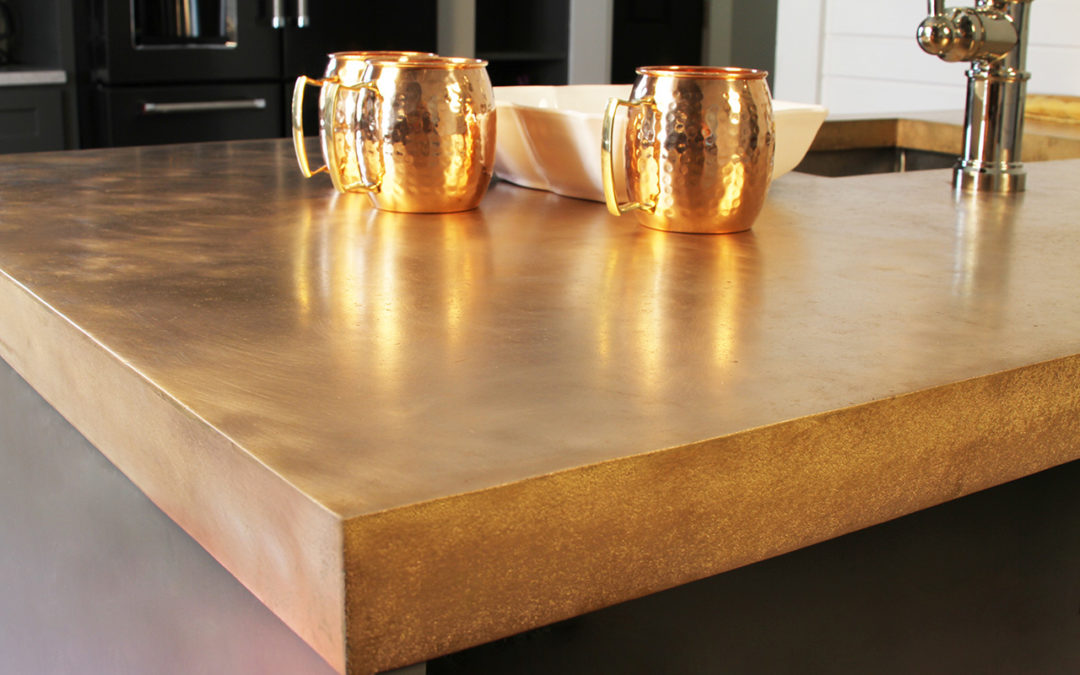
At the warm end of the spectrum, polished bronze carries a rich, golden luminosity that reads almost like an aged amber. It is warmer than brass at full polish and carries more visual complexity — the alloy’s composition means the light catches it differently depending on the angle. In a kitchen setting, polished bronze reads as deeply luxurious without the starkness that some clients associate with brighter metals.
This finish works beautifully in spaces with natural wood tones, aged stone, or dark cabinetry. It brings warmth and a sense of collected richness that is difficult to achieve with other materials.
Mid-Range Patinated Bronze
Between the polished and fully antiqued states, bronze passes through a range of warm browns, ochres, and deep tawny tones. These mid-range patinas are particularly popular in hospitality design — they read as sophisticated and aged, suggesting the kind of establishment that has been there for decades and intends to remain for decades more.
For bar tops especially, a mid-patinated bronze communicates quality to guests in a way that is felt before it is articulated. It is the material doing the work of storytelling.
Antique Bronze Finish
At the deeper end of the spectrum, an antique bronze finish settles into rich, layered browns with darker recesses that create genuine visual dimension. This is bronze at its most sculptural — the finish draws the eye in and rewards close attention. Antiqued bronze surfaces reference the tradition of fine art casting and architectural metalwork, positioning the space within a lineage of material excellence.
This finish pairs particularly well with stone countertops in adjacent areas, leather seating, and lighting with amber tones. In residential applications, it elevates a kitchen island or wet bar into something closer to a piece of furniture than a functional surface.
Ideal Applications for Bronze Surfaces in Design
Kitchen Countertops and Islands
Bronze kitchen countertops are a genuine statement. They are not the right choice for every client, but for those who want a surface that commands the room and only grows more beautiful with use, bronze delivers in a way that stone and engineered surfaces cannot.
The hardness of bronze makes it practical for kitchen use — it holds up to the demands of food preparation and the inevitable contact of cookware, utensils, and daily life. We recommend pairing bronze countertops with darker or deeply toned cabinetry to allow the metal’s warmth to anchor rather than compete. Lighter cabinet finishes can also work beautifully when the goal is contrast.
Bar Tops
Bronze bar tops are arguably the most natural application of the material in commercial design. The history of metal bar tops runs long — pewter and zinc have lined the bars of French brasseries and Parisian cafés for generations. Bronze brings that same tradition but with added visual drama and a harder surface that handles the rigors of a working bar with authority.
For hospitality groups designing spaces that aspire to longevity and a sense of place, a handcrafted bronze bar top communicates instantly that corners were not cut. Guests notice. Regulars come to love the way it changes imperceptibly over time.
Range Hoods
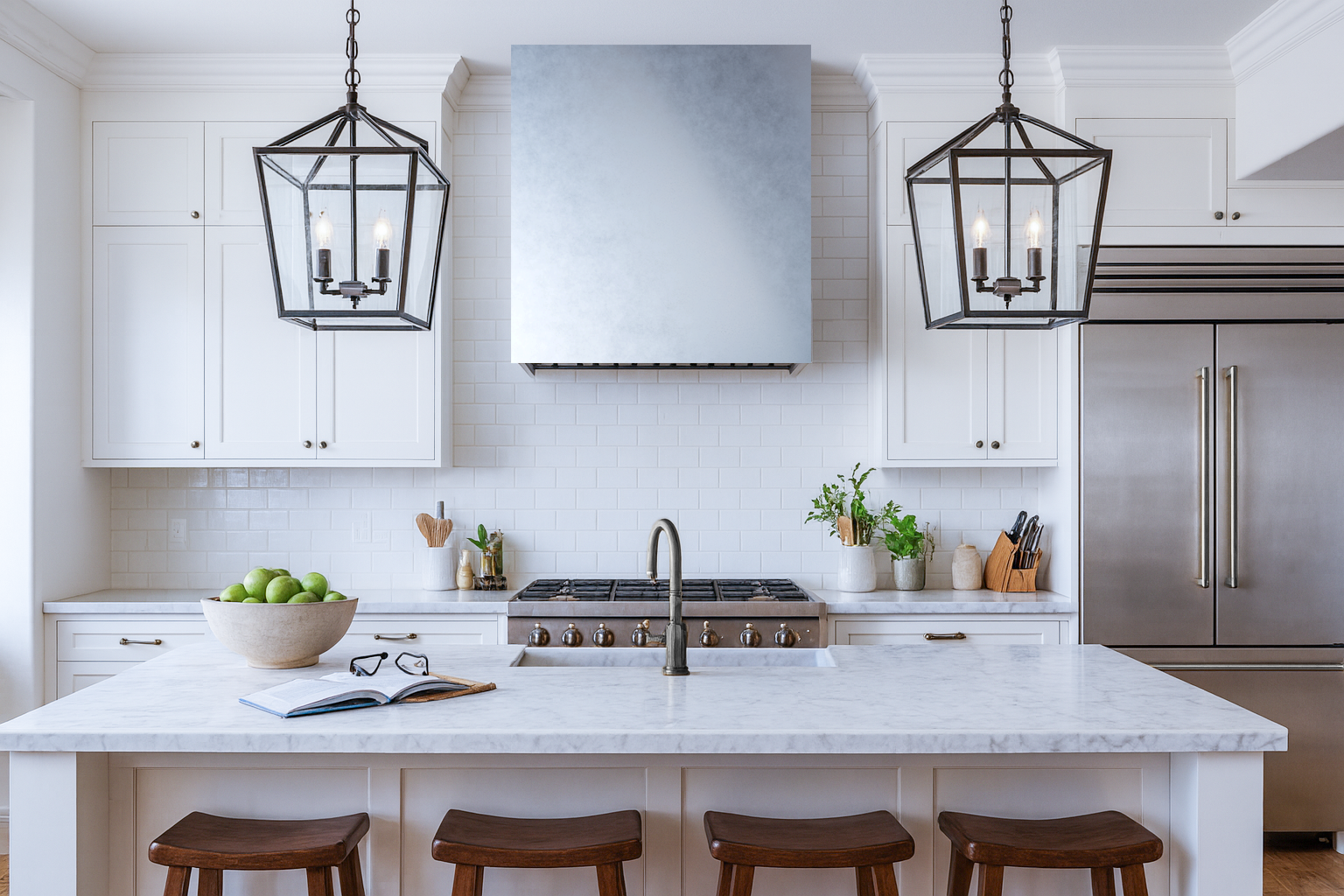
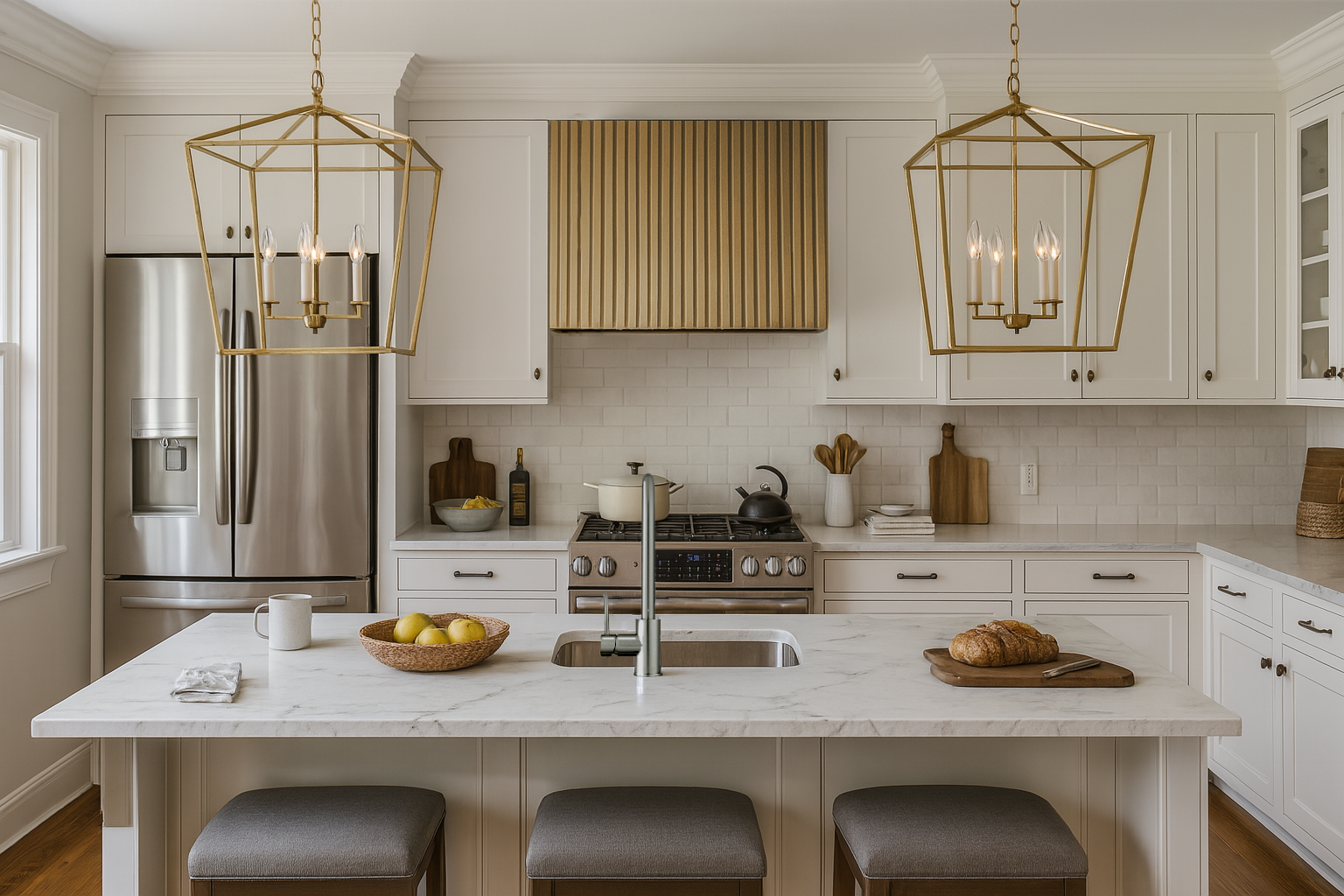
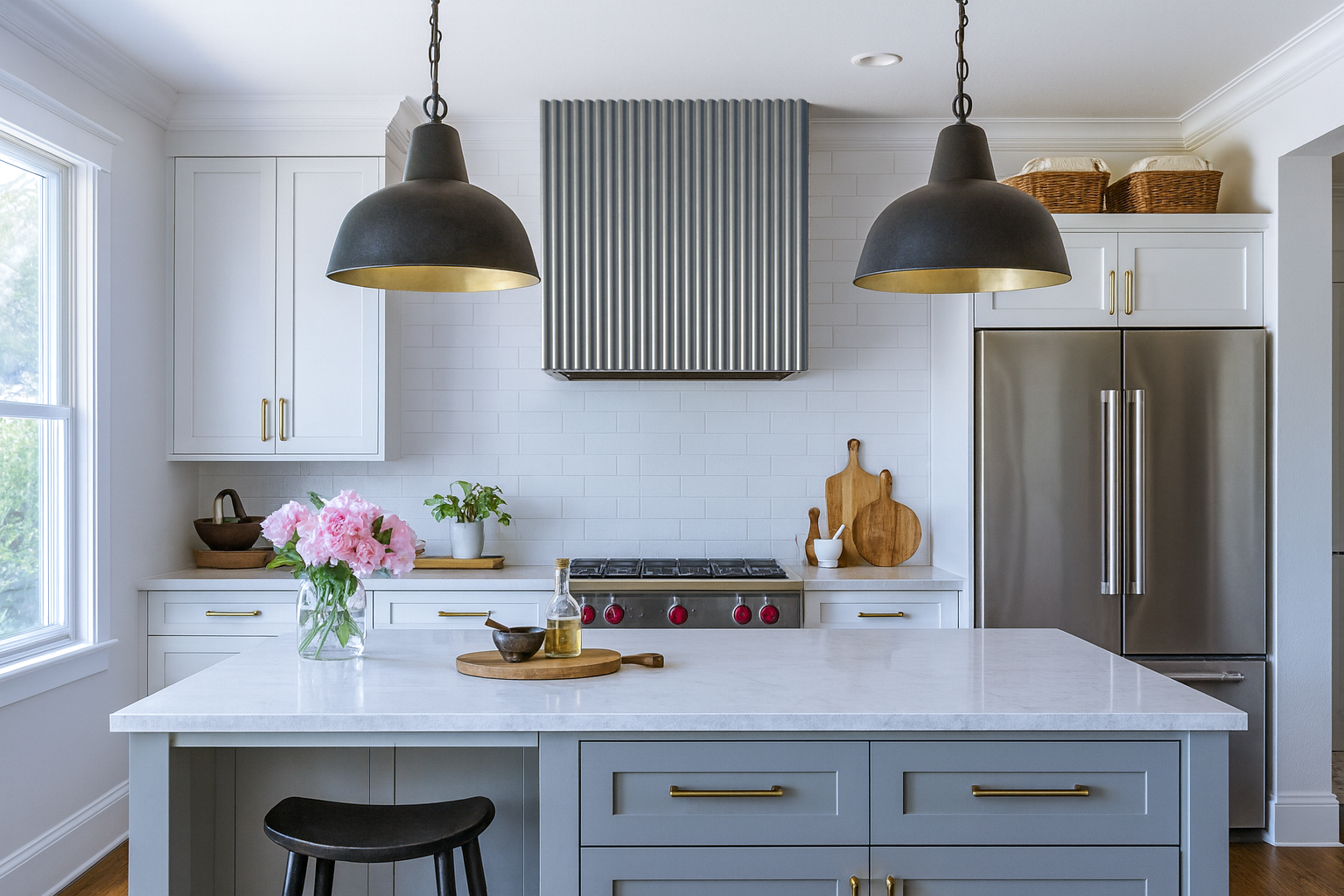
A bronze range hood is one of the most sculptural elements that can be introduced into a kitchen. At La Bastille, we design and build fully custom bronze range hoods built to exacting specifications, with premium liners for seamless integration. Each one is entirely one of a kind.
Because the range hood is positioned at eye level and commands the visual center of the kitchen, a bronze finish at this scale makes a powerful statement. The antique bronze finish is particularly effective here, creating a focal piece that anchors the entire kitchen composition.
Architectural Details and Accent Surfaces
Beyond the primary horizontal surfaces, bronze lends itself beautifully to architectural details — shelving faces, bar rail trim, wainscot panels, and specialty millwork accents. In boutique hotel lobbies, private clubs, and fine dining establishments, these details accumulate into an environment that feels considered and genuinely crafted.
Working with Bronze: What Designers and Architects Should Know
Custom Fabrication and Lead Times
All La Bastille bronze surfaces are designed, fabricated, and finished in the USA by our in-house team of designers and skilled artisans. We source only the highest quality alloys, and our process involves no shortcuts. When you engage with us on a bronze project, you are working directly with the people who will hand-finish the piece to your specification.
For custom projects, we typically provide a response within one to two business days and work within lead times of approximately 12 to 14 weeks depending on scope. We work with a detailed design packet and technical shop drawings to ensure the final piece fits your space precisely.
Finish Selection and Specification
When specifying bronze for a project, we strongly encourage designers to request finish samples before committing to a direction. The finish spectrum in bronze is wide, and photographs — even excellent ones — do not fully convey how these materials behave in actual light conditions. Our team is available to guide this conversation, and we regularly support designers through finish selection with physical samples and consultative calls.
We also want designers to be candid with their clients about the nature of a living metal finish. Bronze will evolve. If a client wants a surface that stays exactly as delivered indefinitely, bronze may not be the right material. If they want a surface that becomes more itself over time — that gains depth and individuality with every year of use — bronze is exceptional.
Collaboration with the Design Team
We function as genuine partners in the design process. Our in-house designers bring both technical and artistic expertise to every project, and we welcome early engagement — even in the conceptual phase — so that the material selection and surface design can be developed in dialogue with your broader design intent. Bronze, in particular, benefits from early conversation about how it will relate to other materials in the space.
FAQ: Bronze Countertops and Surfaces
Is bronze food-safe for kitchen countertops?
Bronze is used in kitchen applications, and its copper content gives it natural antimicrobial properties. As with all specialty metal surfaces, we recommend treating bronze with appropriate sealers for food-prep areas and discussing care protocols with our team during the project phase.
How does bronze compare to brass as a surface material?
Both are copper-based alloys, but bronze is typically harder and has a distinctly different color character — warmer and more tonal than brass, with a broader finish range. Brass tends toward brighter yellows; bronze moves through golds and rich browns. For clients who want depth and patina over brilliance, bronze is often the stronger choice.
Can a bronze countertop be restored or refinished?
Yes. Like all living metals, bronze surfaces can be re-finished over time if a client wants to reset the appearance. This is one of the significant advantages of genuine cast metal over coated or laminated surfaces.
What edge profiles are available in bronze?
We offer a wide range of edge profiles, from clean modern lines to more traditional or architectural detailing. Our team works with you and your client to select or design an edge that completes the surface.
How do I begin a bronze project with La Bastille?
Reach out to our team directly through labastille.com. We respond within one to two business days and will connect you with an in-house designer to begin the conversation. We welcome inquiries from designers, architects, and hospitality groups at any stage of the design process.
The Case for Bronze in Your Next Project
Bronze is not a material you use because it is trending. You use it because the project calls for something that carries genuine weight — visually, materially, and historically. A handcrafted bronze countertop or bar top is an investment in the long character of a space. It will not look the same in five years as it does on installation day, and that is precisely the point.
At La Bastille, we believe the most meaningful surfaces are the ones that accumulate life rather than resist it. Bronze, handled with craft and intention, does exactly that. We would be glad to be part of your next project.